

Embarking on a culinary exploration of Southeast Asia unveils a world where familiar flavors often intertwine with the profoundly unfamiliar. While many travelers anticipate aromatic curries, vibrant noodle dishes, and refreshing tropical fruits, a deeper dive reveals a realm of foods that challenge conventional Western palates. Yet, within these unexpected forms lies a rich tapestry of history, culture, and surprising sensory profiles.
This article journeys through 11 of Southeast Asia’s strangest but tasty foods, from the infamous Balut to crispy fried insects, delving into their origins, objective characteristics, and the cultural significance that makes them cherished local delicacies.
The dishes we will explore, while potentially perceived as strange from an outside perspective, are deeply integrated into the daily lives and celebratory traditions of their respective cultures. Let’s begin!
1) Balut
Perhaps the most globally recognized of Southeast Asia’s more challenging foods is Balut, a fertilized duck egg with a developing embryo, boiled and eaten from the shell. Originating from the Philippines, its consumption is widespread, particularly in the evenings, often purchased from street vendors. The appearance of a Balut egg is initially indistinguishable from a regular boiled egg, until it is cracked open. Inside, it contains a warm, savory broth, a solid egg yolk, a white albumen layer, and the developing embryo itself, varying in maturity from a few weeks to closer to three weeks.
Culturally, Balut is viewed as a nutritious and fortifying snack, particularly valued for its perceived protein content. It is often sprinkled with salt and a splash of vinegar or chili garlic oil before consumption. The sensory experience involves first sipping the warm, clear liquid within the shell, which offers a rich, savory flavor. The yolk is typically dense and creamy.
The most distinctive element is the embryo, presenting varying textures depending on development stage – from soft tissue to discernible feathers and small, delicate bones that offer a surprising crunch. The aroma is robust, distinctly savory, and can possess a slightly gamey note. It’s a snack deeply embedded in Filipino street food culture and considered a point of national culinary identity.
2) Fried Insects
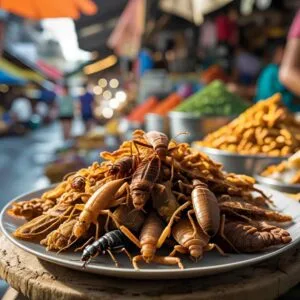
While insect consumption, or entomophagy, is not unique to Southeast Asia, it is a visible part of the street food scene in countries like Thailand, Cambodia, and Vietnam. Common offerings include crickets, grasshoppers, silkworms, ant eggs, and even tarantulas in some areas. These insects are typically deep-fried until golden brown and crispy, often seasoned with salt, pepper, or chili powder.
Historically, insects served as a readily available and sustainable source of protein, particularly in rural areas. Today, they are popular street snacks, sometimes even marketed as novelties for tourists, but retaining a strong local consumer base. Their appearance varies by insect species, but they generally present a crunchy, brittle texture when fried. The aroma is typically oily and can range from nutty and earthy (crickets, grasshoppers) to slightly more pungent (silkworms). The ‘crunch’ as they are eaten is a defining sensory aspect. Fried insects represent resourcefulness and adaptation within the regional diet, offering nutritional value in a small package.
3) Durian
Revered as the “King of Fruits” across Malaysia, Indonesia, Thailand, and the Philippines, Durian is perhaps more known for its intensely pungent aroma than its creamy texture. The large, spiky fruit houses pods of soft, custard-like flesh surrounding large seeds. Its scent is so strong that it is banned in many hotels and public transport systems across Southeast Asia. One common anecdotal experience for newcomers involves being unexpectedly hit by the powerful, unique aroma emanating from a durian stall or even through a closed door.
The aroma is a complex profile often described objectively as a mix of sulfurous notes, onion, garlic, sweet caramel, and sometimes a hint of cheese or turpentine, depending on the variety and ripeness. The texture of the flesh is famously smooth, creamy, and dense, melting on the tongue. Its cultural significance is immense; it is highly prized, expensive during peak season, and often shared among families and friends during gatherings. Despite its challenging smell, the rich, complex flavor profile experienced by consumers, distinct from the aroma, solidifies its status as a sought-after delicacy.
“Durian has been described as the world’s smelliest fruit, but to many in Southeast Asia, it’s a beloved delicacy.”
4) Fermented Fish Products
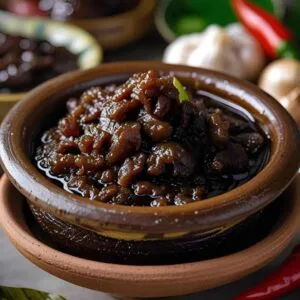 Fermented fish and shrimp pastes and sauces are foundational ingredients throughout Southeast Asian cooking, contributing a deep umami complexity that is often difficult for unaccustomed palates to appreciate due to their potent aroma. Examples include Bagoong in the Philippines, Pra Hok in Cambodia, Belacan in Malaysia, and various types of fish sauce (Nuoc Mam in Vietnam, Nam Pla in Thailand). These are made by fermenting small fish or shrimp with salt over extended periods.
The aroma of fermented fish paste or sauce in its raw form is intensely pungent, fishy, and savory, often perceived as overwhelming by those unfamiliar with it. However, when used in cooking, this aroma transforms, providing a depth of flavor and savory richness that is central to countless dishes, from stir-fries and curries to dipping sauces and salads.
The fermentation process breaks down proteins, creating glutamates responsible for the strong umami taste. Their appearance ranges from liquid amber (fish sauce) to thick, often grey or pinkish-brown pastes. These products are not typically eaten on their own in large quantities but are essential seasoning agents, embodying the savory foundation of much of the region’s cuisine.
5) Jengkol and Petai Beans
Common in Indonesia, Malaysia, and parts of Thailand, Jengkol (Dogfruit) and Petai (Stink Bean) are types of legumes known for their distinct, sometimes challenging aroma and flavor, particularly after consumption. They are often added to curries, stir-fries, or sambals (chili pastes). Jengkol beans have a flat, disc-like shape, while petai beans are found in long, twisted pods.
When cooked, Jengkol has a firm, slightly rubbery texture and an earthy, slightly bitter taste. Petai beans are softer with a more pronounced bitter and sulfuric note. Both beans contain djenkolic acid, an amino acid responsible for the strong, lingering odor they impart to breath and urine after eating. This characteristic makes them ‘strange’ to many outsiders.
Despite this, their unique flavor profile is highly valued in local cuisine, adding a specific depth and aroma to dishes that is irreplaceable. Their preparation often involves boiling or soaking before cooking to reduce some of the bitterness and potential side effects, showcasing a traditional understanding of how to manage challenging ingredients.
6) Pig Blood Soup
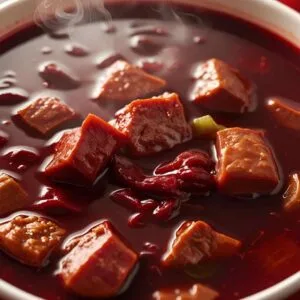 Dishes featuring animal blood are found in various cultures globally, and in Southeast Asia, pig blood soup is a notable example, particularly in Vietnam (Tiet Canh, though typically served fresh and raw, a practice requiring caution and less common in mainstream awareness) and Thailand (Tom Lued Moo). Tom Lued Moo is a soup containing cubes of cooked pig blood, offal (like intestines, liver, lungs), pork slices, and sometimes vegetables, served in a clear or lightly seasoned broth, often garnished with fried garlic and coriander.
The cooked pig blood congeals into a firm, jelly-like texture, dark maroon or black in color. It has a mild, slightly metallic, and savory flavor that readily absorbs the seasonings of the broth. The broth itself is typically light yet flavorful, often seasoned with pork bone stock, pepper, and sometimes preserved vegetables. The inclusion of offal adds varying textures, from tender to chewy. This soup is a common breakfast item or casual meal, prized for its warmth and perceived nourishing qualities. While the concept of consuming blood might be unusual to some, the resulting dish is a deeply savory and complexly textured soup, integral to the local diet.
7) Ant Egg Soup
A unique dish found primarily in Laos and Northeastern Thailand (Isaan), Gaeng Kai Mot Daeng is a soup featuring red ant eggs and sometimes juvenile ants, cooked in a clear, sour broth flavored with lemongrass, galangal, chili, and herbs. The practice of harvesting ant eggs from nests is a traditional one, representing the utilization of local resources.
The ant eggs are small, white, and oval-shaped. When added to the soup, they retain a slightly firm, pop-like texture, offering a burst of tangy, sour flavor within the broth. The sourness comes both from the natural acidity of the ant eggs and from souring agents like lime juice or tamarind added to the soup. The broth itself is light, fragrant with aromatic herbs, and carries a bright, clean taste profile contrasted with the rich texture and tartness of the eggs. This dish showcases a traditional reliance on foraging and an appreciation for the delicate, sour notes that complement other flavors in regional cooking.
8) Frog Legs
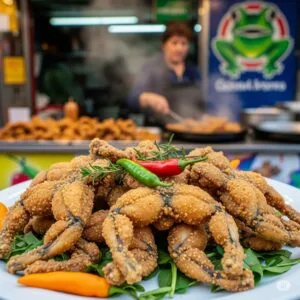 While consumed in many parts of the world, frog legs are a popular protein source in various Southeast Asian countries, prepared in numerous ways including stir-frying with ginger and scallions, deep-frying, or added to curries and stews. They are particularly common in Vietnam, Cambodia, and Indonesia (often prepared ‘swikee’, a frog leg soup).
Cooked frog legs have a mild flavor often compared to chicken, but with a texture that is noticeably tender and slightly gelatinous, especially near the joints. When deep-fried, the exterior becomes crispy while the interior remains moist and flaky. In soups or stews, they become very tender, their flavor blending seamlessly with the broth. Their appearance, resembling small chicken drumsticks, can be off-putting to those unaccustomed to eating amphibians, yet their culinary versatility and palatable texture make them a staple in many local markets and restaurants.
“Edible insects are a source of nutritious and healthy food… They are widely available and are an especially important food source in many parts of the developing world.”
– Food and Agriculture Organization of the United Nations (FAO)
9) Bird’s Nest Soup
Bird’s Nest Soup is considered a high-end delicacy across several Asian cultures, including those in Southeast Asia like Vietnam, Thailand, and Malaysia, where the nests are harvested from swiftlets. The nests are made from the bird’s solidified saliva and are notoriously difficult and dangerous to harvest, contributing to their high cost. Prepared as a soup, the cleaned nests are typically simmered in a sweet or savory broth until they achieve a gelatinous texture.
The nests themselves are off-white or yellowish and fibrous before cooking. When cooked, they absorb the liquid and swell, transforming into a translucent, gelatinous substance. The flavor of the nest itself is very mild, almost neutral; its value lies more in its unique texture and the belief in its medicinal properties.
The sensory experience is primarily textural – a smooth, slippery, and slightly gelatinous consistency within the surrounding liquid, whether it’s a light, clear savory broth or a sweetened soup often containing rock sugar and sometimes pandan leaf for aroma. The ‘strangeness’ lies in its origin and the unusual texture of the main component.
10) Century Egg
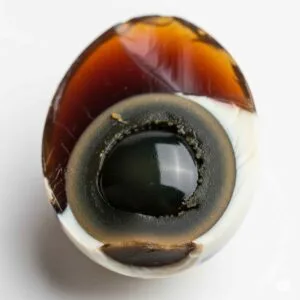 Though its origins are in China, the Century Egg (or thousand-year egg, or pidan) is a preserved egg product widely consumed in various Southeast Asian countries with Chinese populations, including Vietnam, Thailand, Malaysia, and Singapore. Duck, chicken, or quail eggs are preserved in a mixture of clay, ash, salt, quicklime, and rice hulls for several weeks to months.
The preservation process transforms the egg dramatically. The albumen becomes a translucent, dark brown or black jelly-like substance, while the yolk turns dark green or grey with a creamy texture. The aroma is strong and distinct, often described as pungent, sulfuric, or ammoniacal. The flavor, however, is complex – savory, earthy, and slightly cheesy, particularly the yolk, contrasted with the mild, gelatinous ‘white’.
They are rarely eaten plain but are often served as part of a salad, with pickled ginger, or added to congee (rice porridge), where their strong flavor and unique texture contribute depth to the dish. Their visual transformation and potent aroma certainly place them on the list of potentially ‘strange’ foods.
11) Snake Wine and Blood: Potent Concoctions
In parts of Vietnam and Cambodia, traditional medicine and perceived vitality benefits have led to the creation and consumption of snake wine and fresh snake blood. Snake wine is typically made by placing a whole venomous snake into a bottle of rice wine, often with smaller snakes, insects, or herbs. Fresh snake blood is sometimes consumed immediately after a snake is killed, often mixed with rice wine.
Snake wine presents a visual spectacle – a coiled serpent preserved within a clear liquid. Its aroma is often described as strongly alcoholic with underlying earthy or animal notes. The flavor is potent and medicinal, heavily influenced by the rice wine, with subtle, harder-to-define undertones from the snake itself. Fresh snake blood, dark and viscous, has a rich, slightly metallic, and earthy aroma and flavor when consumed neat or mixed with wine, which primarily provides the alcoholic burn. These are perhaps the most challenging items on this list for many, tied deeply to beliefs about vitality and traditional remedies rather than everyday cuisine, but are undeniably part of the region’s diverse food and drink landscape.
A One-Of-a-Kind Food Journey
These eleven examples offer a glimpse into the adventurous and diverse culinary world of Southeast Asia. From the deeply ingrained cultural practice of consuming Balut in the Philippines, to the sustainable protein source offered by fried insects on the streets of Thailand, the unique aroma and texture of Durian cherished across the region, or the foundational savory notes of fermented fish products like those used extensively in Vietnam’s cuisine, each dish tells a story.
They remind us that what is considered ‘strange’ is simply a reflection of cultural difference and historical necessity. Exploring these foods objectively, focusing on their sensory properties and the traditions surrounding them, unlocks a deeper understanding of the people and environments that shaped them. They are not just culinary oddities, but windows into resilience, resourcefulness, and a profound connection to the land and its resources. So, as you explore the region, perhaps seek out one of these dishes, not just to taste, but to experience a living part of Southeast Asia’s vibrant heritage.