


There is a saying among travelers in Southeast Asia: “If the plastic stool isn’t wobbly, the food probably isn’t good.”
Thailand’s street food scene is legendary for a reason. It is a chaotic, beautiful mess where Michelin stars hang next to unwashed woks and where a $2 bowl of soup can bring tears to your eyes.
But as 2025 approaches, the scene is shifting. Prices are nudging up, new spots are opening, and the old classics remain undefeated.
As someone who has eaten their way from the mountains of Chiang Mai to the beaches of Krabi, I’ve learned that the best meals rarely have a menu in English.
This guide is my personal highlight reel, the dishes worth sweating for, the safety tips that actually matter, and the flavors that will ruin you for all other food when you return home.
The “Holy Trinity” of Thai Flavor Balance
Before we talk about what to eat, understand Thai street food by understanding the condiment caddy. Almost every table will have a metal rack with four jars containing:
- Sugar: To balance spice.
- Fish Sauce (Nam Pla): Salty umami (liquid gold).
- Chili Vinegar (Nam Som): Sourness to cut through fat.
- Dried Chili Flakes (Prik Bon): Heat.
Thai chefs cook the dish to a “standard” level, but you are expected to be the final chef. If your noodle soup tastes a bit flat, a splash of vinegar and a sprinkle of sugar is usually the fix.
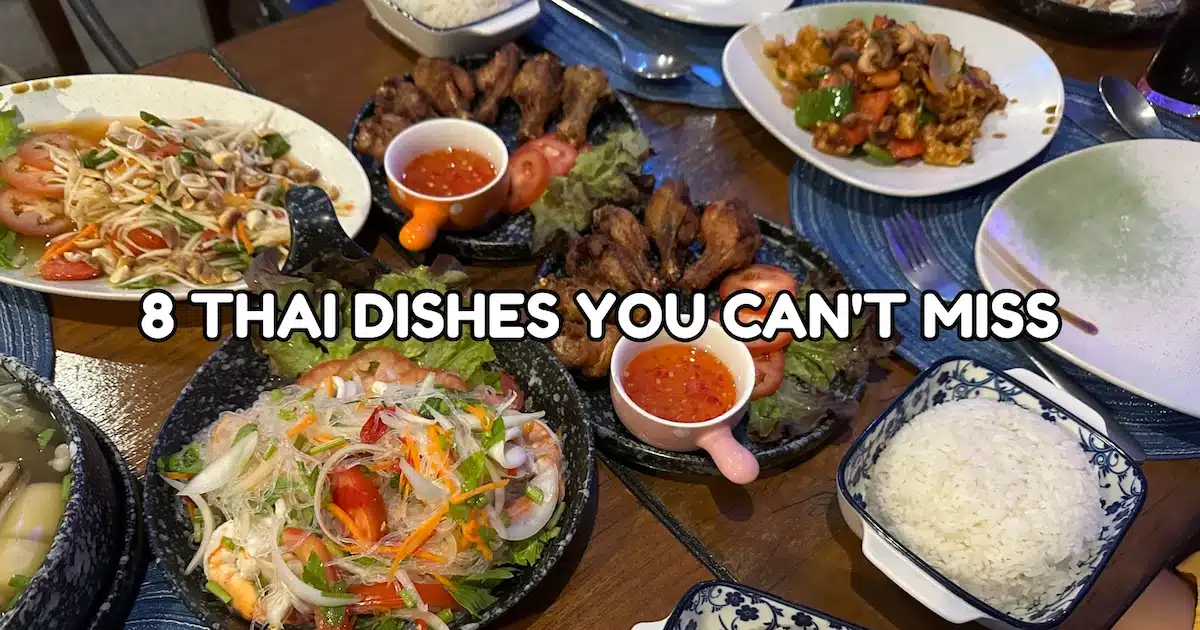
8 Dishes You Can’t Miss
1. Pad Kra Pao (Holy Basil Stir-Fry)
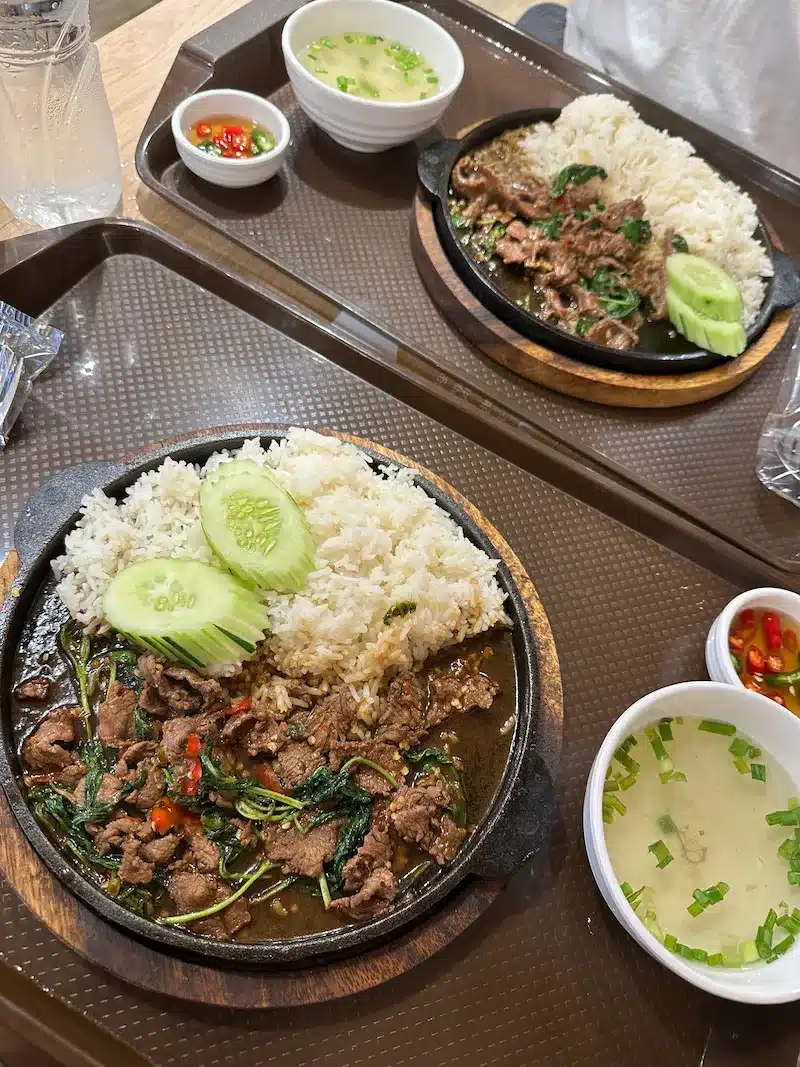
The True National Dish.
While tourists order Pad Thai, locals order Pad Kra Pao. It is the ultimate comfort food: minced pork (Moo) or chicken (Gai) wok-fried with garlic, explosive chilies, and aromatic holy basil leaves.
- How to Order: You must say “Kai Dao” (fried egg). The creamy yolk running into the spicy pork is essential.
2. Som Tum (Green Papaya Salad)
The Textural Masterpiece.
Originating from the Northeast (Isan), this salad is pounded in a mortar and pestle. It combines shredded unripe papaya, tomatoes, yard-long beans, peanuts, dried shrimp, lime, palm sugar, and fish sauce.
- The Variation: There are two main types. Som Tum Thai is the sweet/sour version tourists love. Som Tum Plara uses fermented fish sauce and crab—it’s pungent, funky, and loved by locals (approach with caution!).
3. Khao Soi (Northern Curry Noodles)
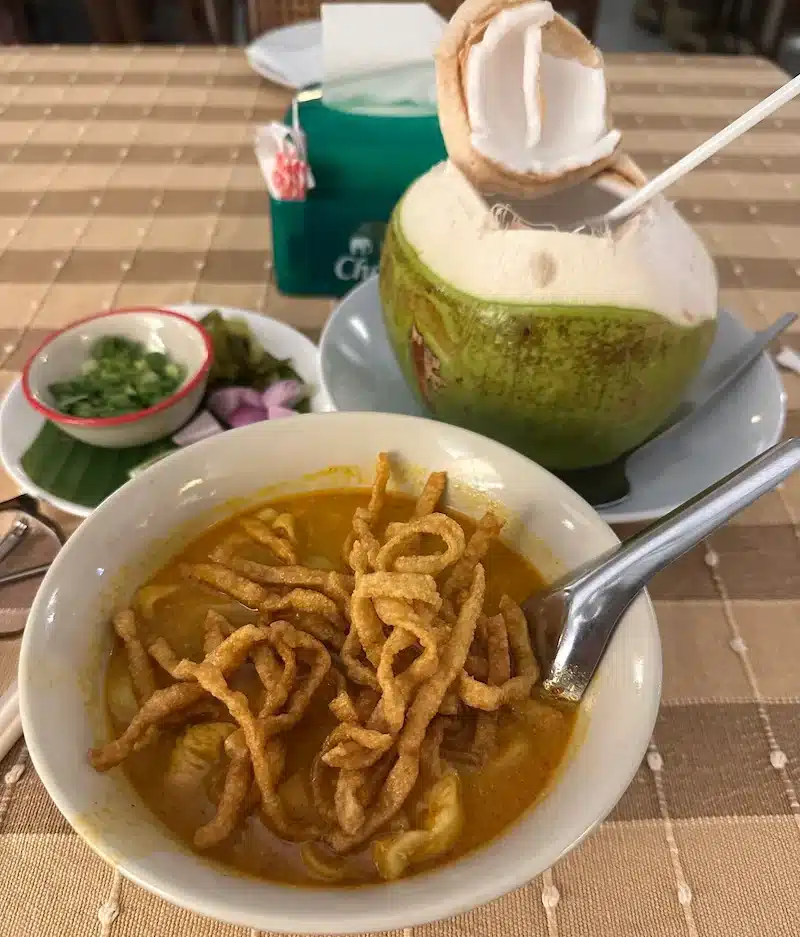
The Chiang Mai Icon.
If you are in the north, this is mandatory. It’s a rich, yellow coconut curry broth served over soft egg noodles and topped with a nest of crispy deep-fried noodles. It’s usually served with a side of pickled mustard greens, shallots, and a wedge of lime to cut through the rich coconut cream.
4. Moo Ping (Grilled Pork Skewers)
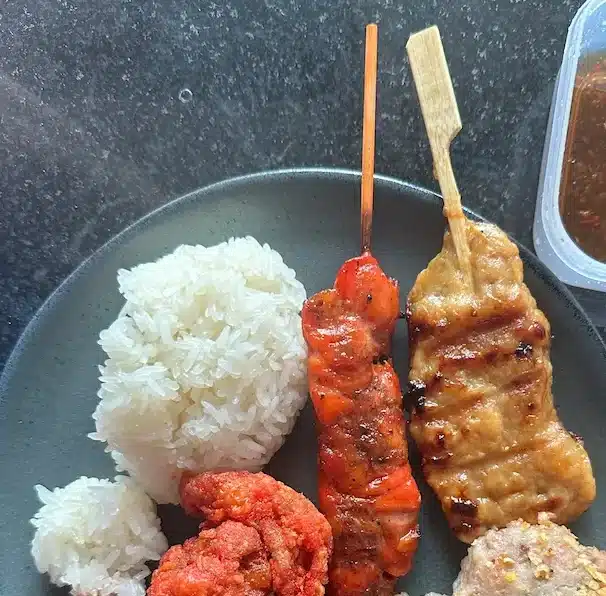
The Breakfast of Champions.
You will smell these before you see them. Thin slices of pork are marinated in coriander root, garlic, and pepper, then grilled over charcoal until caramelized. They are tender, smoky, and slightly sweet.
5. Tom Yum Goong (Spicy Shrimp Soup)
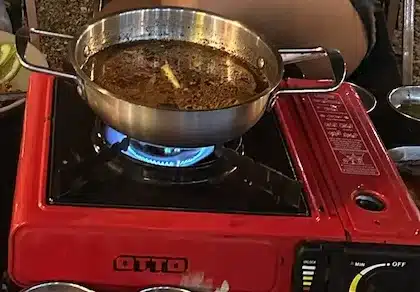
The World Famous Bowl.
“Tom” means boil, “Yum” means mixed/spicy/sour. This soup is a masterclass in aromatics, utilizing galangal, lemongrass, and kaffir lime leaves.
- Creamy vs. Clear: You can order Nam Sai (clear broth, sharper taste) or Nam Khon (creamy broth with evaporated milk and chili jam). Both are incredible.
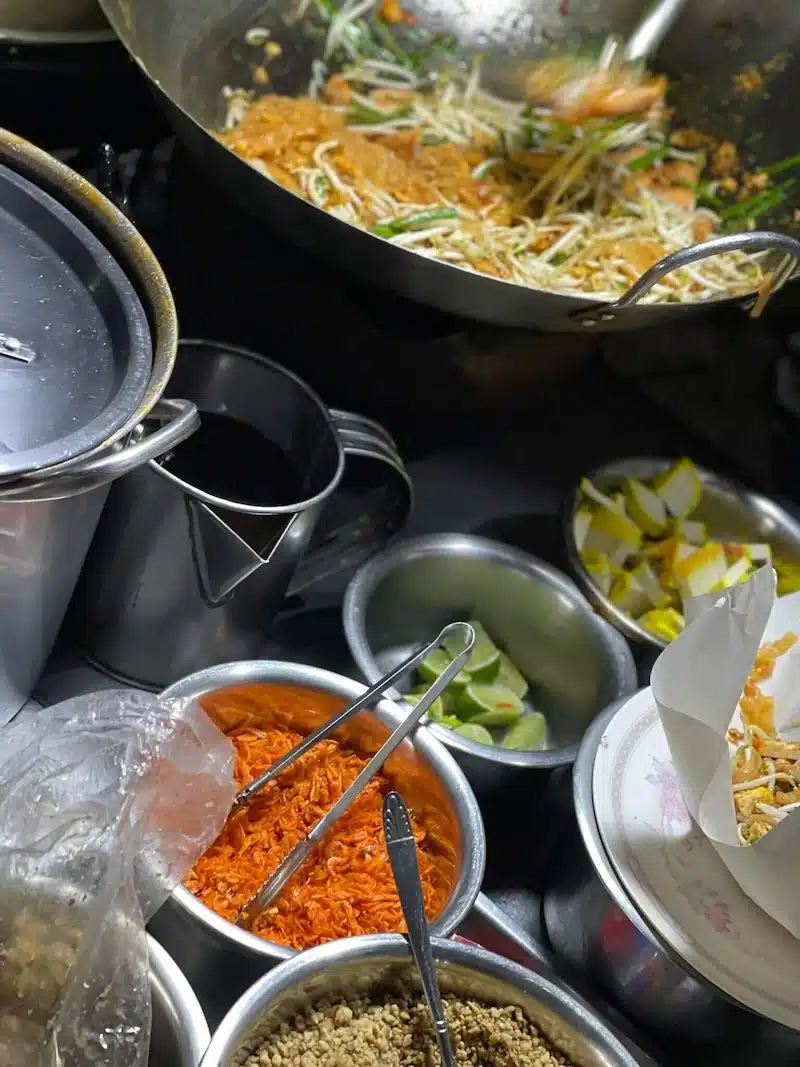
6. Pad Thai (Stir-Fried Noodles)
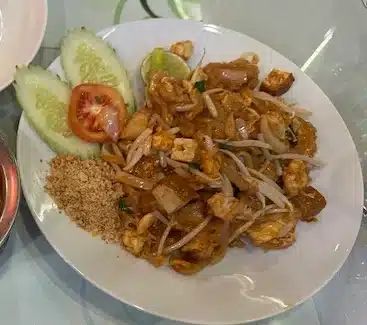
The Gateway Drug.
Everyone knows it, but eating it on a plastic stool in Bangkok is different. The noodles should be chewy (glutionous), not mushy.
7. Boat Noodles (Kuay Teow Reua)
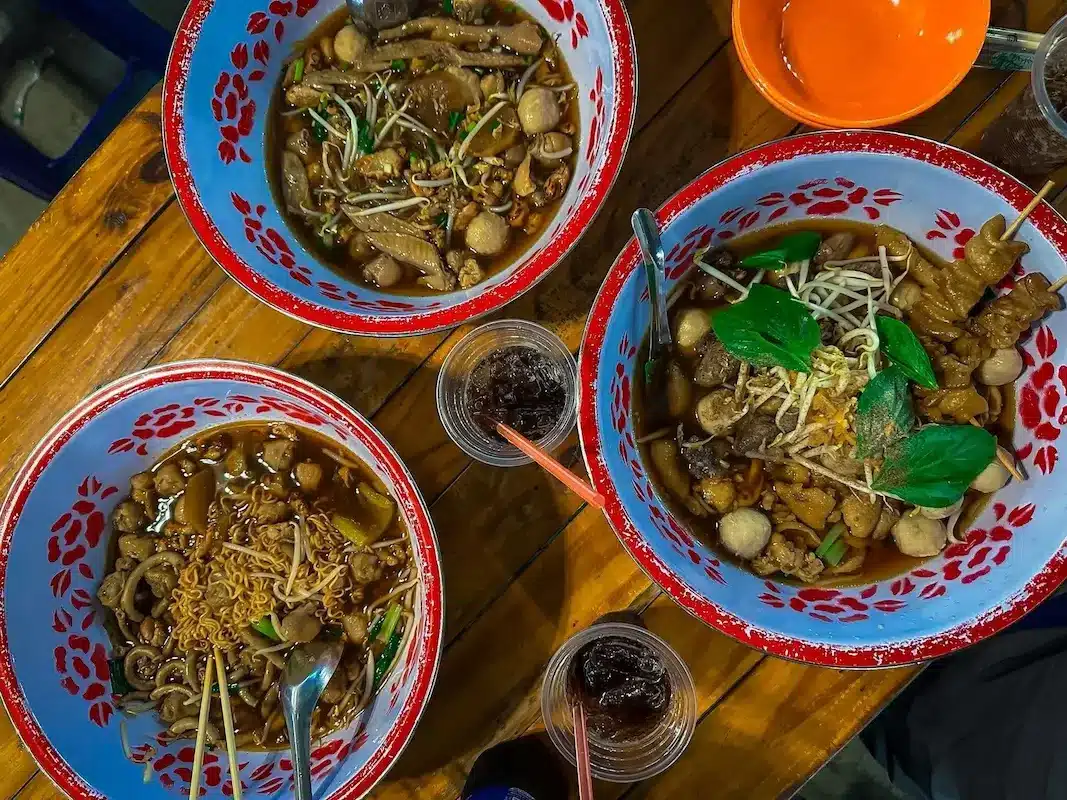
The Flavor Bomb.
Historically served from boats on Bangkok’s canals, these are small bowls of noodle soup with an intensely rich broth. The secret ingredient? A splash of pig or cow blood mixed into the broth (don’t worry, it’s cooked!). It thickens the soup and adds a savory depth you can’t get any other way.
8. Mango Sticky Rice (Khao Niao Mamuang)
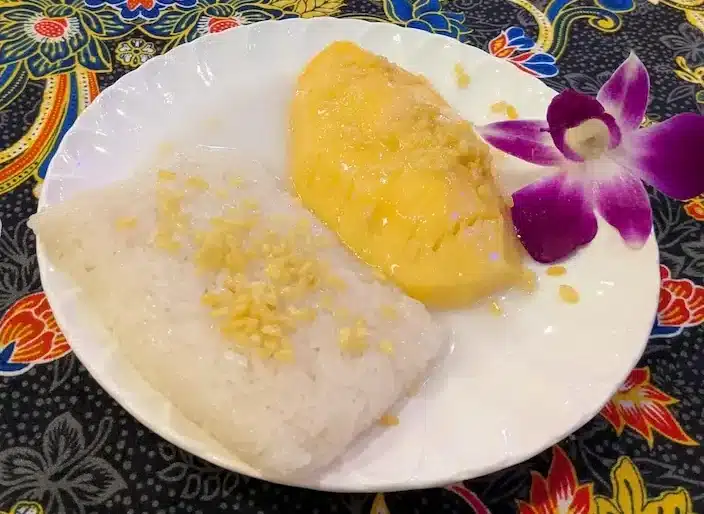
The King of Desserts.
Thai mangoes (Nam Dok Mai) are sweeter and smoother than mangoes found elsewhere. They are served over glutinous rice cooked in coconut milk and sugar, then topped with a salted coconut cream and crispy mung beans. The play between the sweet fruit and the salty cream is perfection.
Regional Flavors
| Region | Flavor Profile | Famous Dishes |
|---|---|---|
| Central (Bangkok) | The melting pot. Flavors are generally balanced between sweet, salty, sour, and spicy. | Home of Green Curry and Pad Thai. |
| North (Chiang Mai/Chiang Rai) | Influenced by Burma and China. Less sugar, more bitter herbs, and sticky rice is the staple. | Sai Oua (spicy herbal sausage) and Nam Prik Ong (tomato chili dip). |
| Northeast (Isan) | The spicy heartland. Food here is dry, fiery, and heavily fermented. | Som Tum, Larb (minced meat salad), and Gai Yang (grilled chicken). |
| South (Phuket/Krabi) | The spice intensity is dialed up to 11. Heavy use of turmeric (turning curries yellow) and fresh seafood. | Gaeng Som (sour curry), notoriously spicy. |
How to Find the Best Spots
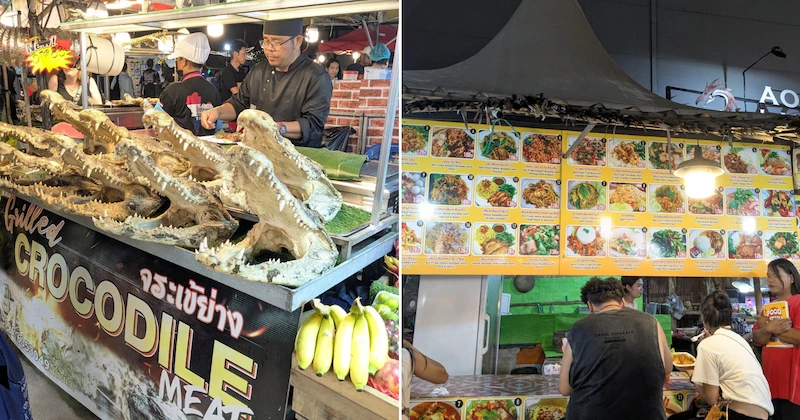
Finding the best street food is an adventure in itself. In 2025, you have a few tools at your disposal:
- The Michelin Guide: Yes, Michelin now rates street food. Look for the “Bib Gourmand” sign (the Michelin Man licking his lips) at stalls. It usually guarantees quality for under a few dollars.
- The “Shell Shuan Shim” Bowl: Long before Michelin came to Thailand, there was the “Shell Shuan Shim” award (a green bowl logo). If you see this sign at an old stall, it’s a mark of legendary status.
- Night Markets:
- Bangkok: Jodd Fairs (Rama 9) for trendy food, or Yaowarat (Chinatown) for classic seafood.
- Chiang Mai: Chang Phuak Gate for evening eats, or the Sunday Walking Street.
- Phuket: Lard Yai (Sunday Walking Street) in Old Town.
The Street Food Survival Guide
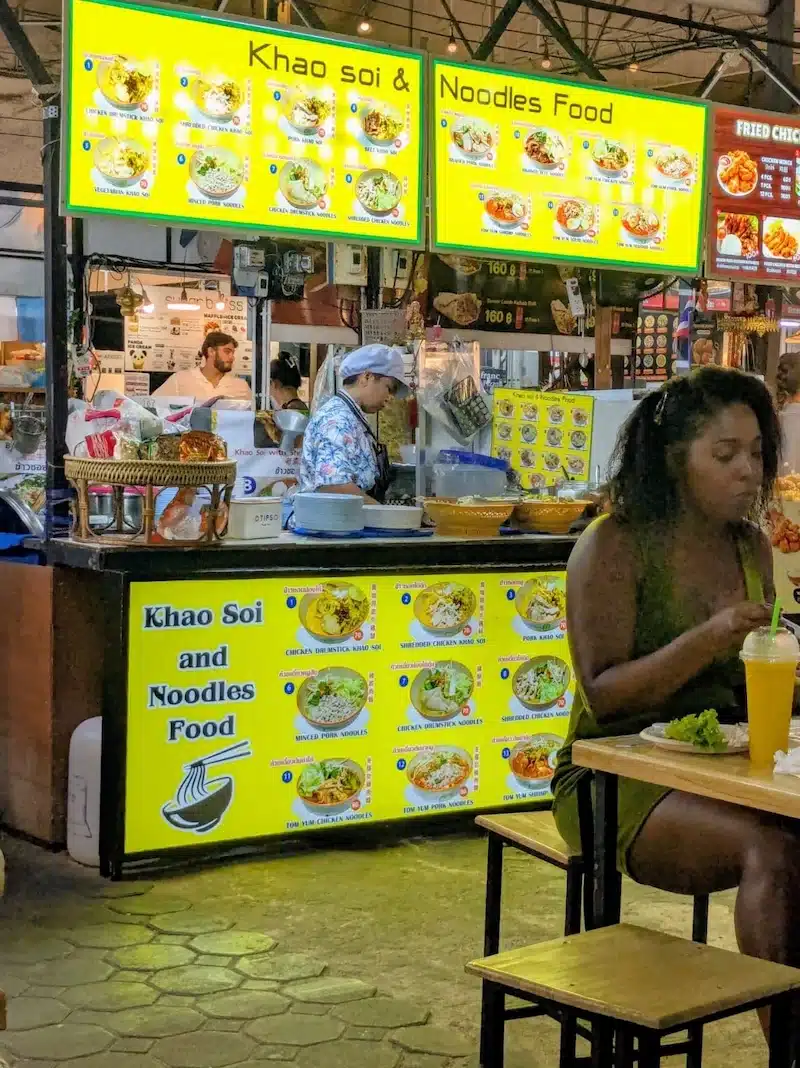
Now, we need to address the elephant in the room: Hygiene and Logistics.
Many tourists are terrified of “Bangkok Belly.” While caution is smart, fear shouldn’t stop you. Here are the updated rules for navigating the scene in 2025.
1. The “High Turnover” Rule
The safest food isn’t found in the empty restaurant with the white tablecloths; it’s found at the street cart with the line of locals down the block. High turnover means the ingredients are fresh and haven’t been sitting out. If you see a stall with piles of pre-cooked seafood sitting in the sun and no customers? Walk away. If you see a wok on high heat and a queue of office workers? Get in line.
2. The Ice Myth vs. Reality
For years, guidebooks said “don’t eat the ice.” In 2025, this is outdated advice. Street vendors buy ice from hygienic, government-regulated factories.
- Safe: Cylindrical “tube” ice with a hole in the middle.
- Safe: Crushed ice produced by machines.
- Avoid: Large blocks of ice chipped by hand (rare to see these days).
- Golden Rule: Never drink tap water. Always stick to bottled water.
3. The Price of Paradise (2025 Budget)
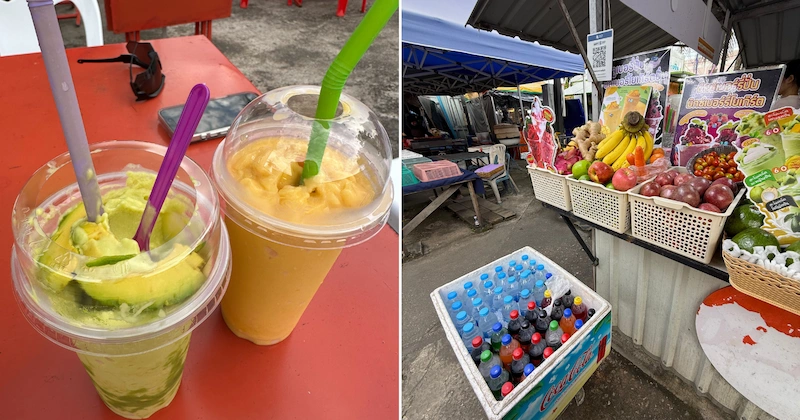
Prices have nudged up slightly over the last few years, but street food remains incredibly cheap.
- One Plate Meal (Pad Krapow/Fried Rice): 50 – 80 THB ($1.50 – $2.30 USD)
- Noodle Soup: 50 – 70 THB ($1.50 – $2.00 USD)
- Skewer (Pork/Chicken): 10 – 20 THB ($0.30 – $0.60 USD)
- Fresh Fruit Smoothie: 40 – 60 THB ($1.15 – $1.75 USD)
Bringing the Experience Home
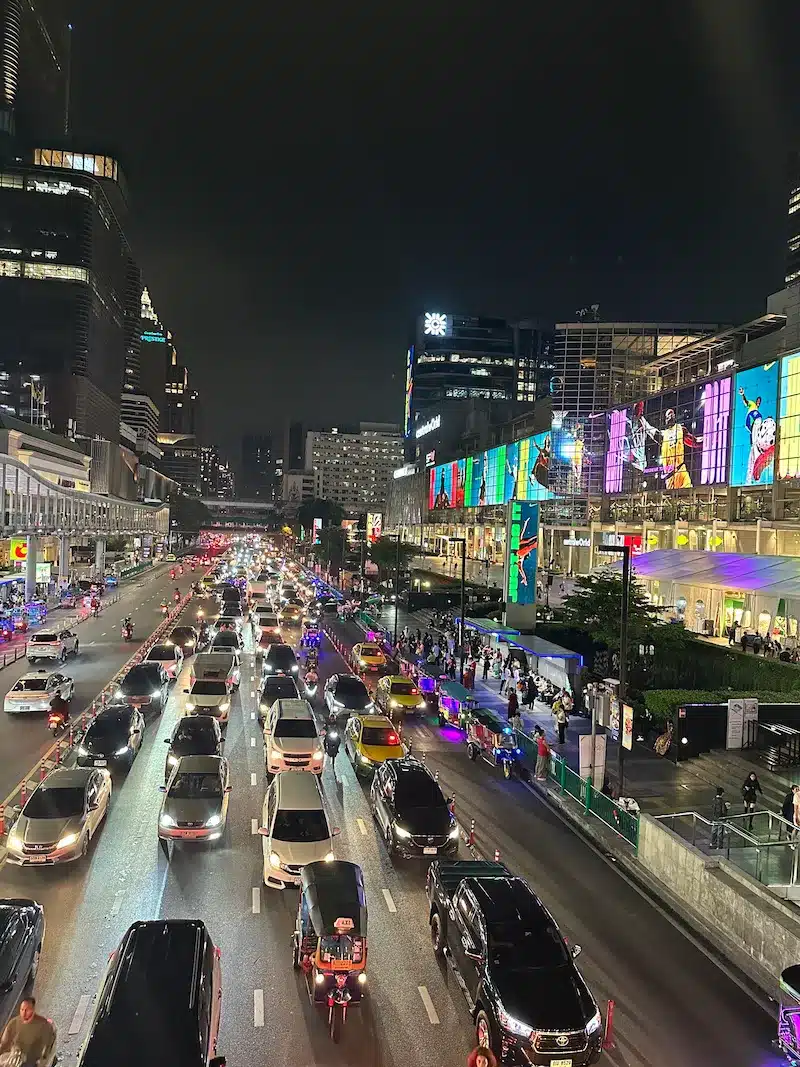
The beauty of Thai street food is that it changes your perception of what “fast food” can be. It isn’t mass-produced; it is artisanal cooking done at speed.
While nothing compares to the humidity and noise of a Bangkok sidewalk, you can bring these flavors home. The key is sourcing the right ingredients: fresh lime, quality fish sauce (look for Megachef or Red Boat brands), and real palm sugar.
But for now, if you are planning a trip, pack loose pants. The culinary adventure of a lifetime awaits, and it starts with a 50 Baht coin and an open mind.
Enjoy the chaos. Savor the spice.