


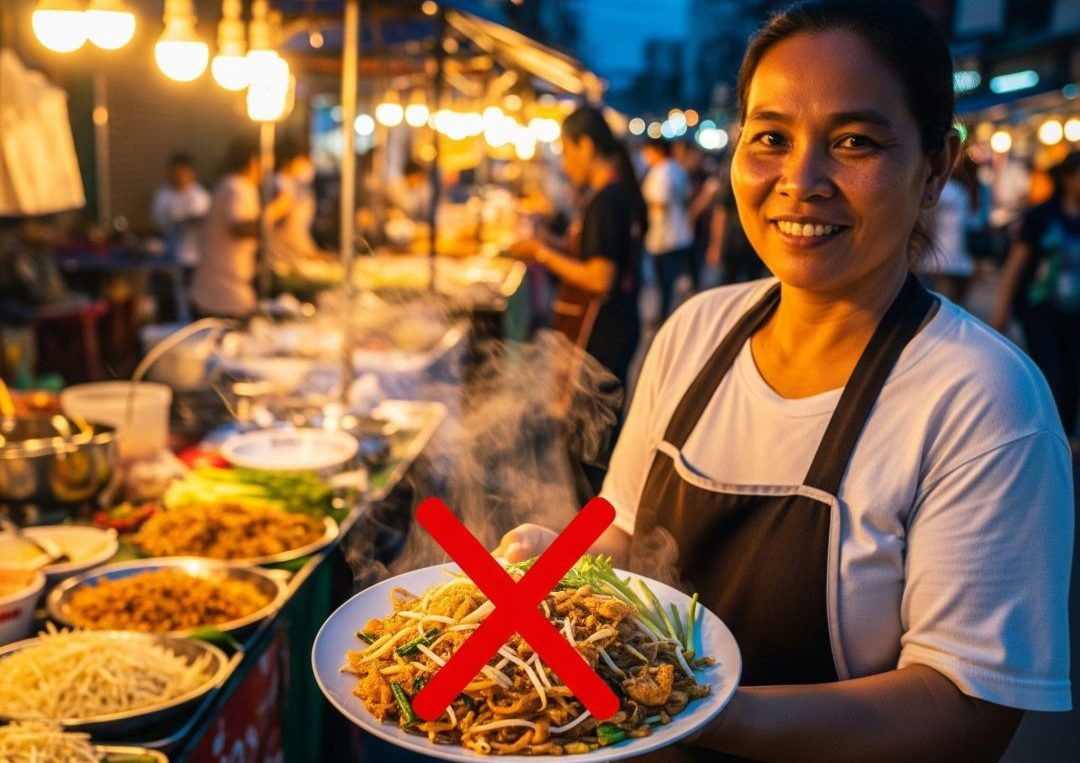
From the sizzling woks on Bangkok’s bustling streets to the fragrant kitchens of northern villages, Thai food is a journey for the senses. I’ve spent years chasing authentic flavors across Thailand, and while most bites have been pure bliss, a few have been… character-building, to say the least.
This isn’t a list to scare you off. Think of it as a friendly guide from one food lover to another.
It’s about navigating the incredible, and sometimes intense, world of Thai cuisine with a little insider knowledge so that you can find the adventures your taste buds will truly thank you for.
1. Larb Luu (Raw Blood Salad): A Step Too Far for Me
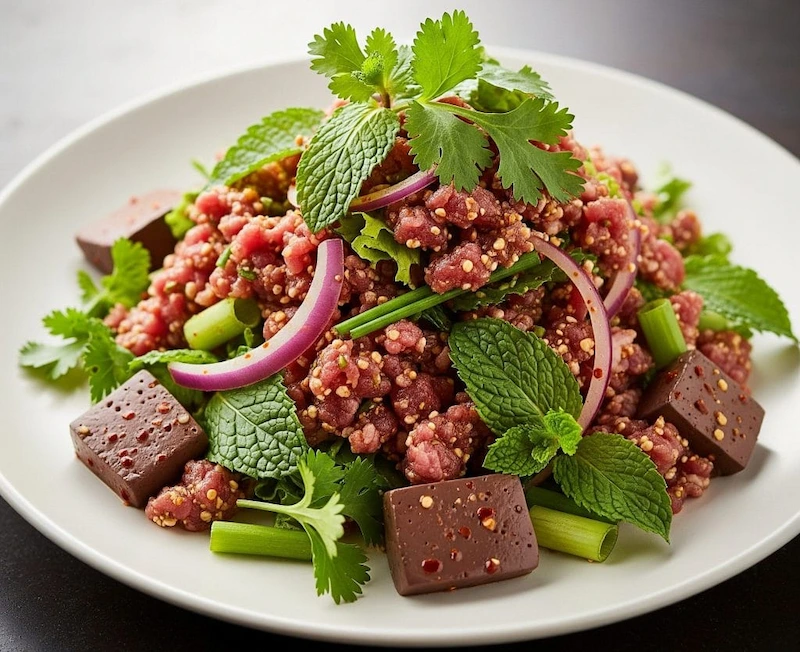
My first encounter with Larb Luu was at a local gathering in Isaan, Thailand’s northeastern heartland.
It’s a spin on the famous larb (minced meat salad), but with a shocking twist: the pork is raw and mixed with fresh blood.
The color alone—a deep, almost electric crimson—was intense. For locals, the rich, metallic tang is a delicacy.
For me, the thought of uncooked meat and the unique texture were hurdles I couldn’t quite clear.
Deliciously Safe Alternative:
You don’t have to miss out on the magic of larb! Simply order Larb Moo (pork) or Larb Gai (chicken). You get the same incredible explosion of lime, mint, toasted rice powder, and chili, but with safely cooked, crumbly meat. It’s my go-to for a perfect spicy-sour kick, especially with sticky rice.
2. Goong Ten (Dancing Shrimp): The Liveliest Meal I’ve Ever Had
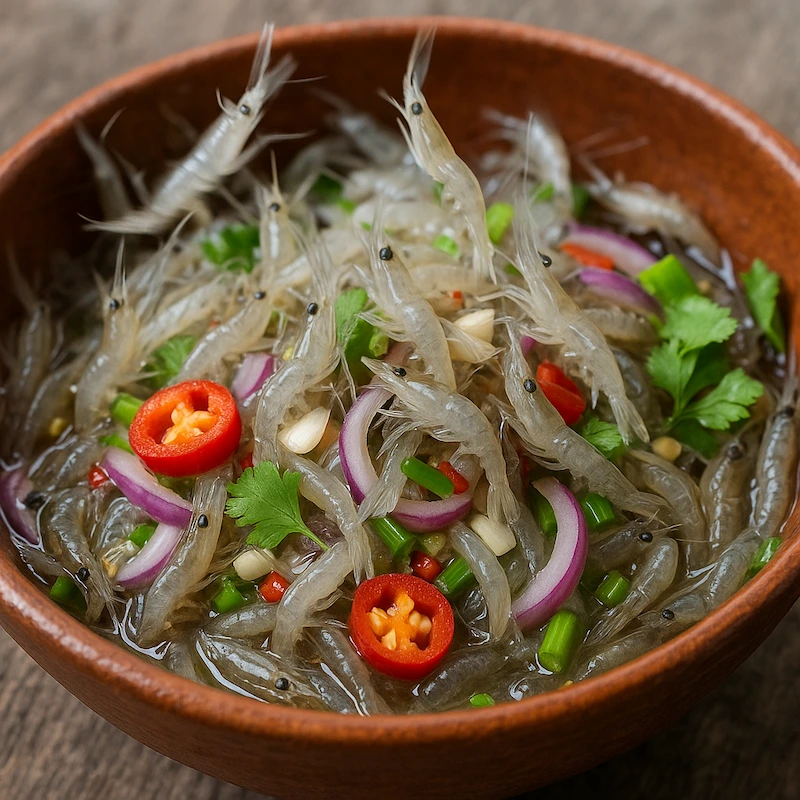
Goong Ten (Dancing Shrimp)
Yes, you read that right. Goong Ten translates to “dancing shrimp,” and it’s a salad of tiny, live freshwater shrimp that literally jump in the bowl.
I was at a market when I saw a vendor mix a bowl of wriggling shrimp with a fiery chili-lime dressing. The experience is everything at once: sour, spicy, and texturally… alive. It’s a true novelty, but the sensation of moving food in your mouth is definitely an acquired taste.
The sound itself is unique—a faint, frantic clicking as the shrimp react to the acidic lime juice, creating a spectacle that is as fascinating as it is confronting.
For most visitors, the challenge is less about the flavor and more about the profound psychological hurdle of eating food that is still moving.
It’s a dish that truly tests your culinary courage and redefines the meaning of “fresh.”
A Deliciously Safe Alternative:
For a taste of raw seafood without the dance, try Goong Chae Nam Pla. It features fresh shrimp marinated in a potent fish sauce, lime, and garlic dressing. If you prefer your seafood cooked, Yum Talay (spicy mixed seafood salad) is a guaranteed winner, packed with cooked shrimp, squid, and mussels in a zesty dressing.
3. Pla Ra (Fermented Fish Paste): The Smell You Won’t Forget
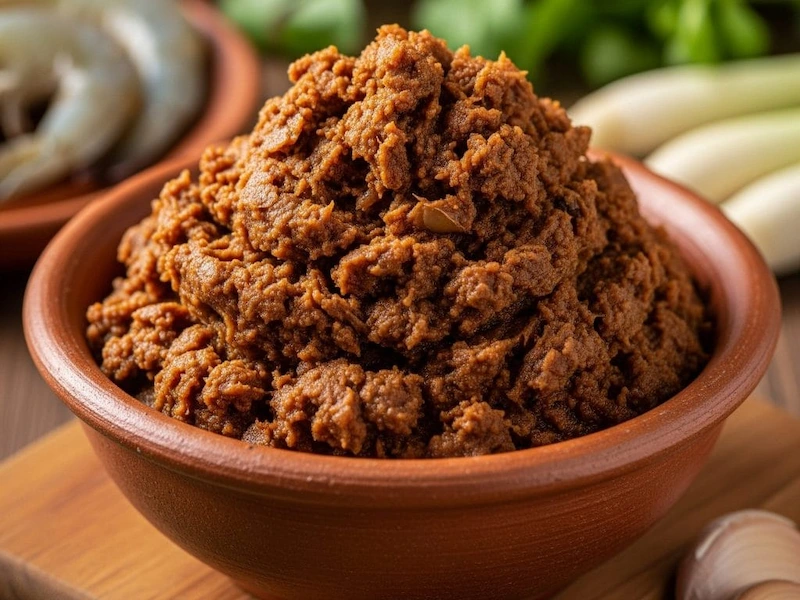
You will smell Pla Ra long before you see it.
This intensely pungent fermented fish paste is a cornerstone of Isaan cuisine, adding a funky, umami depth that locals adore.
My first encounter was accidental; I ordered papaya salad (Som Tum) and got the version made with Pla Ra.
The aroma is powerful and earthy in a way that can overwhelm an unaccustomed palate.
A Deliciously Safe Alternative:
When ordering papaya salad, simply ask for Som Tum Thai. This beloved version uses standard fish sauce (nam pla), which is salty and savory without the intense fermented aroma. It’s the crunchy, sweet, sour, and spicy salad that most people dream of.
4. Larb Mote Daeng (Red Ant Egg Salad): A Surprisingly Sour Pop
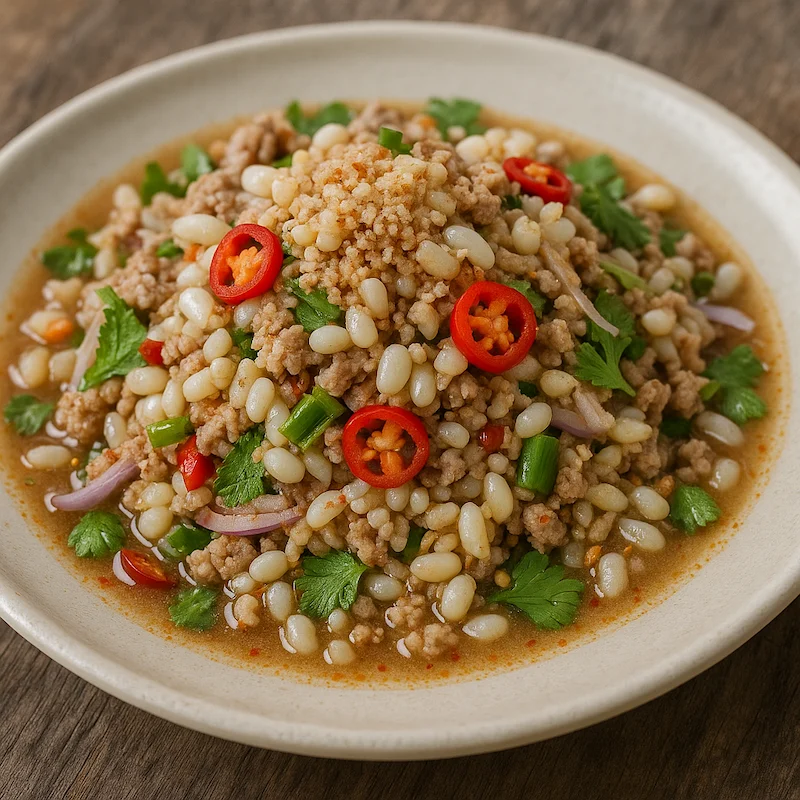
Eating insects is common in many parts of the world, but finding them in my salad was a new one for me.
Larb Mote Daeng uses the eggs of red ants as its protein. The little white eggs look like tiny pearls mixed with fresh herbs.
The most surprising part? The texture. They pop in your mouth, releasing a tart, lemony liquid.
It’s less about being “gross” and more about the unusual sourness and unique popping sensation.
A Deliciously Safe Alternative:
To get that authentic Isaan tang without the insects, try Sai Krok Isaan. These are fantastic fermented pork and rice sausages, grilled until crispy. They have a signature sour flavor that’s incredibly addictive and are a beloved street food snack all over Thailand.
5. Durian: The King That Divides
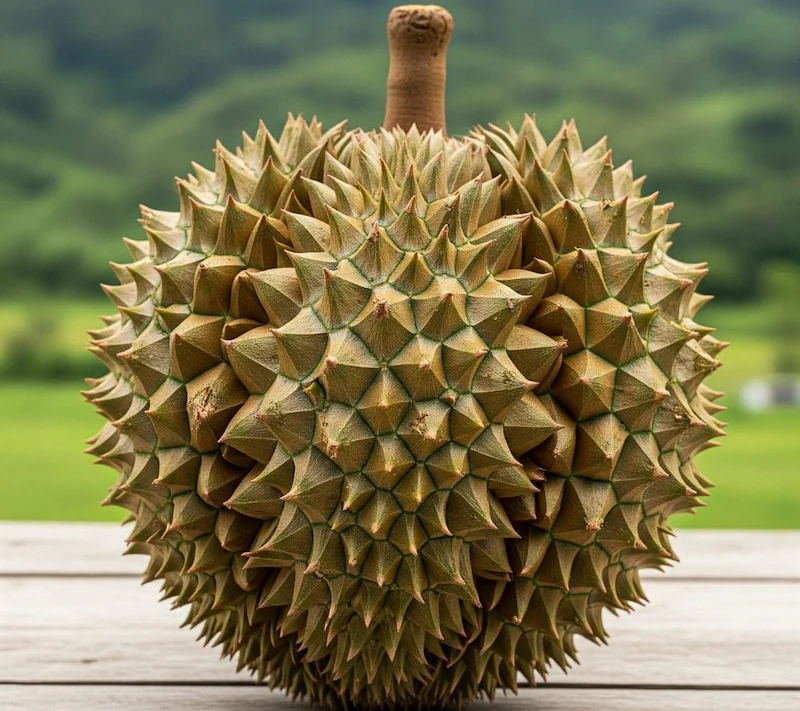
No list of challenging Thai foods is complete without the “King of Fruits.”
Durian’s reputation precedes it; its legendary smell gets it banned from hotels and public transport.
To me, it’s a bizarre mix of sweet, creamy custard and rotten onions.
And according to a New York Times article, the durian market is significant and its cultural impact undeniable throughout the region.
The texture is luscious, but getting past the powerful, lingering aroma is the ultimate challenge. I’ve learned to appreciate it from a safe distance.
A Deliciously Safe Alternative:
For a guaranteed heavenly dessert, you can never go wrong with Mango Sticky Rice (Khao Niao Mamuang). Sweet, ripe mango served with coconut-infused sticky rice is pure bliss—fragrant, creamy, and the perfect sweet ending to any Thai meal.
Your Culinary Roadmap: A Quick Summary
| The Challenge | Why It’s Tricky | The Delicious & Safe Alternative |
|---|---|---|
| Larb Luu | Raw meat and blood | Larb Moo/Gai (Cooked Pork/Chicken Salad) |
| Goong Ten | Live, moving shrimp | Yum Talay (Cooked Seafood Salad) |
| Pla Ra | Extremely pungent aroma | Som Tum Thai (Papaya Salad with Fish Sauce) |
| Larb Mote Daeng | Insect eggs, popping texture | Sai Krok Isaan (Sour Isaan Sausage) |
| Durian | Overpowering, divisive odor | Mango Sticky Rice |
Final Thoughts
My culinary journey in Thailand has taught me that adventure is personal. While these five dishes pushed my boundaries, they are beloved staples for millions, deeply woven into the fabric of regional culture and daily life. Exploring the diverse foodscape of Thailand is one of the most rewarding ways to connect with its people and history.
So let your curiosity be your guide! If your heart and stomach are whispering adventurous thoughts when you see a bustling local stall selling something unfamiliar, I encourage you to be brave.
Trying these foods isn’t about ticking off a daredevil’s checklist; it’s about opening yourself up to a different worldview, one delicious, daring bite at a time. The most memorable travel stories often begin with stepping just outside your comfort zone.
That said, wisdom and adventure should walk hand in hand. Venturing into the world of raw, fermented, or live ingredients requires a degree of caution. Your stomach’s well-being is paramount to enjoying your trip. Start small with a single bite or a shared portion.
Pay attention to the hygiene of the stall and, when in doubt, choose vendors that are popular with locals—a steady stream of customers is always a good sign.
Listen to your body and don’t feel pressured to eat anything that truly doesn’t sit right with you. The ultimate goal is to return home with a suitcase full of wonderful memories, not regrets.
By balancing an adventurous spirit with sensible choices, you can navigate Thailand’s incredible culinary world with confidence, ensuring your food journey is as delightful as it is unforgettable.