


Before we dive in, let’s be clear. I’ve spent years navigating Southeast Asia on budgets that would make most people nervous. The ‘$500 a month’ dream is a constant topic in nomad forums, but the reality is a world away from the infinity pools and avocado toast. This guide isn’t about luxury for less; it’s a strategic manual for survival, resourcefulness, and deep cultural immersion. It’s tough, but for the right person, it’s possible. Let’s break down what it really takes.
Who This Guide Is For
- ✅ Aspiring Nomads on a Shoestring Budget: If you’re starting out and every dollar counts, this guide provides a realistic survival framework.
- ✅ Slow Travelers & Cultural Immersionists: Perfect for those who want to stay in one place for 1-3 months and live a truly local lifestyle.
- ✅ Bootstrapping Entrepreneurs: Ideal for anyone needing to drastically lower their cost of living while building a business or online income stream.
- ❌ Vacationers or Fast Travelers: This budget doesn’t allow for inter-city travel, tours, or typical holiday activities.
- ❌ Those Needing Western Comforts: This lifestyle means forgoing air conditioning, high-end cafes, gyms, and a bustling expat social scene.
- ❌ Remote Employees with Demanding Jobs: If you need guaranteed high-speed internet for constant video calls and uploads, this budget is extremely risky.
The $500/Month Reality in Southeast Asia: No Sugarcoating
Let’s be brutally honest: $500 a month in Southeast Asia is a barebones survival budget, not a comfortable nomadic dream. This means living like a local at their most frugal. Expect:
Extreme Austerity: Your life revolves around cheap street food or home-cooked rice-and-veggie meals ($5-8/day max). Entertainment? Forget bars, tours, or Western comforts. “Luxury” is a rare coffee. Every dollar is scrutinized.
Spartan Housing: Forget private apartments. You’re hunting for basic rooms ($100-$150/month, absolute max $200) – think shared houses in local neighborhoods or no-frills guesthouses. This requires long-term leases (3-6+ months), often with deposits, and limits you to less touristy areas. Think cold-water showers and fans, not AC.
Zero Flexibility: That $500 leaves no safety net. Unexpected medical costs, visa runs, transport mishaps, or even replacing broken gear can blow your budget instantly. Forget travel between cities.
Minimal Everything Else: Transport is walking, biking, or ultra-cheap local buses ($20-30/month). Data is a basic local SIM ($10-20). What’s left ($30-$120?) covers toiletries, maybe an hour in an internet cafe (co-working spaces are out of reach), and absolute essentials. Healthcare means hoping local clinics are cheap.
A Fundamental Mindset Shift: Success demands extreme discipline and embracing minimalism. This is adapting to very basic conditions and finding “adventure” in navigating daily life on a razor-thin margin, deeply immersed in local rhythms – not tourist attractions.
8 Southeast Asian Cities Where a $500/Month Budget is Potentially Achievable
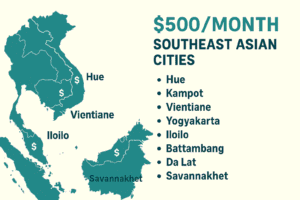
The cities listed below are candidates for an extremely budget-conscious approach, focusing on the bare necessities. Remember that costs can fluctuate based on season, specific location within the city, and rental duration.
1. Hue, Vietnam: The Imperial City on a Shoestring
Located in central Vietnam, Hue is a city steeped in history, best known for its sprawling Imperial City and a culinary scene that is both legendary and incredibly cheap. It moves at a slower, more deliberate pace than its northern or southern siblings, making it a perfect base for deep cultural immersion without the high costs of Ho Chi Minh City.
| The Vibe | Historic, peaceful, and intellectual. Life revolves around the Perfume River and the incredible food scene. It’s a city for writers, thinkers, and those who appreciate a quieter daily rhythm away from the usual backpacker chaos. |
| Realistic Budget Breakdown |
|
| Cost of Living Data |
Data sourced from Numbeo – Hue (Oct 2025). Prices are estimates and subject to change. |
| The Nomad Reality | The nomad community is small and scattered. Your “office” will be a quiet local cafe (like a Highlands Coffee) or your room. Internet is decent in the city center, but a 4G Viettel SIM card for backup is non-negotiable for serious work. |
| The Biggest Challenge | The rainy season (October to January) can be relentless, with potential for flooding. This can feel isolating if you’re not prepared for weeks of mostly indoor living. |
Pro Tip from Zoe: The best and cheapest rooms are found by walking around the residential areas on the south side of the river, away from the main tourist triangle. Look for handwritten “Phòng cho thuê” signs and be prepared to negotiate a monthly rate in person.
2. Kampot, Cambodia: Riverside Tranquility

This chilled-out riverside town in southern Cambodia is a long-standing favorite for expats and slow travelers seeking a break from the hustle. Its French colonial architecture, lush countryside, and proximity to the coast create a compelling, low-stress environment.
| The Vibe | Extremely laid-back, creative, and a bit rustic. Days are slow, spent by the river, exploring pepper plantations, or relaxing in a hammock. The atmosphere is social but centers around a few key expat-run bars and cafes. |
| Realistic Budget Breakdown |
|
| Cost of Living Data | While Numbeo lacks specific data for Kampot, costs are widely reported by expats to be 20-30% lower than in Phnom Penh. For reference:
Phnom Penh data sourced from Numbeo – Phnom Penh (Oct 2025). |
| The Nomad Reality | Internet is the main gamble. It has improved, but power cuts and signal drops are common. Success here requires patience and having multiple backup SIM cards (Cellcard and Smart). The expat community is well-established and easy to tap into. |
| The Biggest Challenge | Professional services and amenities are very limited. If your laptop dies or you need specialized equipment, you’ll have to make the 3-4 hour trip to Phnom Penh. |
Pro Tip from Zoe: Join the “Kampot Noticeboard” group on Facebook before you arrive. It’s the central hub for finding long-term rentals, selling second-hand scooters, and connecting with the local expat community for real-time advice.
3. Vientiane, Laos: The Understated Capital
As the capital of Laos, Vientiane defies expectations. It’s one of Southeast Asia’s most relaxed and manageable capitals, feeling more like a large town than a bustling metropolis. It lacks the chaos of Bangkok but offers a surprising level of comfort and affordability.
| The Vibe | Calm, bureaucratic, and riverside-focused. The French colonial influence is strong, and the pace of life is incredibly slow. It’s a city for quiet contemplation, not high-energy nightlife. |
| Realistic Budget Breakdown |
|
| Cost of Living Data |
Data sourced from Numbeo – Vientiane (Oct 2025). Prices are estimates. |
| The Nomad Reality | The expat community is small and often tied to NGOs or teaching. Internet in the city center is surprisingly reliable, but a local Unitel or ETL SIM is essential. Don’t expect a vibrant co-working scene. |
| The Biggest Challenge | Vientiane can feel *too* quiet for some. Finding a dynamic social circle requires proactive effort, and entertainment options are limited compared to other capitals. |
Pro Tip from Zoe: The visa situation in Laos requires planning. Most nomads get a 30-day tourist visa and then extend it once in Vientiane for another 30-60 days. Factor this extension cost (~$2 per day) into a separate visa fund.
4. Yogyakarta, Indonesia: Java’s Cultural Soul

Forget the polished zen of Bali. Yogyakarta (or “Jogja”) is Java’s vibrant, chaotic, and creative heart. As a major university city, the energy is youthful and artistic, offering deep immersion into Javanese culture, from batik art to gamelan music, without the tourist-inflated prices.
| The Vibe | Artistic, energetic, and deeply Javanese. It’s a city of students, artists, and activists. You’ll hear the call to prayer mixed with the buzz of scooters and the chatter of students debating over street-side coffee. |
| Realistic Budget Breakdown |
|
| Cost of Living Data |
Data sourced from Numbeo – Yogyakarta (Oct 2025). Prices are estimates. |
| The Nomad Reality | Living locally is key. The best deals on rooms (“kost”) are never online. Internet can be inconsistent in cheaper accommodation; a Telkomsel mobile hotspot is your lifeline. The social scene is more local- and student-focused than nomad-centric. |
| The Biggest Challenge | The language barrier can be significant outside of tourist areas. Learning basic Bahasa Indonesia isn’t just helpful, it’s essential for navigating daily life and getting local prices. |
Pro Tip from Zoe: To find a cheap “kost,” rent a scooter for a day and drive through the neighborhoods south of Jalan Malioboro or near the main universities (UGM). Look for the signs and just walk in to ask.
5. Iloilo, Philippines: The Urban Alternative
Located on Panay Island, Iloilo City is a developing urban center that offers a modern city feel without the overwhelming chaos and high costs of Manila or Cebu. With its historic mansions, riverside esplanade, and burgeoning food scene, it’s a comfortable and affordable entry point to the Philippines.
| The Vibe | Friendly, relaxed, and surprisingly organized for a Philippine city. It’s known as the “City of Love” for a reason—the locals (Ilonggos) are famously welcoming. It blends urban convenience with a provincial charm. |
| Realistic Budget Breakdown |
|
| Cost of Living Data |
Data sourced from Numbeo – Iloilo (Oct 2025). Prices are estimates. |
| The Nomad Reality | Internet consistency can be the biggest hurdle. While fiber is available, it’s not everywhere. It’s crucial to test the connection before committing to a rental. The social scene is primarily local, so be prepared to make friends with Filipinos rather than finding a large nomad group. |
| The Biggest Challenge | Finding a truly cheap, short-term (1-3 months) rental can be tough. The market is geared more towards yearly leases, so you’ll need to do some serious hunting in local Facebook groups. |
Pro Tip from Zoe: The Iloilo Esplanade is the city’s lifeline. It’s a fantastic, free place to walk, exercise, and people-watch. Many cafes with decent Wi-Fi are located just a short walk from it, making it a great area to base yourself.
6. Battambang, Cambodia: The Authentic Outlier
If Kampot is laid-back, Battambang is practically asleep—in the best way possible. As Cambodia’s second-largest city, it retains a small-town feel, completely devoid of the tourist crowds of Siem Reap. This is the place for those who want a truly authentic, quiet, and extremely low-cost Cambodian experience.
| The Vibe | Charming, sleepy, and artistic. Known for its well-preserved French colonial buildings and a small but vibrant local arts scene. It’s a city where you quickly become a “regular” at your favorite spots. |
| Realistic Budget Breakdown |
|
| Cost of Living Data | Numbeo data is unavailable for Battambang, but it is widely considered one of the cheapest livable cities in Southeast Asia, with costs significantly lower than Phnom Penh.
Phnom Penh data for reference from Numbeo – Phnom Penh (Oct 2025). |
| The Nomad Reality | This is for the highly independent nomad. The community is minimal, and your social life will likely be with locals and a handful of long-term NGO workers. Internet reliability is a major concern; you are entirely dependent on mobile data. |
| The Biggest Challenge | Isolation. If you thrive on social energy and networking, Battambang can feel very quiet. It’s a place for deep work and self-reflection, not for parties and meetups. |
Pro Tip from Zoe: Many guesthouses offer huge discounts for monthly stays. Don’t book online. Arrive, walk around the area near Psar Nat (the central market), and ask for their monthly rate directly. You’ll often get a price 50% lower than the daily rate.
7. Da Lat, Vietnam: The City of Eternal Spring
Nestled in the Central Highlands, Da Lat is Vietnam’s escape from the tropical heat. Its cool, “eternal spring” climate, pine forests, and French-inspired villas make it feel like a different country entirely. It’s popular with Vietnamese tourists but remains a peaceful and affordable haven for nomads.
| The Vibe | Romantic, tranquil, and nature-focused. The city is known for its flowers, coffee plantations, and surrounding mountains. It’s a place for hiking, enjoying the cool weather, and cozying up in cafes. |
| Realistic Budget Breakdown |
|
| Cost of Living Data |
Data sourced from Numbeo – Da Lat (Oct 2025). Prices are estimates. |
| The Nomad Reality | The internet is generally reliable in the city center. The cooler weather is a huge plus for productivity. However, the social circle is primarily local, so connecting with other remote workers requires more effort via Facebook groups. |
| The Biggest Challenge | It’s not a transport hub. Getting in and out of Da Lat can be more time-consuming and expensive than from coastal cities, making visa runs or weekend trips more of a hassle. |
Pro Tip from Zoe: The best coffee in Da Lat isn’t always in the trendiest cafes. Look for small, local roasters around the city that supply the big shops. You can often buy high-quality beans directly from them for a fraction of the price to brew in your room.
8. Savannakhet, Laos: The Mekong Border Town
A quiet city on the Mekong River bordering Thailand, Savannakhet is primarily a commercial hub, not a tourist destination. For the nomad seeking absolute rock-bottom costs and a truly off-the-beaten-path experience, it offers an unfiltered slice of daily life in provincial Laos.
| The Vibe | Sleepy, functional, and very local. Life moves at a glacial pace. It’s a place to observe, not to do. The decaying French architecture gives it a unique, haunting charm. |
| Realistic Budget Breakdown |
|
| Cost of Living Data | Specific data for Savannakhet is unavailable. It is significantly cheaper than Vientiane across all categories, especially rent and food.
Vientiane data for reference from Numbeo – Vientiane (Oct 2025). |
| The Nomad Reality | This is the ultimate test of self-reliance. Internet will be slow and potentially unreliable. The expat presence is minimal to non-existent. Your interaction will be almost entirely with locals who speak little to no English. |
| The Biggest Challenge | A near-total lack of infrastructure for remote work and socializing. This is for the hardened, budget-focused nomad who needs nothing more than a room, basic food, and a place to focus without distractions. |
Pro Tip from Zoe: Savannakhet’s position on the border with Thailand (across from Mukdahan) is its strategic advantage. It’s a common point for visa runs, and you can cross the Friendship Bridge for a day to access Thai ATMs, better shopping, and a change of scenery.
Realities and Challenges of a $500/Month Budget
Living on $500/month as a digital nomad in Southeast Asia means embracing constant uncertainty and significant trade-offs.
| The $500/Month Dream | The Hard Reality |
|---|---|
| “I’ll find cheap, long-term housing.” | Cheap housing means unreliable Wi-Fi that jeopardizes your work and income. |
| “I can stay for months on a tourist visa.” | Long stays require visa runs costing $50-$150+, breaking your monthly budget. |
| “I’ll live a simple, social life.” | You’re priced out of most nomad events, risking social isolation. |
| “I’ll save money on healthcare.” | You are one minor illness away from a budget crisis and one major accident away from financial disaster. |
| “I’ll be free from financial stress.” | The constant pressure to earn and save creates a stressful work-survive cycle, leading to burnout. |
Making it Work
Living on $500 a month in Southeast Asia is not passive; it requires active, strategic choices every day. Here are key takeaways and practical steps:
- Choose Your City Wisely: Research the actual local cost of long-term basic rentals and food in potential cities, not just tourist prices. Cities listed here are starting points, but local research on accommodation groups and forums is essential.
- Prioritize Accommodation: Your biggest cost sink. Focus relentlessly on finding the cheapest long-term room. Be prepared for basic amenities – fan only, shared bathroom, simple furnishings. Look on local classifieds (use translation tools), ask locals, and negotiate long-term rates.
- Eat Local, Cook Simply: Commit to eating street food or cooking simple meals from local markets. Avoid Western restaurants or cafes for daily food. Learn a few basic phrases to order food or shop at markets. Check out guides on street food safety and options.
- Minimize Transport Costs: Walk, cycle, or use the cheapest local buses/minivans. Avoid taxis or ride-sharing apps except when absolutely necessary or for safety late at night.
- Connectivity Strategies: Invest in a reliable local SIM card with a generous data package. Identify cafes or public spaces with free, stable Wi-Fi you can access. Have a small data reserve for emergencies. Consider a portable power bank.
- Build a Small Emergency Fund: Even $100-200 can be critical for unexpected issues (minor health, visa hiccup, broken phone). Building this is hard on $500/month, but vital.
- Find Free Activities: Explore parks, walk around local neighborhoods, visit free temples or markets, join language exchange groups, attend free community events.
Conclusion
Living on $500 a month in Southeast Asia is less about simply existing and more about mastering the art of minimalist, highly localized living while maintaining your remote work obligations. It is challenging, requires significant sacrifice compared to a more standard nomad budget, and is certainly not for everyone.
However, for those with extremely low earning requirements or significant savings goals, and a willingness to fully immerse in local life without typical expat comforts, it can unlock experiences inaccessible to others.
Southeast Asia offers incredible opportunities for remote workers, including the possibility of living very affordably. Achieving a budget of $500 a month is at the extreme end of this spectrum, demanding careful preparation, resilience, and a deep commitment to living simply. If you’re ready for the challenge, these cities offer a potential pathway.
On the opposite end of the Asian travel spectrum are destinations like Bhutan, which enforce a ‘High Value, Low Volume’ tourism policy. If you are curious about the economic contrast between a $500/month DIY lifestyle and a fully inclusive regulated experience, it is fascinating to compare these budget figures to how much a Bhutan tour costs.