


Landing in Tokyo’s neon-drenched Narita, Bangkok’s bustling Suvarnabhumi, or Singapore’s futuristic Changi for the first time is a sensory explosion. The hum of unfamiliar languages, the dizzying scale, the wall of tropical heat hitting you at the jet bridge – it’s exhilarating… and utterly overwhelming.
After 15 years navigating Asia’s gateways (including a memorable 3 AM arrival in Manila where everything went wrong), I’ve learned one truth: Your Asian adventure succeeds or stumbles the moment you step off the plane.
This guide is packed with practical airport hacks that first-time visitors to Asia can use to navigate arrivals, transfers, and departures smoothly. No tourist traps. No unnecessary stress. Just straight-to-the-point advice for savvy travelers.
1) Your First 60 Minutes
The Immigration Hustle: Skip the Lines
The Scene: A cavernous hall, snaking queues, jet-lagged travelers.
The Hack:
Pre-Print Everything: Visa, hotel booking, return ticket. Stapled together. Border agents love paper trails.
Fill Forms on the Plane: Grab that arrival card mid-flight. Use a blue pen (black often isn’t accepted!). Pro Tip: Stash a pen in your passport holder.
Follow the “Express” Signs: Many airports (e.g., Seoul Incheon, Taipei Taoyuan) have automated gates for certain passports. Look for the e-Gate icons!
Observation is Key: Scan queues before joining. Families take forever. Aim for lines with business travelers.
Connectivity: Your Digital Lifeline (Beyond SIMs)
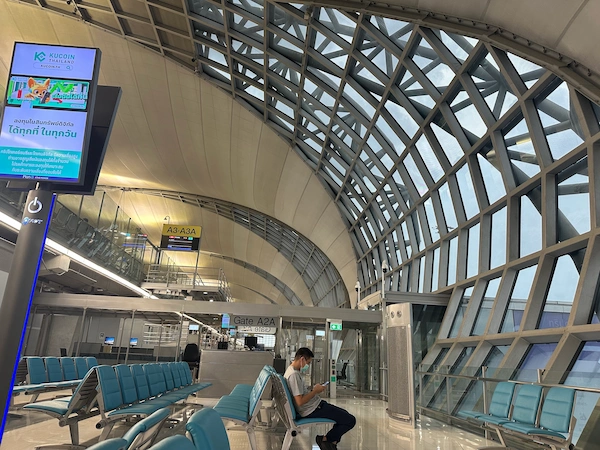
The Pain: No Google Maps. No Grab. No translation. Panic.
The Hacks:
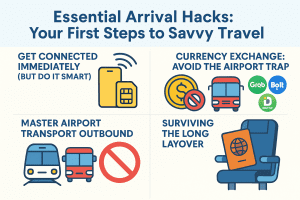
eSIMs: The Undisputed Champion: Buy before you fly (Airalo, Nomad). Activate before deplaning. Instant 4G. No fumbling at kiosks. (I saved 45 minutes in Jakarta this way!).
Physical SIMs:
- Avoid customs-exit vendors (20% markup!).
- Find official booths (e.g., Docomo in Japan, AIS/TRUE in Thailand).
- Ask: “Unlimited data, 7 days, no calls?” (Saves $$).
- Essential: Ensure your phone is unlocked.
Wi-Fi Wisdom:
- Free airport Wi-Fi often requires a local number. Catch-22!
- Solution: Find “Visitor” desks. They’ll give you a login voucher.
- Download offline maps (Google Maps) & translation packs before leaving home.
2) Don’t Get Burned on Currency Exchange
Airport exchange counters are notorious for terrible rates. Only exchange enough cash for your first taxi/train fare and a small buffer.
ATM First: Withdraw just enough for transport + emergency snacks (¥10,000 / ฿2000 / ₱2000). Use global network ATMs (Plus, Cirrus). Decline “dynamic conversion” – your bank’s rate is better.
Airport Exchange = Emergency Only: Need cash now? Compare rates at multiple booths. Avoid “0% Commission!” traps – their rates are worse.
The Downtown Goldmine: Head to authorized money changers (e.g., SuperRich in Bangkok, Czarina in Manila) or major banks for bulk exchange. Rates are shockingly better.
Travel Cards? Wise (formerly TransferWise) is great for spending, but cash is KING for street food, buses, small vendors.
For more tips about exchange in Asia, here’s an article for you, specifically if you’re traveling to Thailand.
3) Know Your Ride Options Before You Land
The most common mistake first-time travelers make? Figuring out airport transportation after arriving. Do your homework.
Here’s a quick rundown:
Airport Trains: Fast, reliable, and often cheaper than taxis. Great for cities like Bangkok, Tokyo, and Seoul.
Public Buses: Cheap but slower. Good for budget travelers with time to spare.
Official Taxis: Only use ones from official stands. Insist on the meter or agree on the price upfront. Avoid random touts.
Ride-Share Apps: Apps like Grab or Bolt are safe, reliable, and affordable across much of Asia. Download the app before your flight and look for the airport’s designated pickup area.
Transport Checklist:
☑️ Screenshot your hotel address + phone number (local language).
☑️ Download offline transport maps (Citymapper works in many Asian cities).
☑️ Have small bills for bus/train tickets. Machines hate $100 bills!
4) Make the Most of Layovers
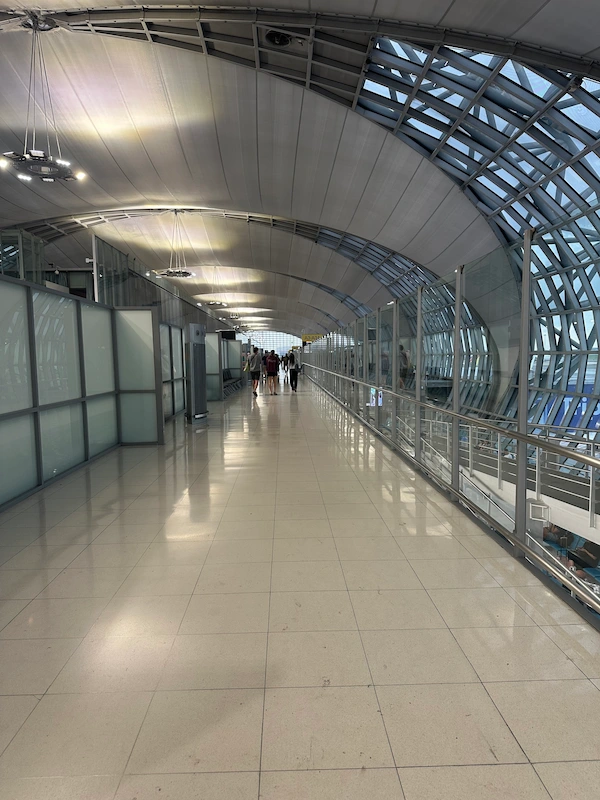
Stuck for a few hours? Good news: some Asian airports are worth exploring.
- Free Snooze Zones: Changi (SG) has designated lounges with recliners. Incheon (ICN) boasts quiet “Rest Zones.” Look for dimly lit gates.
- Capsule Hotels: Book ahead! (e.g., 9 Hours in Narita, Aerotel in KLIA). ~$20-50 for 3-6 hours of private, shower-equipped sanity. Worth every penny.
- Lounges for Non-Elites: Priority Pass (via premium credit cards) or buy one-time access ($25-60) via LoungeBuddy or Klook. Includes food, drinks, showers, Wi-Fi. Calculate: Is 4+ hours of comfort worth $40? Usually yes.
5) Beat the Language Barrier with Tech
Most airport staff speak some English, but outside of customer service zones, communication can get tricky.
Have Google Translate (with offline packs) ready on your phone. Use text translation or even photo translation for signs and menus. It’s a simple tool that saves time and misunderstandings.
6) Eat Like a Local—Even at the Airport
Skip the overpriced chains near international gates. Look for local food courts or staff canteens, often tucked away in lower levels or older terminals.
Staff Canteens/Hawker Centres:
- Changi (T1): Basement “Hawker Centre” – Hainanese Chicken Rice for $4.
- Hong Kong (HKG): Terminal 2 “Food Street” – authentic dim sum.
- Narita (NRT): Terminal 1 B1F “Restaurant Street” – legit ramen shops.
Convenience Stores Are Lifesavers: 7-Eleven, FamilyMart, Lawson’s.
- Onigiri (rice balls): $1-2.
- Bento boxes: $3-5.
- Local snacks & drinks at sane prices.
Refill, Don’t Rebuy: Carry an empty water bottle. Fill at filtered stations (ubiquitous in Asian airports post-security). Saves $3/bottle x 5 times = Lunch!
7) Expect Delays
If your flight is delayed or canceled:
- Go Directly to Your Airline’s Desk. Don’t wait for announcements.
- Know Your Rights (EC 261 / Local Laws): Demand meals, accommodation, rebooking. Be polite but firm.
- Leverage Apps: FlightAware for real-time status, AirHelp for compensation claims later.
- Get it in Writing: Ask for documentation of delay/cancellation reason for insurance.
8) Luggage Strategy = Sanity Saver
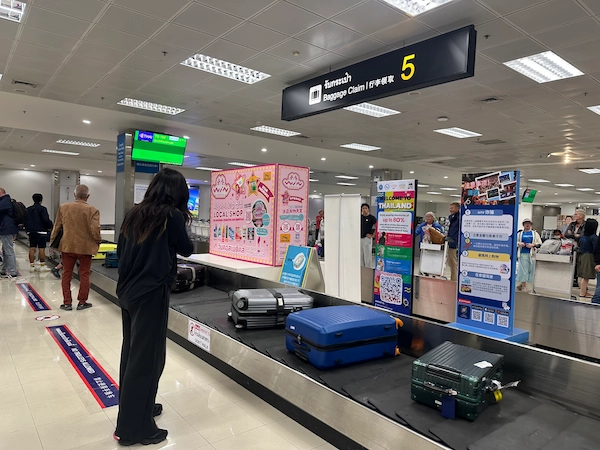
Before Flying:
Take a phone photo of your bag and the luggage tag receipt.
Tie a bright, unique strap/ribbon on your handle.
If Lost:
File a PIR (Property Irregularity Report) at the airline desk before leaving baggage claim.
Get a copy + contact details.
Check insurance coverage immediately. Know your claim process.
Now, want to grab your bag quickly?
Sit near the front of the plane so you get to baggage claim earlier.
Mark your bag with a bright tag or ribbon to avoid mix-ups.
Take a photo of your bag before check-in in case it’s lost.
It might seem minor, but this small step saved me in Manila when someone walked off with my identical suitcase.
Pre-Flight Prep
This section lists what you need to do BEFORE your upcoming flight to Asia.
App Arsenal
- Navigation: Google Maps (Offline!), Citymapper
- Transport: Grab, Gojek, local metro apps
- Translation: Google Translate (Offline Packs!), Papago (Best for Korean/Japanese)
- Flights: FlightAware, airline app
- Money: XE Currency, Wise
- Communication: WhatsApp, Line (Japan/Thailand), KakaoTalk (Korea)
Document Duplication
Email yourself: Passport scan, visa, insurance, itinerary.
Physical photocopy in separate bag.
Power Up
Universal adapter (Type A/B/C common in Asia).
High-capacity power bank (20,000mAh+). Airports are outlet battlegrounds!
Know Your Airport
Study terminal maps online. Where’s immigration? Baggage claim? Train station?
Check the airport’s official website for unique amenities (nap pods? showers? free tours?).
Conclusion: Walk Out Like a Boss
Asia’s airports aren’t obstacles; they’re your first taste of the continent’s incredible energy, efficiency, and sometimes, endearing chaos. By mastering these hacks – from the eSIM activation to locating the hidden ramen joint – you transform potential panic into quiet confidence.
Remember:
Research is your superpower. Know your specific airport’s quirks.
Observation beats rushing. Stand still for 60 seconds. Orient yourself.
Kindness unlocks doors. A smile and “hello” in the local language (“Xin chào!”, “Konnichiwa!”, “Sawasdee krap!”) works wonders with staff.
Now take a deep breath, grab your bag, and step out. Your adventure starts now. Got a specific airport horror story or genius hack? Share it below – let’s learn from each other!