


Imagine your perfect retirement: the gentle lull of turquoise waves, the warmth of a golden sun, and a community where life moves at a more graceful pace. This isn’t just a daydream; it’s a reality waiting for you on one of Thailand’s idyllic islands.
But which island truly delivers on the promise of paradise while ensuring your comfort, safety, and access to quality healthcare? This guide moves beyond the glossy brochures to give you the real story. We’ve pinpointed the specific havens that offer that perfect blend of blissful tranquility and the practical amenities essential for senior living.
Your journey to finding a sustainable and serene island home starts now.
Key Criteria for a Secure and Comfortable Retirement
When choosing a Thai island for long-term senior living, practical considerations outweigh tourist attractions. The ideal island offers a balance between tranquility and convenience, with easy travel access, a peaceful environment, and accessible amenities for daily life.
Key factors include:
- reliable infrastructure
- safety
- availability of healthcare
- diverse food options
- dependable internet
Island Spotlights: A Detailed Guide to Practical Long-Term Stays
For those considering a peaceful, extended stay or retirement in Thailand, selecting the right island involves prioritizing accessibility, a tranquil environment, robust local amenities, and safety. Here is a detailed look at some of the most practical options, updated with current information.
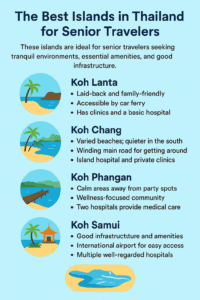
Koh Lanta
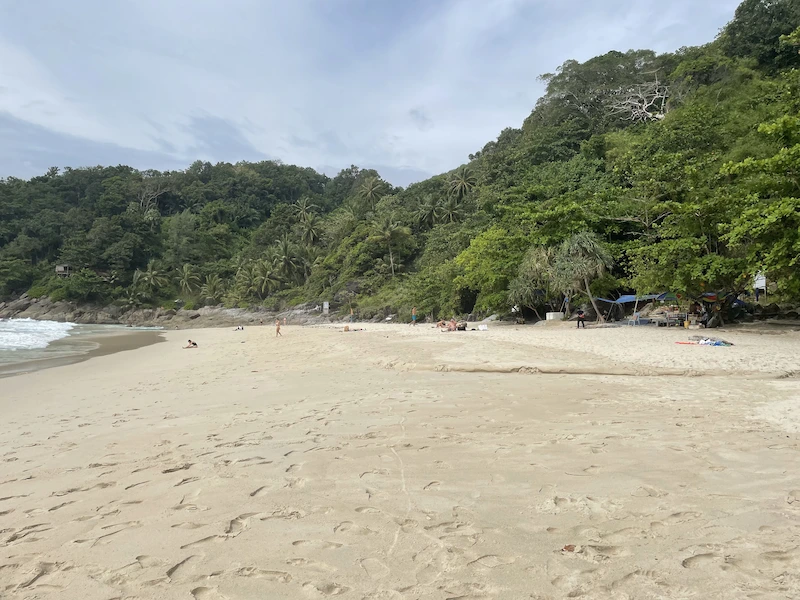
Often recommended for families and older travelers, Koh Lanta offers a perfect blend of accessibility and a relaxed, slow-paced lifestyle.
- Atmosphere & Lifestyle: The island is known for its tranquil and laid-back vibe. It is not a party destination, making it ideal for those seeking peace and quiet. The pace of life is noticeably slower, encouraging relaxation.
- Best Suited For: Retirees and long-term stayers who want a quiet, budget-friendly island with a good balance of amenities and nature without excessive development.
- Accessibility & Transport: Koh Lanta is accessible via car ferry and speedboat from the mainland. The most common way to get around is by renting a scooter, though caution is advised. Tuk-tuks and private taxis are also available for transport.
- Amenities & Infrastructure: The island is less developed than giants like Phuket or Samui, lacking large shopping malls or cinemas. However, it is well-equipped for daily needs with convenience stores (7-Eleven), small supermarkets, and pharmacies. The Old Town features charming, quirky cafes and shops set in historic wooden stilt houses.
- Healthcare: Healthcare facilities include several clinics, numerous pharmacies, and a local hospital equipped to handle basic medical situations. For more serious conditions, patients would need a transfer to larger hospitals on the mainland in Krabi or Trang.
- Cost of Living: Koh Lanta is considered very budget-friendly. It’s possible to find beachfront bungalows for under $50 per night, and daily expenses like massages can be as low as $7.
Koh Chang
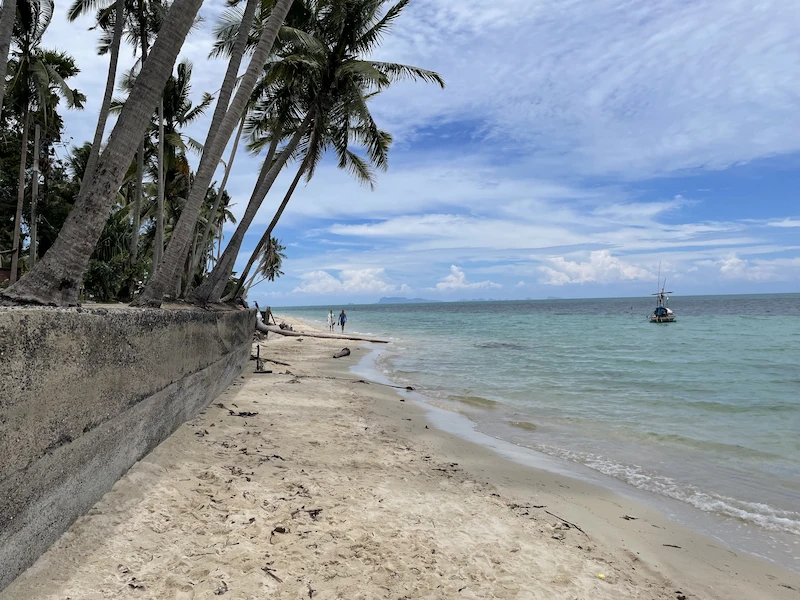
As Thailand’s third-largest island, Koh Chang presents a diverse landscape with a more peaceful atmosphere compared to heavily touristed islands.
- Atmosphere & Lifestyle: The island offers a laid-back environment with a good balance of relaxation and adventure. While some west coast beaches like White Sand Beach can be busy, quieter spots are abundant, particularly in the south (e.g., Bang Bao, Salak Phet) and in areas like Klong Prao and Kai Bae.
- Best Suited For: Those who appreciate nature and a quieter setting but still want access to good restaurants and a range of accommodation. It’s increasingly popular with European retirees and expats.
- Accessibility & Transport: The island is reached by a car ferry from the mainland. The main coastal road is scenic but can be very winding and hilly in sections, requiring careful driving.
- Amenities & Infrastructure: Koh Chang has a well-established infrastructure with banks, ATMs, supermarkets, and a wide variety of restaurants. Due to most of the island being a protected national park, development is limited, which helps preserve its natural charm and enhances long-term property value.
- Healthcare: There is a government hospital and several private clinics on the island that can provide essential medical services.
- Community: A strong sense of community exists among the growing number of long-term residents and expats.
Koh Phangan (Specific Areas)

While famous for its Full Moon Parties, Koh Phangan is a large and multifaceted island with many peaceful, quiet corners perfect for a long-term stay. The party scene is largely contained to Haad Rin, leaving the rest of the island serene.
- Atmosphere & Lifestyle: The island offers a unique blend of convenience without the over-development seen on Koh Samui. Different areas cater to vastly different lifestyles, from wellness and yoga to quiet local life.
- Best Suited For: Individuals seeking a balanced lifestyle, with options for both social or wellness activities and quiet seclusion.
- Key Areas for a Quiet Stay:
- Thong Sala: As the island’s capital and main port, it’s a bustling hub with banks, shops, a variety of restaurants, and the main hospitals. Its central location makes it a convenient base for exploring the island, and the popular Phantip Night Market is a must-visit for food lovers.
- Srithanu: This area on the west coast is the island’s spiritual and wellness center. It is renowned for its numerous yoga and meditation retreats, attracting a community of health-conscious individuals and digital nomads. The area is a mecca for healthy, vegan, and vegetarian food.
- Chaloklum: A tranquil fishing village on the northern coast with a distinct local vibe and minimal tourist crowds. It features a long, scenic bay and is a primary departure point for diving and snorkeling trips.
- Healthcare: The island is equipped with two hospitals, located in and around the main town of Thong Sala.
- Transport: The island’s terrain can be hilly. Getting around typically involves renting a scooter or using the local shared taxis (songthaews).
Koh Samui
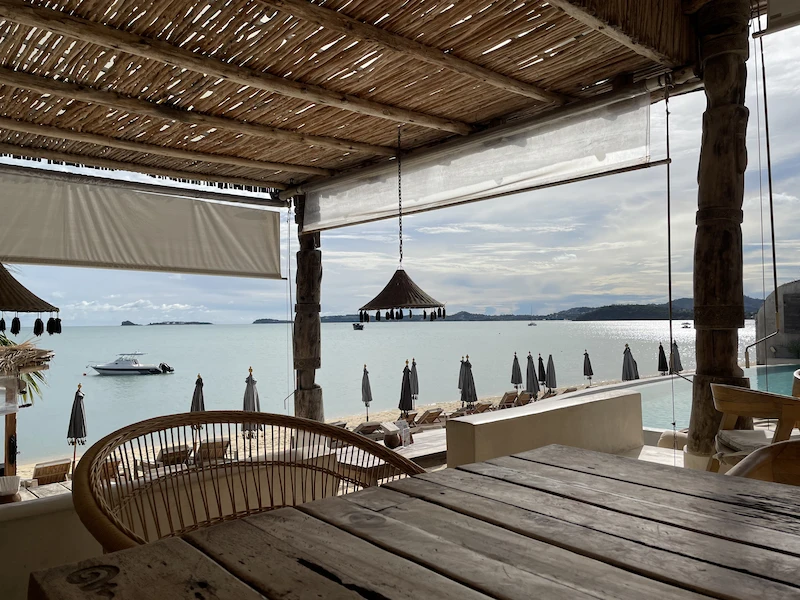
Koh Samui is more developed and generally busier, but its superior infrastructure, especially regarding healthcare, makes it a top contender for many retirees.
- Atmosphere & Lifestyle: The island offers a blend of modern comforts and a laid-back tropical lifestyle. The key is choosing the right location, as some areas are significantly quieter than others. A large, active expat community thrives here.
- Best Suited For: Retirees for whom immediate access to high-quality healthcare is a top priority and who prefer more developed infrastructure and amenities, including direct international flights.
- Key Areas for a Quiet Stay:
- Mae Nam: Located on the northern coast, this area is known for its tranquil beachfront lifestyle, attracting expats who seek serenity and wellness-focused living.
- Bophut: Offers a charming mix of traditional Thai-Chinese culture in its famous Fisherman’s Village and a more contemporary, relaxed lifestyle. It provides a perfect blend of serenity and vibrancy.
- Southern Coast: The southern areas of the island are generally less developed and offer a more peaceful pace of life.
- Accessibility & Transport: A major advantage is Samui International Airport, which provides easy connections to Bangkok, Singapore, and other international destinations.
- Healthcare: This is Samui’s standout feature for retirees. The island has four private, international-standard hospitals, including the well-regarded Bangkok Hospital Samui, with English-speaking staff and modern facilities.
- Cost of Living: The cost of living is higher than on the other islands but remains affordable compared to Western countries. A frugal monthly budget for a single person can be around $1,500 (฿50,000), while a more comfortable lifestyle might cost $2,000 (฿66,000) or more. Accommodation costs vary significantly by area, with rentals in quieter spots like Mae Nam being considerably cheaper than in bustling Chaweng.
Your Practical Guide to Long-Term Island Life
A blissful retirement in Thailand depends on a solid foundation of practical planning. Here is a breakdown of the essential factors you must address for a secure and sustainable long-term stay on a Thai island.
1. Budgeting: Understanding the Cost of Living
While Thailand is affordable, island life has its own economy. A clear budget is crucial for financial peace of mind.
- Estimated Monthly Budget: For a comfortable, non-extravagant lifestyle, expect a monthly budget of 35,000 to 70,000+ THB (approximately $1,000 – $2,000+ USD). This figure can vary significantly based on your island choice and spending habits.
- Accommodation Costs: Your biggest expense will be housing. Secure significant savings by negotiating long-term rentals (6-12 months).
- Koh Lanta / Koh Chang: Expect to pay 10,000 – 25,000+ THB per month for a comfortable one-bedroom house or apartment.
- Koh Samui: Prices are generally higher, starting around 15,000 – 20,000 THB and increasing from there for similar properties.
- Managing Food Expenses: You can control your food budget effectively.
- Local Eating: Embrace delicious and inexpensive Thai food from local restaurants and street stalls.
- Home Cooking: Utilize the vibrant fresh markets for produce, meat, and seafood to cook at home.
- Western Groceries: Be aware that imported Western goods and dining at tourist-focused restaurants will significantly increase your monthly expenses.
2. Healthcare: Your Top Priority
For senior travelers, access to reliable healthcare is non-negotiable. This should be a primary factor in choosing your island.
- On-Island vs. Mainland Hospitals:
- Best-Equipped Islands: Koh Samui is a standout, boasting international-standard hospitals capable of handling complex medical needs directly on the island.
- Most Other Islands: Islands like Koh Lanta and Koh Chang have clinics and small hospitals for routine issues. However, any serious medical emergency will require evacuation to a larger hospital on the mainland (e.g., in Trang, Krabi, or Bangkok).
- Essential Health Insurance: Before you travel, secure a comprehensive international health insurance policy. It is critical that your plan includes coverage for medical evacuation.
- Emergency Planning: Upon arrival, identify the location of the best local clinic and know the exact procedure, time, and cost involved in getting to the nearest major mainland hospital.
3. Visas: Securing Your Legal Stay
Navigating the Thai visa system is essential for a stress-free, long-term stay. Do not leave this to the last minute.
- For Stays Beyond 30-60 Days: You will need a proper visa. Common options for retirees and long-term visitors include:
- Tourist Visa (TR): Allows for an initial 60-day stay, which can typically be extended for another 30 days.
- Non-Immigrant “O” Visa: Often used as a basis for other long-term extensions.
- Non-Immigrant “O-A” (Long Stay/Retirement Visa): Specifically for applicants aged 50 and over who meet specific financial requirements (e.g., a security deposit in a Thai bank or proof of monthly income).
- Crucial Advice: Visa regulations are subject to change. Always consult the official website of the Royal Thai Embassy or Consulate in your home country and the Thai Immigration Bureau for the most current requirements and application procedures.
4. Community: Building Your Social Network
Tranquility is wonderful, but connection is vital for well-being. Proactively building a social circle will greatly enhance your experience.
- Connect Online: The easiest way to start is by joining island-specific Facebook groups. Search for terms like “Koh Lanta Expats,” “Samui Community,” or “Farang Koh Chang” to find established communities. These groups are invaluable for advice, social event information, and making initial connections.
- Engage in Local Life:
- Participate in activities like yoga classes, volunteer opportunities, or local festivals.
- Become a regular at a local café or market to build familiarity and relationships.
- Consider taking Thai language or cooking classes to deepen your connection to the culture and community.
Conclusion: Your Island Retirement, Realized
Choosing a Thai island for retirement is a balance between idyllic dreams and practical needs. Islands like Koh Lanta, select areas of Koh Chang and Koh Phangan, and quieter spots on Koh Samui offer the best mix of tranquility, accessibility, and essential services for a comfortable long-term stay.
Success hinges on prioritizing practicalities such as reliable healthcare, ease of travel, and daily conveniences alongside the desire for a peaceful environment. While navigating visas and planning for medical needs requires effort, these challenges are manageable with proactive research.
To turn this dream into a reality, a scouting trip is invaluable. Before committing, connect with local expat communities online for current, on-the-ground advice, and always consult official embassy or immigration websites for the latest visa information. With thoughtful planning, a serene and fulfilling island retirement is well within reach.