

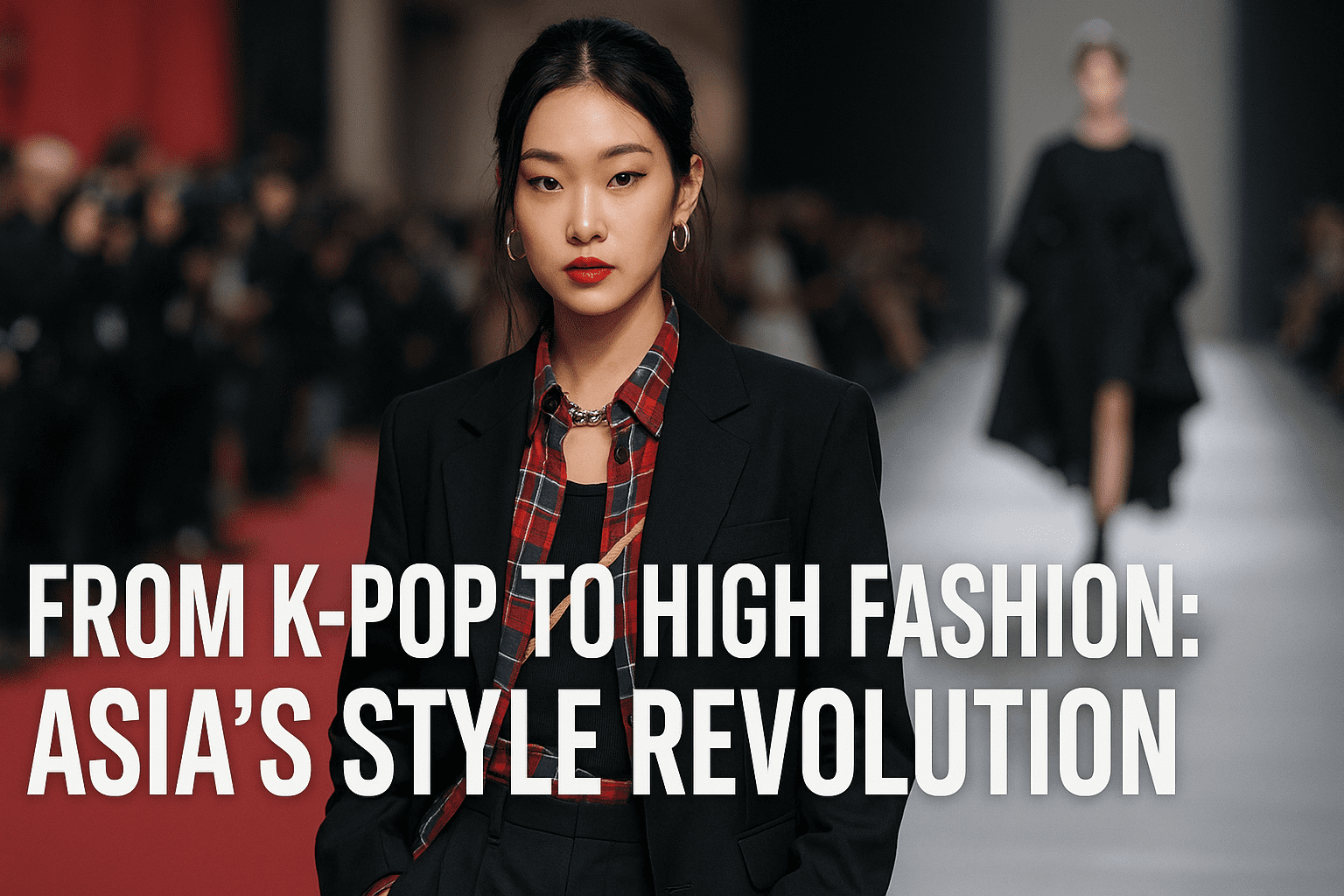
Once viewed by the global fashion industry primarily as a manufacturing hub, Asia has dramatically shifted its role to become a powerhouse of creativity and a primary source of worldwide trends.
This transformation, fueled by a rich history, groundbreaking designers, and the global phenomenon of K-Pop, has firmly placed the continent at the center of the fashion universe. This article explores the multifaceted journey of Asia’s style revolution, from its ancient roots to its current status as a trendsetting force.
The Historical Foundations of Asian Style
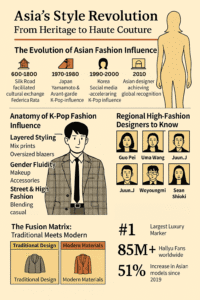
To truly appreciate the current wave of Asian fashion, it’s essential to understand its deep and diverse origins. For millennia, traditional garments across the continent were more than just clothing; they were intricate narratives woven from fabric.
These pieces communicated everything from social status and marital standing to regional identity and spiritual beliefs.
- Korea’s Hanbok: Known for its vibrant colors and graceful lines, the hanbok was a symbol of Korean culture, with specific designs and colors indicating the wearer’s position in society. Modern designers are now reinterpreting this traditional attire, bringing it to global audiences through collaborations with K-pop groups and historical dramas.
- Japan’s Kimono: This iconic T-shaped robe is celebrated for its elegance and the artistry of its textiles. Historically, the kimono’s design and material signified the wearer’s status and the occasion. Its minimalist sophistication and reverence for simplicity continue to influence designers today.
- India’s Sari: A single piece of cloth draped in numerous ways, the sari is a testament to the diversity within Indian culture. The patterns, fabrics, and draping styles vary from region to region, each telling a unique story of its origin.
- China’s Hanfu and Qipao: With a history spanning thousands of years, the Hanfu represents the traditional clothing of the Han Chinese. In the 20th century, the Qipao (or Cheongsam) emerged, evolving from a loose-fitting Manchu dress to a stylish, form-fitting garment that symbolized a new era of modernity.
For centuries, the Silk Road facilitated a vibrant exchange of textiles and aesthetics between the East and West. However, the colonial era shifted this dynamic, with Western fashion becoming dominant.
Now, a renewed appreciation for these traditional garments is fueling a resurgence of interest, with designers blending ancient techniques with modern sensibilities.
Reshaping Global Fashion’s Silhouette
In the latter half of the 20th century, a group of revolutionary Japanese designers stepped onto the Paris fashion scene and irrevocably altered its landscape. In the early 1980s, designers like Yohji Yamamoto, Rei Kawakubo of Comme des Garçons, and Issey Miyake introduced a radically different aesthetic that challenged the prevailing Western ideals of glamour.
Their designs were characterized by:
- Deconstruction and Asymmetry: They played with unconventional cuts and oversized silhouettes, often leaving edges raw and unfinished.
- Monochromatic Palettes: Yamamoto, in particular, was known for his extensive use of black, believing it to be a color that is both modest and arrogant, lazy and mysterious.
- Innovative Textiles: Issey Miyake was a pioneer in using technology to create his signature pleated fabrics, which were both comfortable and elegant.
This “Japanese New Wave” was initially met with shock and even derision, with some critics labeling it the “Hiroshima bag-lady look.”
However, their intellectual and philosophical approach to clothing resonated deeply within the industry, proving that Asian designers could not only participate in the global fashion conversation but lead it in new and thought-provoking directions.
The K-Pop Catalyst: Igniting a Global Fashion Frenzy
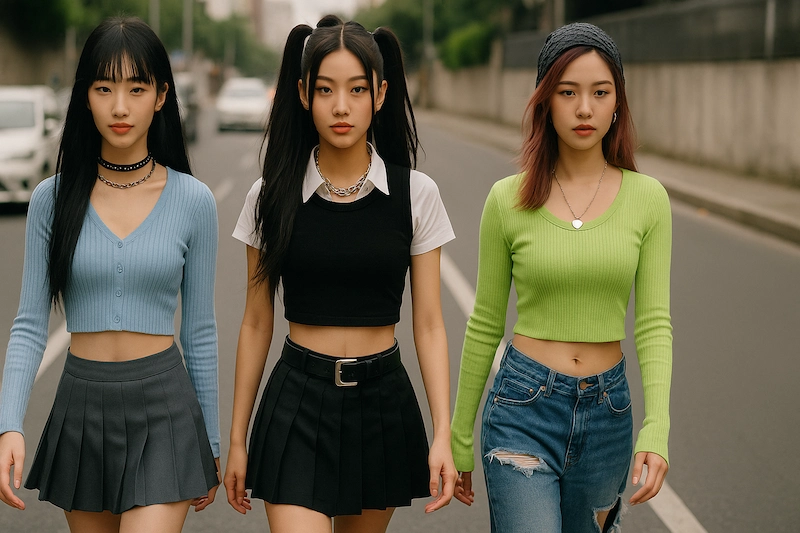
While Japanese designers were making waves in haute couture, a cultural phenomenon was brewing in South Korea that would democratize Asian fashion’s influence on a global scale: K-Pop.
K-Pop’s impact on fashion is multifaceted:
- Trendsetting Power: K-Pop idols are not just followers of trends; they are creators. Their meticulously styled outfits in music videos and public appearances often cause items to sell out within minutes.
- Blending Styles: They masterfully mix high fashion with streetwear, creating looks that are both aspirational and accessible to their global fanbase.
- Gender Fluidity: K-Pop has been instrumental in pushing the boundaries of menswear, with male idols frequently embracing makeup, elaborate accessories, and androgynous silhouettes.
- Global Ambassadors: The immense popularity of groups like BTS and BLACKPINK has led to major luxury brands appointing them as global ambassadors, solidifying the bridge between pop culture and high fashion.
The rise of the “Korean Wave” (Hallyu) has also brought international recognition to South Korean brands and designers, with Seoul Fashion Week now considered one of the most important events in the industry.
How Social Media Fueled the Revolution
The rapid global spread of Asia’s style revolution would not have been possible without the internet and social media. Platforms like Instagram, TikTok, and Weibo have completely changed how fashion trends are born and disseminated.
- Democratization of Fashion: Anyone with a smartphone can now become a style influencer, bypassing the traditional gatekeepers of the fashion industry. A street style look from Tokyo can go viral and influence global trends in a matter of hours.
- Direct Engagement: Social media allows K-Pop idols and designers to connect directly with their fans, fostering a sense of community and brand loyalty.
- Rise of E-Commerce: The digital wave has also fueled the growth of online shopping, making it easier than ever for consumers worldwide to purchase clothing from Asian brands.
This digital interconnectedness has created a dynamic and ever-evolving fashion ecosystem, where inspiration flows freely across borders.
Contemporary Asian Designers on the World Stage
Building on the legacy of the Japanese pioneers and amplified by the K-Pop phenomenon, a new generation of talented designers from across Asia is gaining international acclaim.
- China: Designers like Guo Pei, known for her opulent, couture creations (famously worn by Rihanna at the Met Gala), and Huishan Zhang, who masterfully blends Eastern and Western aesthetics, are showcasing the incredible craftsmanship of Chinese design.
- India: Bibhu Mohapatra is celebrated for his exquisitely detailed evening gowns that have even been worn by former First Lady Michelle Obama. Ruchika Sachdeva of Bodice is making a name for her sustainable and ethically produced designs.
- South Korea: Beyond the influence of K-Pop, designers are creating innovative and sought-after brands. Labels like Stylenanda and Gentle Monster have gained a cult following for their unique and contemporary designs.
- A Broader Movement: Designers from Nepal, Pakistan, and Thailand are also making their mark, often incorporating traditional textiles and craftsmanship into their modern collections.
These designers are not simply creating beautiful clothes; they are telling stories of their heritage and cultural identity, and the world is eagerly listening.
A More Inclusive Future: Representation and Diversity
The rise of Asian fashion is also part of a larger conversation about the need for greater diversity and representation in the industry. For too long, the fashion world has been dominated by a narrow, Eurocentric standard of beauty.
The increasing visibility of Asian designers, models, and influencers is challenging these outdated norms. Models like Liu Wen, the first East Asian model to walk in the Victoria’s Secret Fashion Show, and Sora Choi, a favorite of brands like Prada and Louis Vuitton, are breaking barriers and paving the way for a more inclusive future.
This shift is not just about seeing more diverse faces on the runway; it’s about celebrating different cultures and perspectives, enriching the fashion landscape for everyone.
Conclusion: An Enduring Influence
Asia’s style revolution is a dynamic and ongoing story. It’s a narrative of a continent moving from the background to the forefront of the global fashion stage.
From the timeless elegance of its traditional garments to the boundary-pushing creativity of its contemporary designers, Asia’s influence is undeniable. K-Pop served as a powerful catalyst, but the foundations of this revolution were laid by decades of rich history and pioneering talent.
As the world continues to look to Asia for inspiration, it’s clear that this is not just a fleeting moment but a fundamental and enduring shift in the geography of style.