

If Chiang Mai is the ancient soul of Northern Thailand, Chiang Rai is its wild, artistic imagination.
Here, temples aren’t just places of worship; they are masterpieces of modern art that look like they were plucked from a fantasy movie. But capturing the magic of the White Temple or the eerie beauty of the Black House requires a little insider knowledge.
Whether you are doing a self-drive or a tour, this guide is your blueprint for a seamless day trip. We’re breaking down the four most photogenic stops in Chiang Rai for 2026, giving you the logistics, the etiquette, and the best angles to turn a long travel day into an unforgettable visual journey.
Wat Rong Khun (The White Temple): A Heavenly Vision
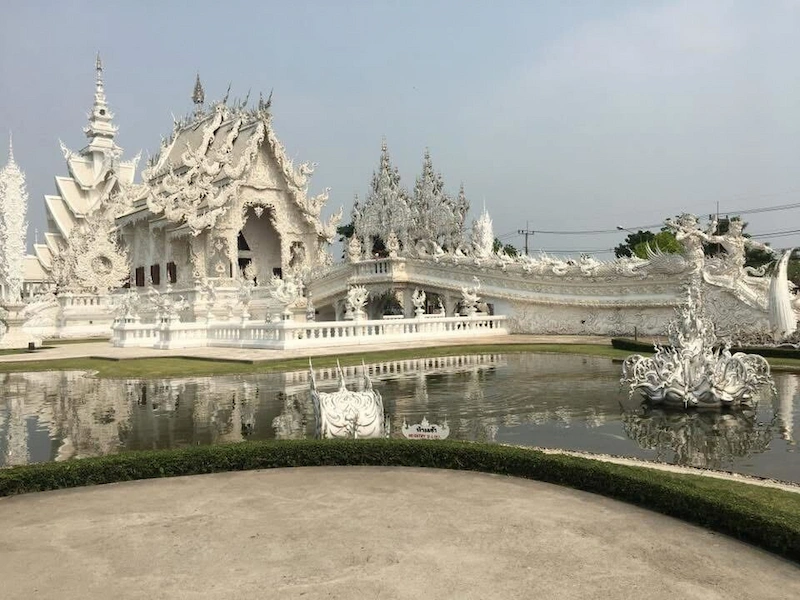
First on any savvy traveler’s list for a Chiang Rai day trip is Wat Rong Khun, more famously known as The White Temple. In Thai, it’s วัดร่องขุ่น. It’s a privately-owned art exhibit in the style of a Buddhist temple, designed by renowned Thai artist Chalermchai Kositpipat.
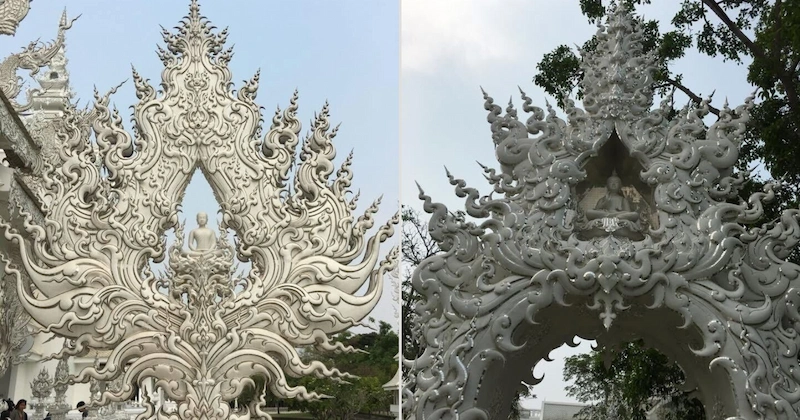
Dedicated to the Lord Buddha, it represents Buddhist enlightenment and the cycle of rebirth, with its pure white color symbolizing the purity of Buddha and the glass representing the Buddha’s wisdom shining across the Earth and the Universe.
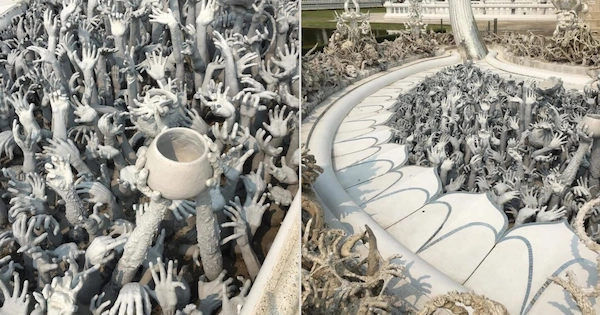
What makes Wat Rong Khun so uniquely Instagrammable is its surreal, almost ethereal appearance. Every detail, from the grasping hands reaching out from the pit of hell to the intricate glass mosaics shimmering in the sunlight, is designed to evoke both awe and reflection. The bridge of the “cycle of rebirth” leads you towards the main ordination hall (Ubosot), symbolizing the path to enlightenment by overcoming earthly temptations.
Inside, the murals are not traditional but contemporary, depicting pop culture icons alongside Buddhist teachings, a fascinating blend that surprises many.
Opening Hours: Open daily from 8:00 AM to 5:00 PM (sometimes extending to 5:30 PM). To beat the crowds, especially if you’re aiming for clear, people-free shots, I highly recommend arriving right at opening time.
Dress Code: As a place of worship and significant cultural importance, modest dress is essential. You must cover your shoulders and knees. This applies to both men and women. No sleeveless tops, short shorts, or mini-skirts. I always carry a light scarf or sarong in my daypack specifically for temple visits. You’ll observe that those who understand the local customs and dress respectfully often have a more seamless experience.
Entrance Fee: There is an entrance fee for foreign visitors, typically 100 THB. Thai nationals enter for free.
Wat Rong Suea Ten (The Blue Temple): A Sapphire Sanctuary
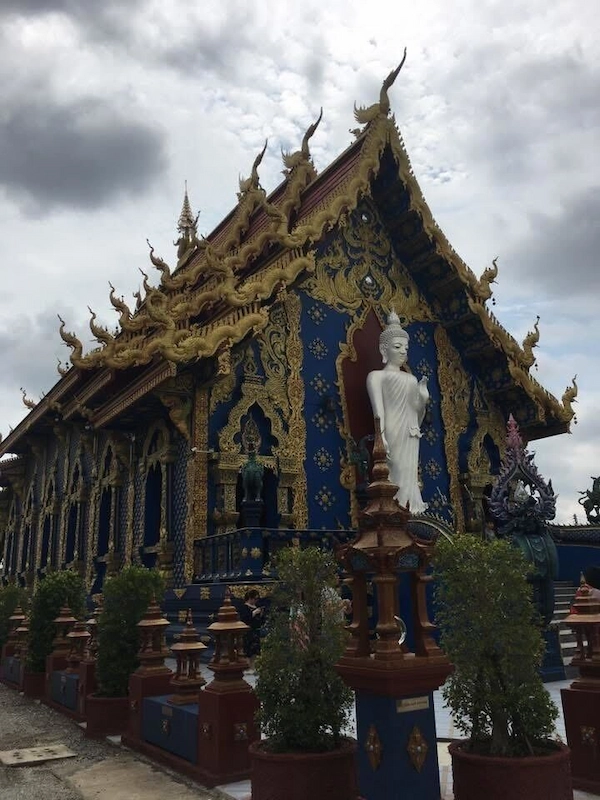
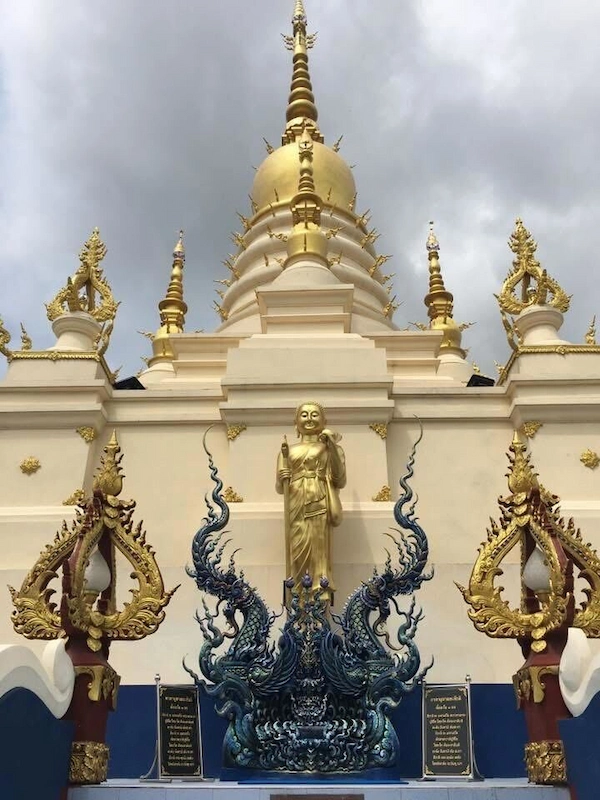
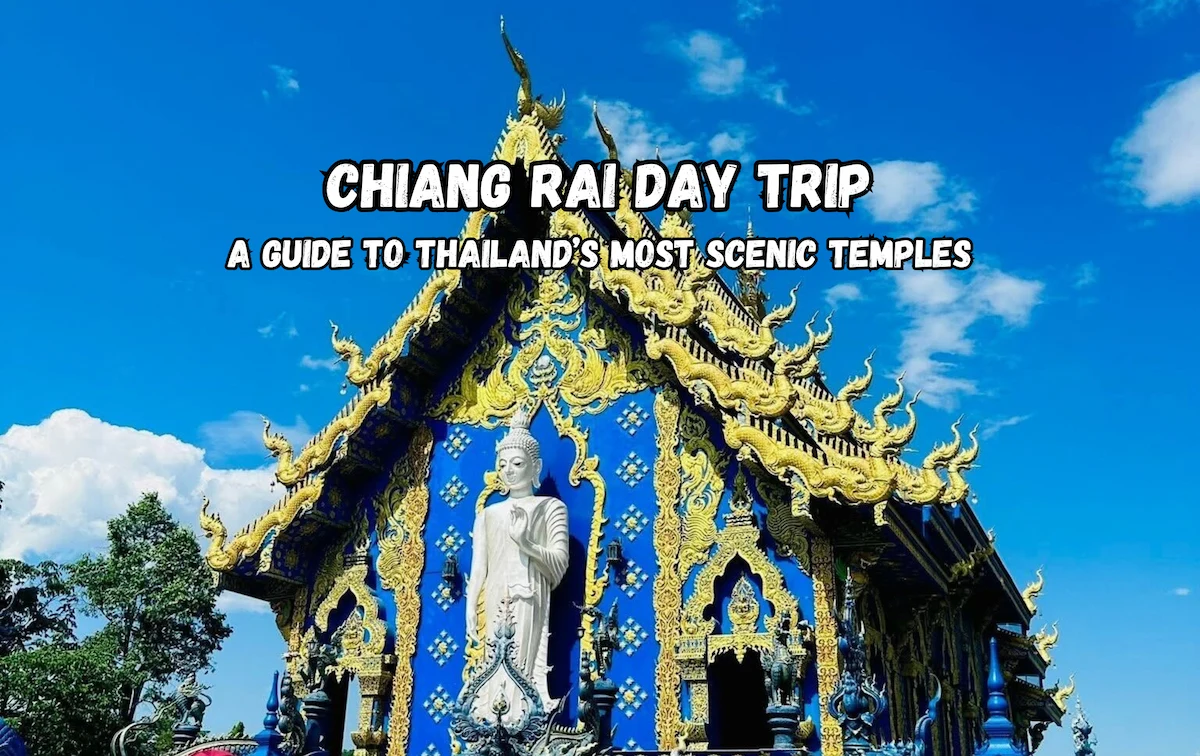
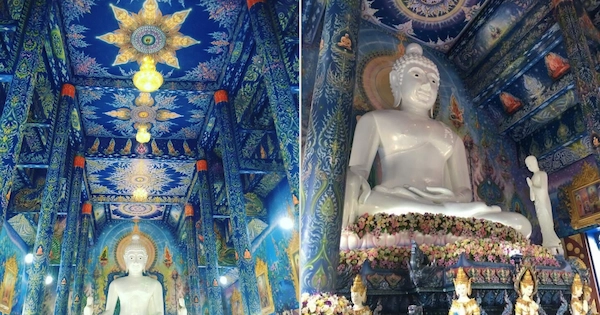
Following the White Temple, your next stop should be Wat Rong Suea Ten, widely known as The Blue Temple (วัดร่องเสือเต้น). This vibrant temple offers a striking contrast to its white counterpart, bathed in brilliant shades of sapphire blue and adorned with intricate gold trim. Its name, “Temple of the Dancing Tiger,” comes from the belief that tigers once roamed the area.
Dedicated to the Lord Buddha, this temple embodies devotion through its captivating color palette and detailed craftsmanship.
The uniqueness of the Blue Temple lies not just in its dominating blue color, symbolizing the Dharma (the teachings of the Buddha) and purity, but also in its contemporary Lanna-style architecture, a modern take on traditional Northern Thai design.
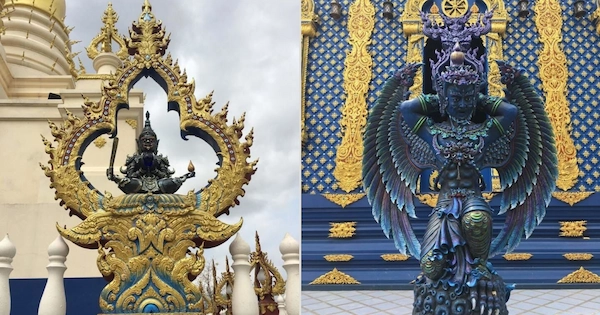
The main hall features a towering white Buddha image, bathed in a serene blue light, creating an otherworldly atmosphere that is incredibly photogenic. The exterior is equally mesmerizing, with guardian statues and mythical creatures painted in vivid blues and purples.
I once visited the Blue Temple during midday, thinking it would be less crowded than the White Temple. Boy, was I wrong! While it might not have the same initial rush, the intense midday sun can make the vibrant blue colors less striking in photos and the heat can be draining.
Opening Hours: Generally open daily from 7:00 AM to 8:00 PM. Its longer hours make it a great option for a sunset visit, as the changing light can bring out different nuances in its blue hues.
Dress Code: Similar to the White Temple, modest attire is required. Shoulders and knees must be covered. While enforcement might feel slightly less strict than at Wat Rong Khun, it is still a place of worship and respect should be shown.
Entrance Fee: Uniquely, there is generally no entrance fee to enter the main temple grounds, though donations are appreciated.
Wat Huay Pla Kang (The Golden Ganesha): Soaring Serenity
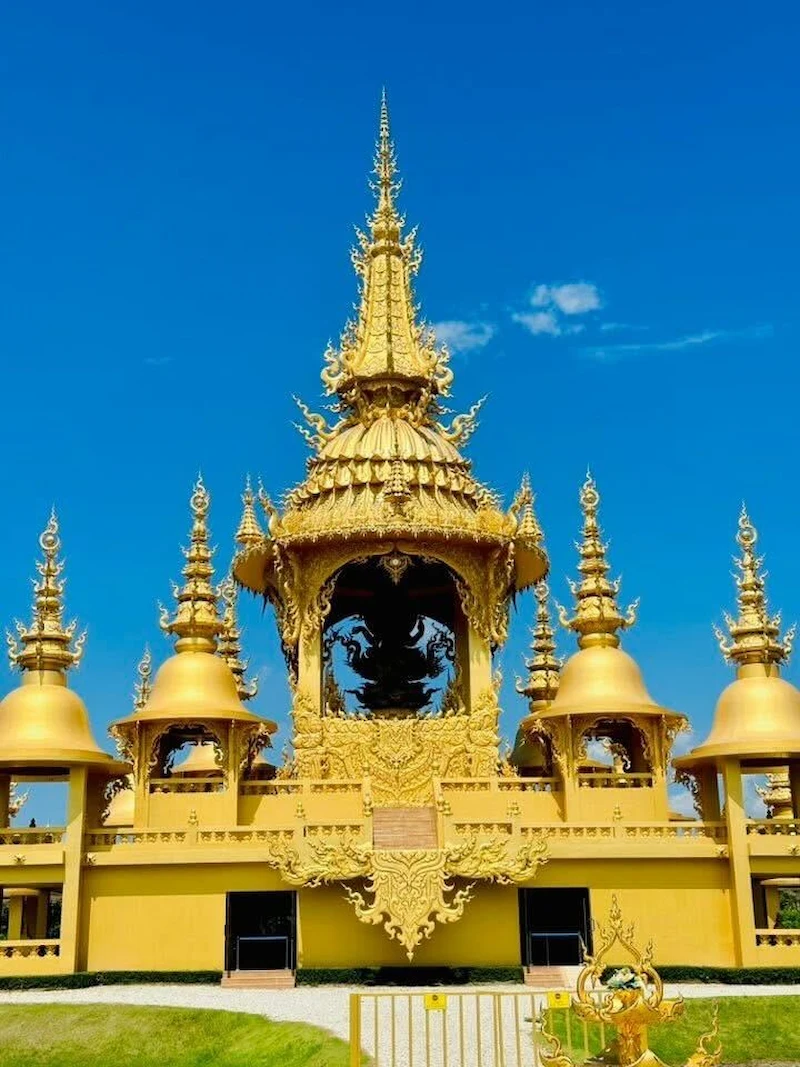
Next up, we shift from intimate spiritual gems to breathtaking scale: Wat Huay Pla Kang (วัดห้วยปลากั้ง). While instantly recognizable for its colossal white Guan Yin (Goddess of Mercy) statue gazing over Chiang Rai, don’t miss the namesake “Golden Ganesha Pavilion” nestled below – a dazzling counterpoint of intricate detail against the mountain backdrop. This temple complex uniquely blends Thai, Chinese, and contemporary influences.
The main attraction is the 9-tiered, 78-meter tall white Guan Yin statue – accessible via a whimsical dragon-staircase or an elevator inside (a small fee applies).
At its base lies the stunning Golden Ganesha Hall, housing multiple radiant golden statues of the revered elephant-headed Hindu deity (Ganesh), beloved in Thai Buddhism as a remover of obstacles. The surrounding pavilions feature ornate Chinese-inspired woodwork and ceramics.
Opening Hours: Open daily from 7:00 AM to 9:00 PM (complex). Guan Yin viewing deck access usually aligns with daylight hours.Less crowded early morning or near closing.
Dress Code: Modest attire essential (shoulders & knees covered). More relaxed than royal temples, but respect is key.
Entrance Fee: Free entry to the temple complex grounds.
Baan Dam Museum (The Black House): A Darkly Artistic Contrast
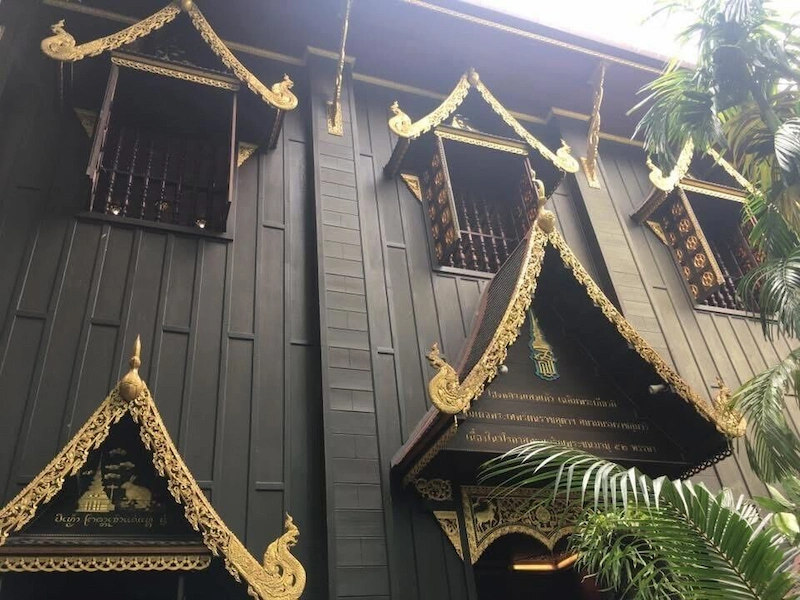
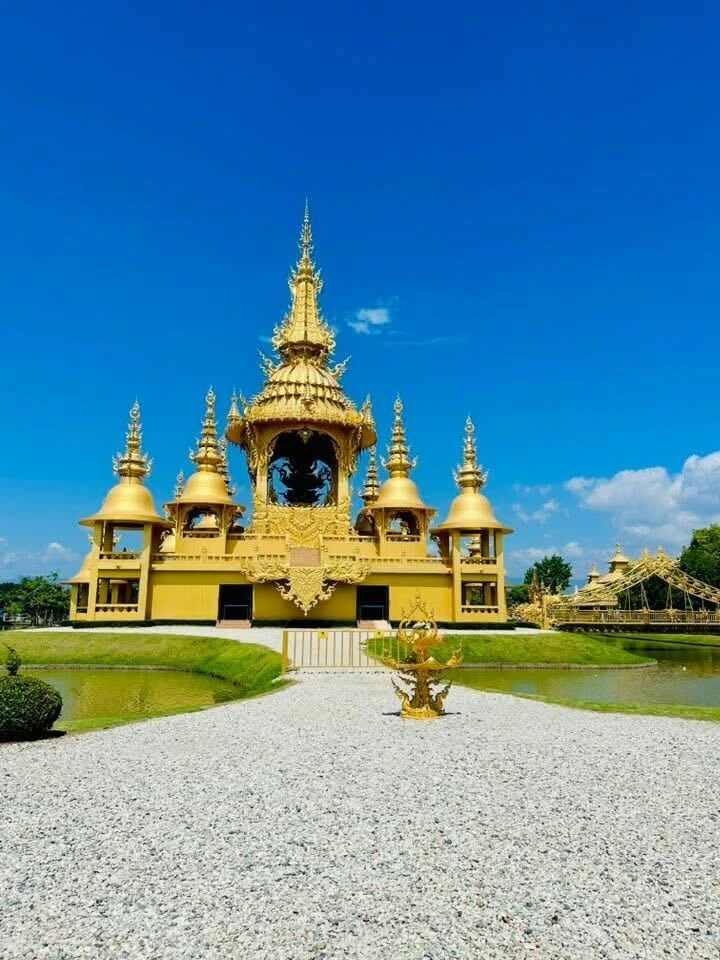
Completing our quartet of unique Chiang Rai attractions is the Baan Dam Museum (บ้านดำ), commonly known as The Black House. This isn’t a traditional temple but rather an eccentric collection of dark, imposing buildings and sculptures created by national artist Thawan Duchanee.
While not dedicated to a specific Buddha, it can be interpreted as a commentary on the dark side of humanity, the impermanence of life, and a complex exploration of Buddhist philosophy through its unique artistic expression. It stands as a stark, thought-provoking counterpoint to the White Temple’s purity.
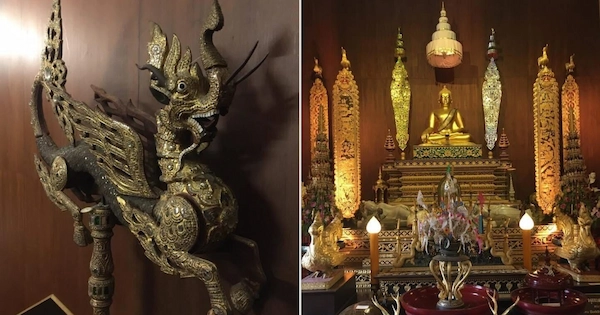
Baan Dam’s uniqueness is its sheer audacity and its stark departure from conventional aesthetics. Comprising nearly 40 structures, mostly made of black wood, it features animal remains (bones, skins, skulls) used as art installations, alongside traditional northern Thai motifs and bizarre, often macabre, sculptures. It’s a challenging and fascinating place, perfect for those seeking something beyond the purely beautiful.
Opening Hours: Open daily from 9:00 AM to 5:00 PM, with a lunch break closure from 12:00 PM to 1:00 PM.
Dress Code: While not a traditional temple, it is an art museum and a place of cultural significance. Modest dress is still advisable as a sign of respect for the artist and the nature of the exhibits. However, it’s generally more relaxed than at the White or Blue Temples.
Entrance Fee: There is an entrance fee for foreign visitors, typically 80 THB. Thai nationals enter for free.
Getting There & Back
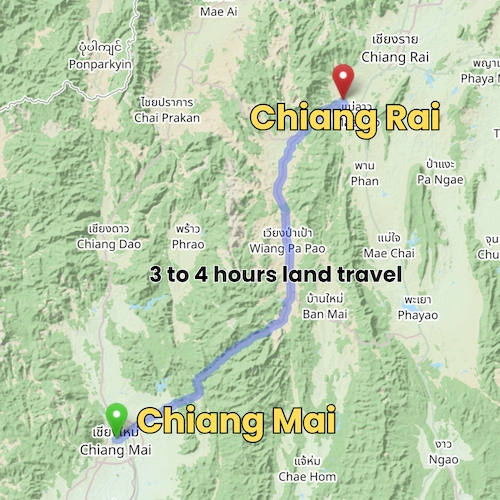
Now that you know which temples to prioritize, let’s talk logistics. Getting from Chiang Mai to Chiang Rai for this temple run is straightforward.
Bus Travel: The Budget-Friendly Choice
The most common and budget-friendly way to reach Chiang Rai from Chiang Mai is by bus. GreenBus Thailand operates frequent services from Chiang Mai’s Arcade Bus Terminal 3 (Bus Terminal 2 also has some services, but 3 is the main one). You have several class options:
- Ordinary (local bus): Cheapest, but slower and less comfortable.
- Express (X-Class): Faster, air-conditioned, and comfortable. My preferred choice for day trips.
- VIP: Most expensive, but offers more legroom and sometimes snacks.
Travel Time: The bus journey typically takes around 3 to 3.5 hours, depending on traffic and stops. Given the time it takes, an early start is non-negotiable. Aim for the first bus out of Chiang Mai (usually around 6:00 AM or 7:00 AM) to ensure you have ample time at the temples without feeling rushed.
Booking Tickets: You can purchase tickets directly at the bus terminal, but for peace of mind, especially during peak season, I recommend booking online in advance via the GreenBus website or a platform like 12Go.asia.
Private Taxi or Shared Van: Convenience at a Cost
If budget isn’t your primary concern and you prefer maximum convenience, a private taxi or shared van is an option. These can be arranged through your hotel, a local tour operator, or Grab (though Grab might be harder to secure for a full-day, inter-city trip). A private car offers flexibility, allowing you to set your own schedule and spend as much or as little time at each temple as you wish. However, it’s significantly more expensive, often costing several thousand baht for a round trip.
Shared vans offer a middle ground, providing door-to-door service or pick-ups from central locations, usually as part of a pre-arranged tour. This eliminates the need to navigate bus stations but means you’re on a fixed itinerary.
Getting Around Chiang Rai
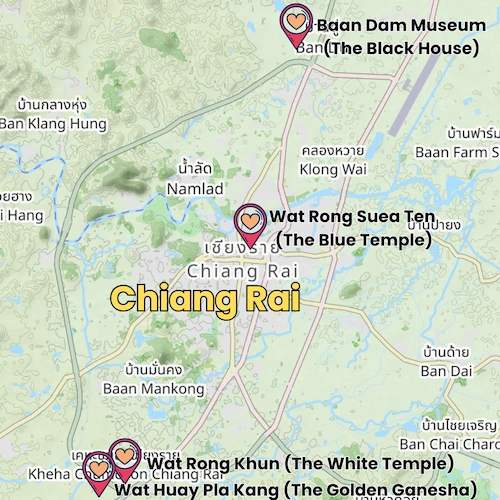
Once you arrive at Chiang Rai Bus Terminal 1 (located in the city center), getting to the temples requires local transport. Here are your best options:
- Songthaew (Red Trucks): These shared taxis are abundant and affordable. Negotiate the price before getting in and you can hire one for the day.
- Tuk-Tuk: Quicker than songthaews for shorter distances, but might be slightly pricier. Again, agree on the fare beforehand.
- Grab/Bolt (Ride-sharing apps): Available in Chiang Rai, offering fixed prices and convenience. This is often my go-to for reliability and avoiding negotiation hassles.
- Motorbike Rental: If you’re comfortable and licensed, renting a motorbike offers ultimate freedom. However, be aware of the risks and requirements for scooter rental in Thailand. For a day trip from Chiang Mai, renting one in Chiang Rai for local transport is generally safer than riding all the way from Chiang Mai.
To optimize your temple run, plan your route logically. The White Temple is south of the city, while the Blue Temple, Wat Phra Kaeo, and Baan Dam are closer to or within the city center.
A good route would be White Temple and Golden Ganesha Temples first (early morning), then head back towards the city for the Blue Temple, and finally the Black House.
Conclusion
Chiang Rai’s temples are dazzling artistic marvels where ancient spirituality meets modern genius – far more than just Instagram backdrops. Your temple journey reveals a world of light, color, and serenity. This isn’t merely a photo run; it’s a soul-stirring encounter with human creativity expressed in sacred spaces.
Respect the quiet moments: arrive early for soft light and thinner crowds, dress modestly, and pause to absorb the intricate details beyond your lens. Pack your wonder (and a wide-angle!) for 2026.
Map your route, embrace the beauty, and capture memories reflecting Northern Thailand’s unique magic. Your awe-inspiring temple adventure starts now.