

The digital nomad dream in Chiang Mai has evolved.
What was once a ‘budget’ escape has transformed into a sophisticated hub where the cost of living is rising alongside the quality of life.
In 2026, the game has changed: the DTV visa has opened the floodgates for long-term stays, and the market has reacted. But is the ‘Rose of the North’ still a paradise, or have we reached a tipping point?
To find out, I’m breaking down my actual monthly expenses down to the last Baht. From the street food stalls of Changklan to the modern co-working spaces, let’s see if Chiang Mai still offers the best ROI for your remote work lifestyle.
Accommodation, Food, and Internet
1) Accommodation: Where to Live and What it Costs
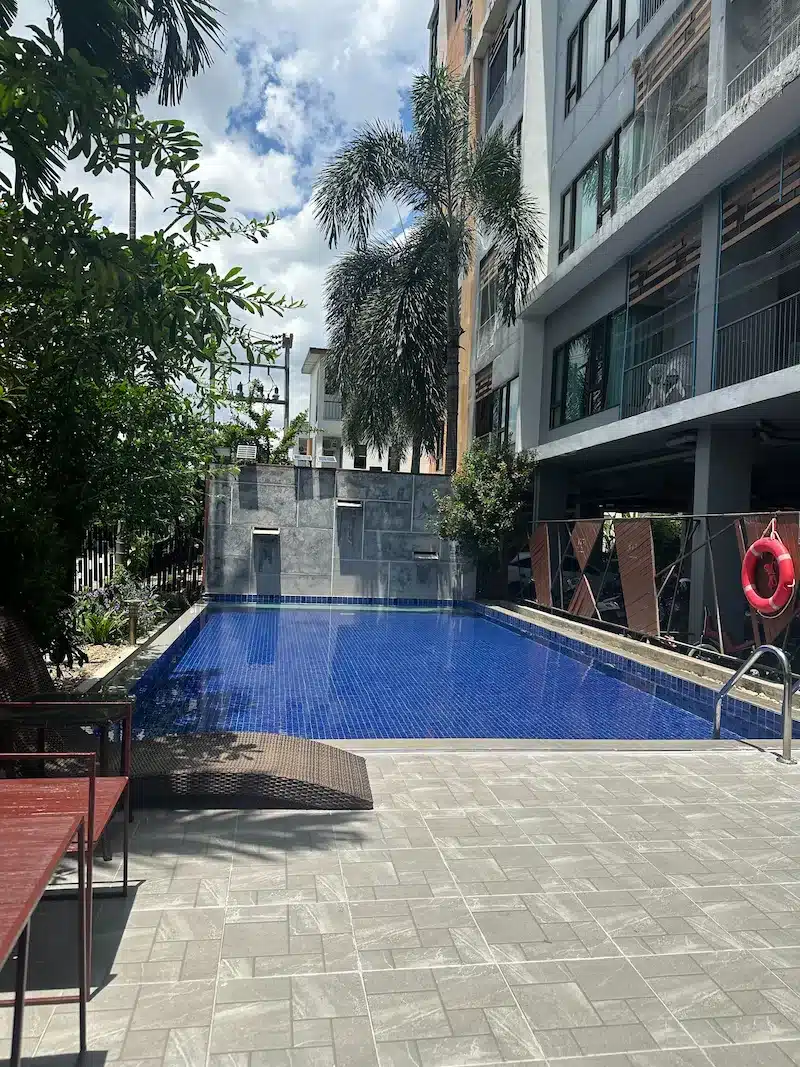
When you first arrive in Chiang Mai, finding a place to stay is your biggest financial decision. Costs vary wildly depending on location. I currently reside in a modern studio condo in the Changklan area, paying a very reasonable 8,000 Thai Baht (THB) per month.
Changklan offers a balance: it’s central and close to night markets, but away from the tourist-heavy bustle.
For those considering other popular areas, here is the 2026 pricing landscape:
- Nimman (The Digital Nomad Hub): This is the trendiest part of town, teeming with cafes and co-working spaces like Yellow or Punspace. Rent here reflects the convenience.
Cost: 12,000 THB – 25,000 THB for a modern studio or one-bedroom condo.
- The Old City (Historical Center): Charming but often older buildings.
Cost: 7,000 THB for older guesthouses; up to 15,000 THB for renovated units.
- Santitham (Budget & Local): A residential neighborhood popular with students and long-term expats.
Cost: 7,000 THB – 10,000 THB for a studio.
- Changklan (Central & Balanced): Great access to the river and markets.
Cost: 8,000 THB – 12,000 THB
2) Utilities: The Hidden Cost of Air Conditioning
Electricity is your variable “wild card.”
- Cool Season (Nov-Jan): Bills can be as low as 500 THB.
- Hot Season (March-May): If you run the AC during the day, expect bills to jump to 2,000 – 3,500 THB.
Water bills are usually negligible (under 100 THB).
3) Connectivity: Internet Speed and Price
Thailand’s internet infrastructure is world-class.
- Pocket Wi-Fi: I pay 550 THB for 30 days of unlimited data (AIS or True Move), allowing me to work from anywhere.
- Fiber Optic: For a fixed home connection, expect 600 – 1,000 THB per month for speeds of 500 Mbps to 1 Gbps.
Food, Transport, and Lifestyle
1) Food Costs: Street Food vs. Western Cravings
Food in Chiang Mai is an experience. My grocery budget is around 1,000 THB per week for fresh fruit, yogurt, and staples.
- Street Food: The magic lies in the markets (like Chiang Mai Gate or Chang Phuak). A generic Pad Kra Pao or Khao Soi costs 40 – 60 THB.
- Local Restaurants: A sit-down lunch costs 50 – 80 THB.
- Western Food: If you crave a burger or pasta, the price jumps to 200 – 350 THB.
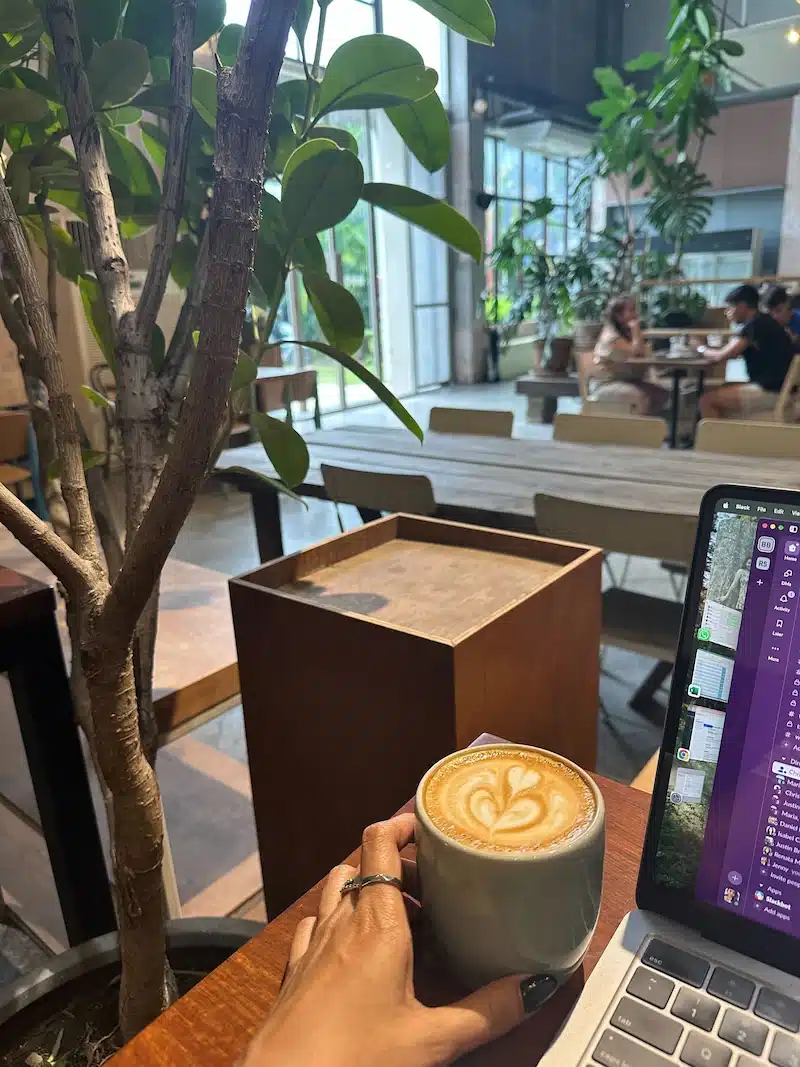
- Coffee: A local Americano is 40–60 THB, while a specialty latte in Nimman runs 80–120 THB.

2) Transportation: Grab vs. Scooter Rental
- Grab (Ride-hailing): A bike ride within the city costs 60 – 100 THB. A car ride is 100 – 200 THB. If you don’t drive, budgeting 3,500 – 4,500 THB a month for Grab is realistic.
- Scooter Rental: The choice for freedom. Monthly rentals range from 2,000 – 4,000 THB (plus ~300 THB for fuel).
3) Co-working and Gyms

- Co-working Spaces: A monthly hot desk at places like Alt_ChiangMai or Yellow costs 3,000 – 4,500 THB.
- Gyms: Local open-air gyms cost as little as 60 THB per visit. Premium air-conditioned gyms (like GoGym or Jetts) cost 1,500 – 2,500 THB monthly.
- Muay Thai: For a truly local workout, Muay Thai is incredible. A single drop-in group class usually costs around 390 THB, though buying a pack of 10 or a monthly membership brings the cost down significantly.
The 2026 Reality Check: Visas and Air Quality
This is the section most blogs miss, but it is essential for your planning.
The “Burning Season” (Smoky Season)
From February to mid-April, agricultural burning causes hazardous air quality in Northern Thailand.
- The Reality: PM2.5 levels often reach unhealthy levels. The mountains disappear behind a wall of gray smog.
- The Solution: Many nomads leave Chiang Mai during these months (heading to the southern islands like Koh Samui or Phuket). If you stay, you must budget for an air purifier in your room and N95 masks.
The “DTV” Visa Revolution
In late 2024, Thailand introduced the Destination Thailand Visa (DTV). This has changed the game for the upcoming years.
- It allows remote workers to stay for up to 5 years (180 days per entry).
- It requires a 500,000 THB proof of funds and a 10,000 THB application fee.
- This is a massive upgrade from the old tourist visa runs, making Chiang Mai a more stable long-term base.
Estimated Monthly Cost Breakdown (2026)
Here is what your wallet needs to look like to live here.
The “Bootstrapper” Budget
Perfect for new nomads or those saving aggressively.
- Rent: 7,000 (Santitham studio)
- Utilities: 700 (Low AC)
- Internet: 550 (Mobile Data)
- Food: 5,000 (Street food + cooking)
- Transport: 3,500 (Scooter rental)
- Lifestyle: 1,800 (Free nature activities, minimal drinking)
- Total: ~18,500 THB ($590 USD)
The “Comfortable Nomad” Budget
Living the good life with AC, co-working, and western meals.
- Rent: 20,000 (Modern Condo in Nimman or Astra)
- Utilities: 2,500 (AC used freely)
- Internet: 1,000 (Fiber)
- Co-working: 3,500 (Monthly pass)
- Food: 12,000 (Mix of cafes, western dinners, and delivery)
- Transport: 4,500 (Grab cars/bikes)
- Lifestyle: 7,500 (Socializing, gym, weekend trips)
- Total: ~52,00THB ($1,670 USD)
(Conversion rate approx 33 THB = 1 USD)
Comparison Summary: 2025 vs. 2026
| Category | Your 2025 Estimate (THB) | 2026 Reality Check (THB) | Notes for 2026 |
|---|---|---|---|
| 💰 Bootstrapper Total | 16,150 THB | 18,500 THB | Reflects 2026 price hikes in Santitham rents and monthly scooter rentals. |
| 🏨 Comfortable Total | 48,300 THB | 52,000 THB | Includes the “Nomad Tax” for modern condos in Nimman and increased cafe spending. |
| 📉 Exchange Rate | 36:1 (USD/THB) | 31:1 (USD/THB) | The biggest hidden cost. A stronger Baht means your USD doesn’t go as far. |
Conclusion: Finding Value in the New Normal

The Chiang Mai of 2026 is no longer a hidden secret for budget backpackers; it is a global hub for serious remote professionals.
While inflation and a stronger Baht mean your dollar doesn’t stretch as far as it did in 2015, the “Return on Life” remains unparalleled.
However, this paradise is conditional. To thrive here, you must plan around the Burning Season, navigate the new visa landscape, and respect the local rhythm.
The city’s core promise hasn’t changed: it is still a place where an exceptional quality of life is an accessible reality rather than a distant luxury.
If you’re ready to trade the chaos of the West for the mist-covered mountains of the North, the Rose of the North is waiting.