



Don’t get me wrong, I love Khao Soi. But you cannot eat curry noodles every day.
As a Filipina living in Chiang Mai for six years, rice is in my DNA. While I enjoy the digital nomad cafe life, my true passion project has been a relentless hunt for the perfect Hainanese Chicken Rice (“Khao Man Gai”).
I’ve eaten my way through the Michelin-recommended spots and the famous tourist stalls, but none were perfect. Too often, the portions were tiny or the chicken was dry.
But the hunt is finally over. I have found the champion. It isn’t in any guide, and don’t even bother opening your phone, you cannot find them on Google Maps.
Here is the secret to the best lunch in Chiang Mai.
| Details | Information |
|---|---|
| Location | Kampangdin Road, Changklan (Directly opposite O2 Gym) |
| Google Maps | Not Listed / Does Not Exist (You must use the Gym as a landmark) |
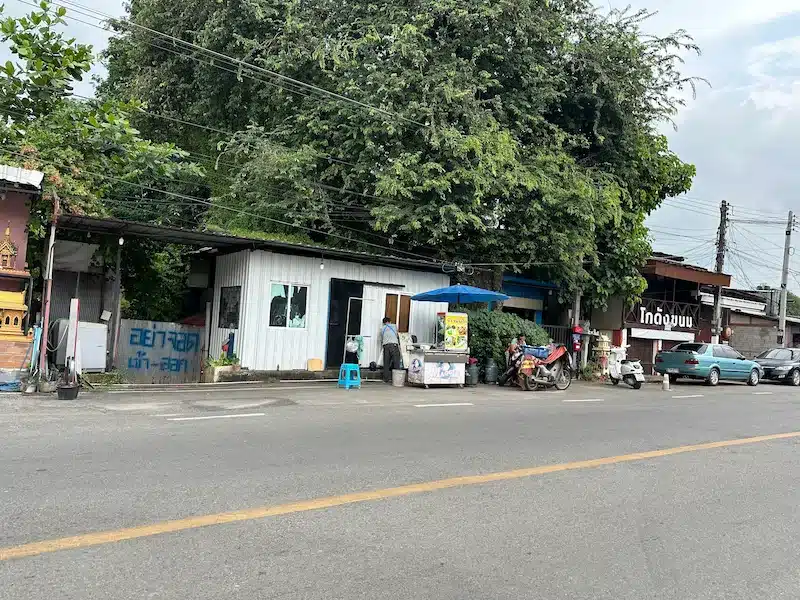
| Landmark | Look for the Blue Umbrella next to the abandoned-style house |
| Opening Hours | Approx. 8:00 AM – 11:00 AM (Or until sold out) |
| Best Dish | “Pasoem” (Mix of Steamed & Fried Chicken) |
| Price for Locals (or Thai speaking) | 40 THB (60 THB for a mix of steamed and fried chicken “Pasoem”) |
| Price for Foreigners | 60 THB (80 THB for a Pasoem) |
The “Blue Umbrella” on Kampangdin Road
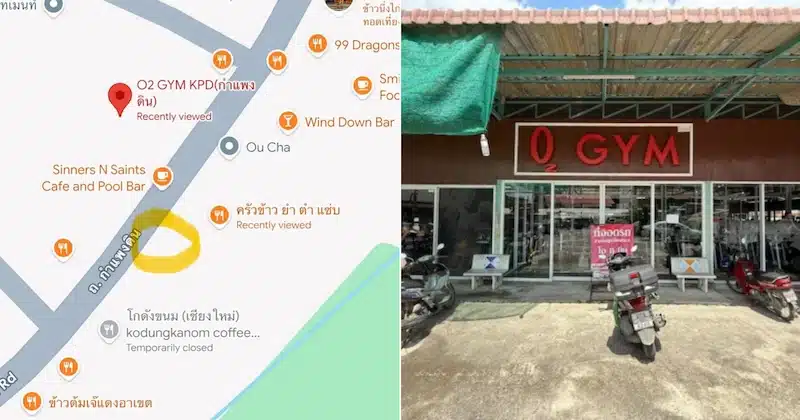
Finding this stall requires a bit of local know-how, or at least, a willingness to venture slightly outside the tourist square.
The stall is located in the Changklan district, specifically on Kampangdin Road. This area is fascinating: it feels lived-in, raw, and authentically Thai, a stark contrast to the polished boutiques of Nimman.
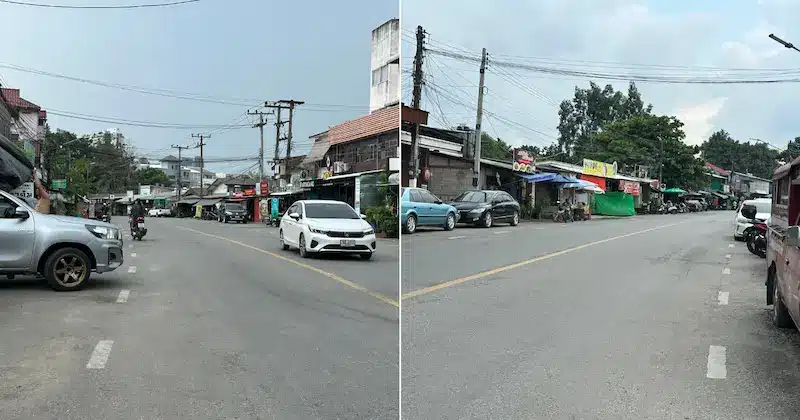
Here is the challenge: They are a ghost to the internet. If you search for “Best Chicken Rice Changklan” or try to drop a pin, you won’t find a listing for them. They don’t have a Google Business Profile, and they don’t have reviews on TripAdvisor.
To find them, you need to navigate the old-school way: by using landmarks.
Look for O2 Gym. It’s a massive, open-air, hardcore gym where the iron is heavy and the air conditioning is non-existent.
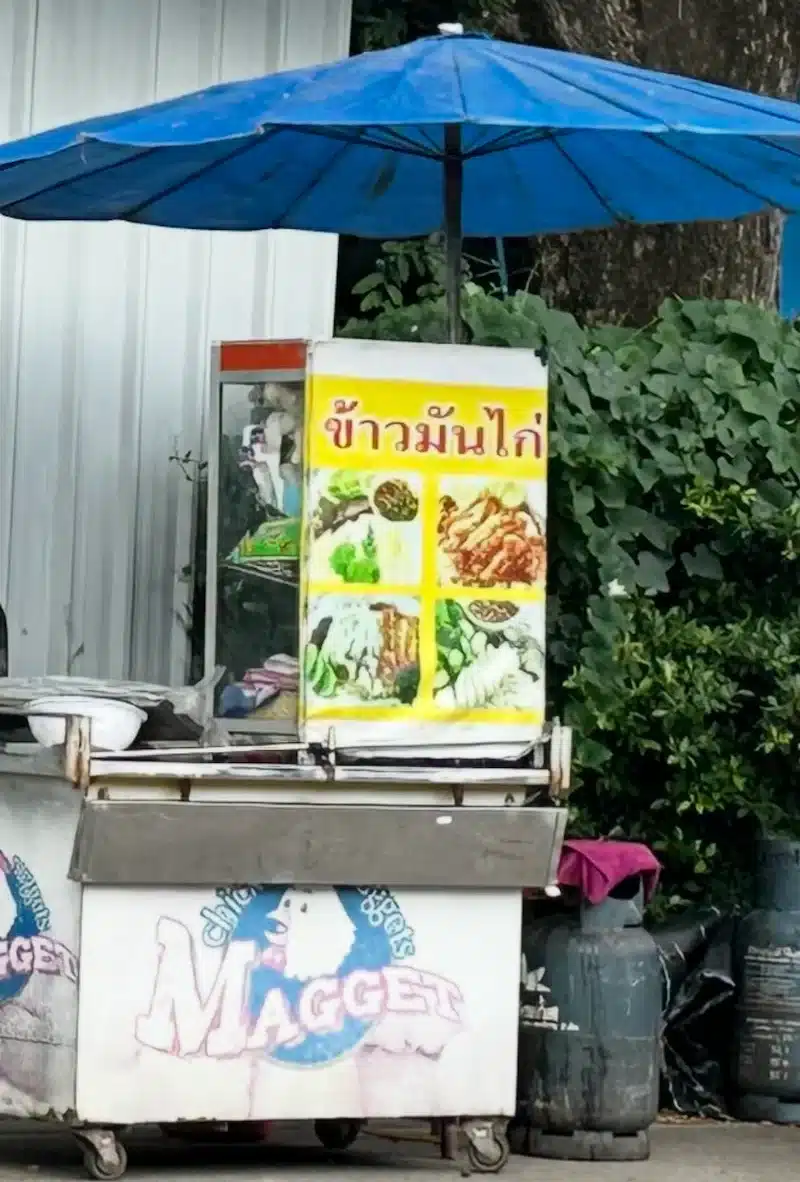
Right across the street from O2 Gym, nestled next to a dilapidated, abandoned-looking house that has seen better days, sits a humble setup.
There is no neon sign. There is no menu in English. There is simply a faded sign in Thai script that reads “Khao Man Gai,” a table laden with ingredients, and a distinctive blue umbrella.
It is managed by a lovely older couple who have clearly been doing this for decades. You can see it in their rhythm. The husband usually handles the chopping and the wife handles the rice and the packaging, greeting regulars with a warm, knowing smile.
They are the kind of vendors who make Chiang Mai feel like a small town, even as it grows into a bustling metropolis.
Why This Stall Ruins All Other Chicken Rice
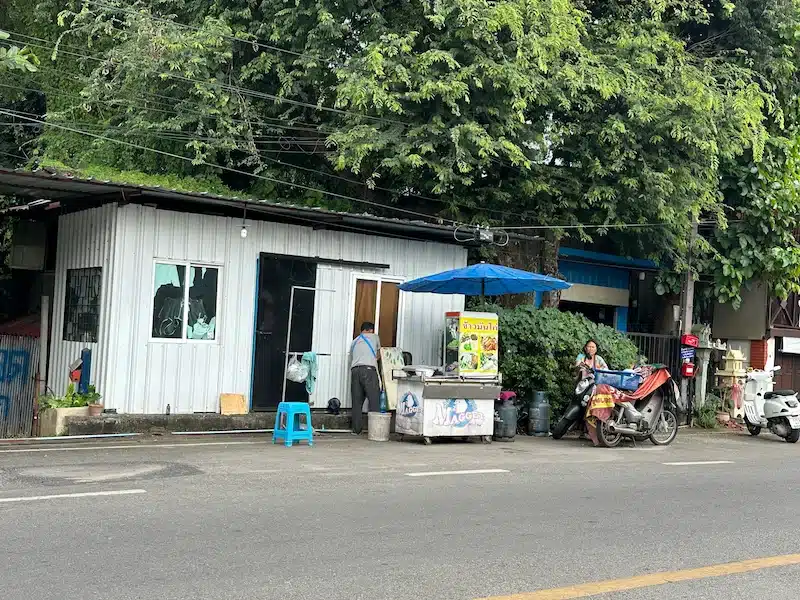
You might wonder, “Ann, it’s just boiled chicken and rice. How different can it be?”
To that, I say: you haven’t tasted this rice.
The magic of Khao Man Gai isn’t actually the chicken; it’s the Khao (rice). At this nameless stall, the rice is a masterpiece. It isn’t just boiled; it’s sautéed in chicken fat, garlic, ginger, and pandan leaves before being steamed to perfection.
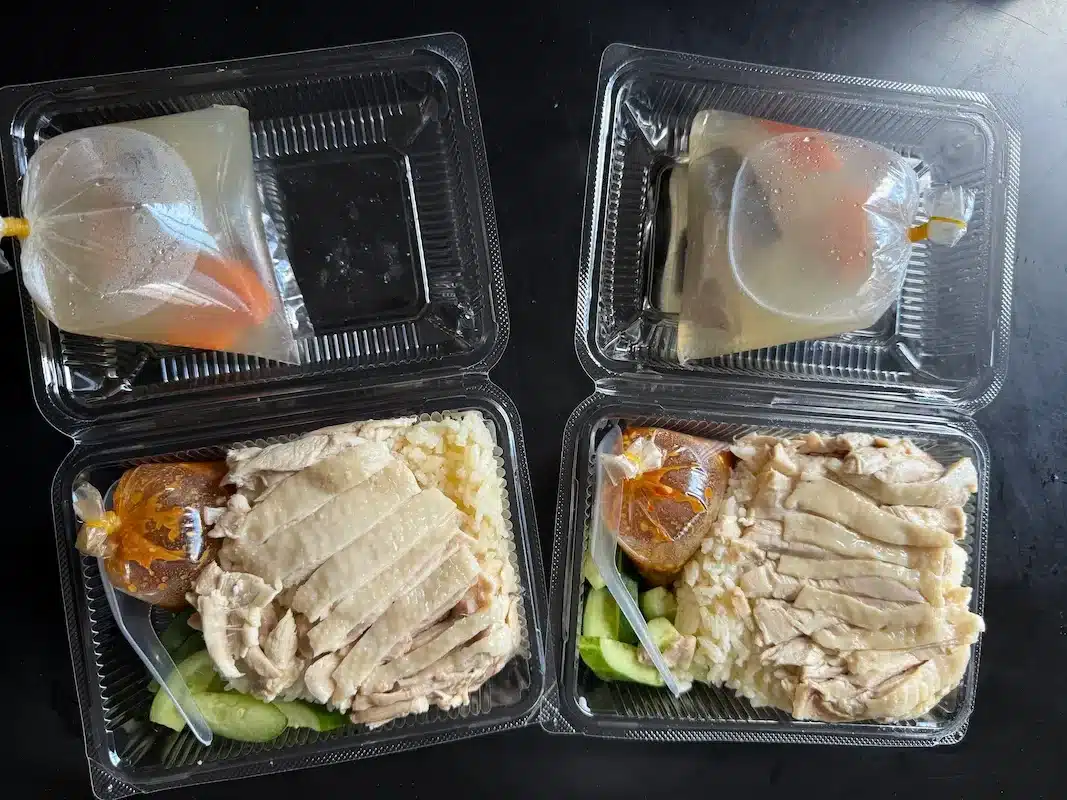
When you open the packet, the aroma hits you instantly: savory, oily (in the best way), and deeply comforting. The grains are distinct, glistening with flavor, never mushy or hard. I could honestly eat the rice on its own without any meat.
Then, there is the chicken. Whether you order the classic steamed version or the Gai Tod (Fried Chicken), the meat is spectacular. The steamed chicken is incredibly succulent, possessing that slippery, silky texture that marks a true expert in the kitchen.
It’s never dry, which is the curse of so many lesser stalls. If you’re feeling indecisive (or just hungry), do what I do: order the “Pasoem” (Mix). You get the best of both worlds: slices of tender steamed meat alongside crunchy, golden-brown fried chicken.
But the element that ties it all together is the sauce. A Khao Man Gai is only as good as its Nam Jim.
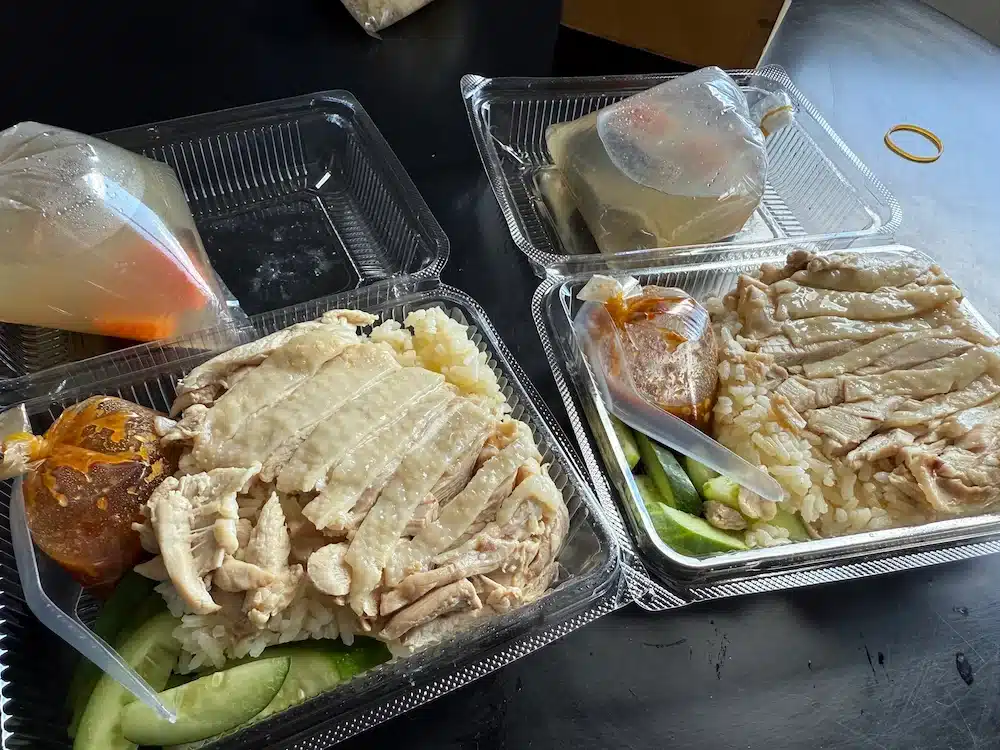
This couple’s sauce is a dark, fermented soybean paste mixture that explodes with flavors of fresh ginger, Thai chilies, garlic, and vinegar. It punches through the richness of the chicken and rice, providing a spicy, tangy kick that wakes up your palate.
Every order comes with the standard freebies, but even these feel generous. You get fresh, crisp slices of cucumber to cleanse the palate, and a bag of clear chicken soup with some carrots and pig’s blood.
The Price of Perfection (And the Race Against Time)
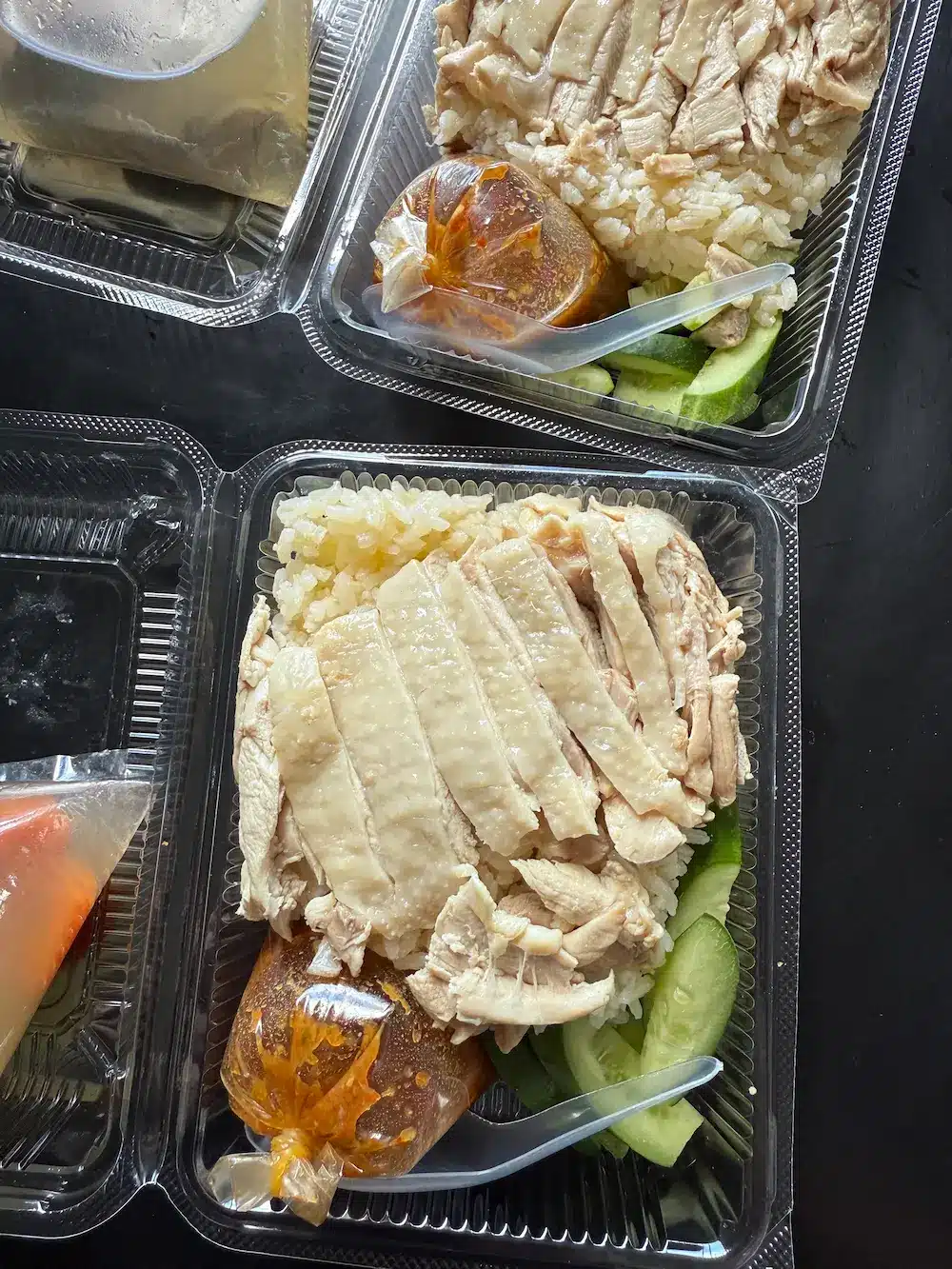
Now, let’s talk about value. In an era where prices are creeping up everywhere, this couple is serving a portion size that is genuinely shocking.
For 40 Baht (barely $1.20 USD), you get a mountain of food. It is a hearty, heavy meal that fuels you for the entire day. For me, sometimes one pack is almost too much, but it’s so delicious I finish it anyway.
In other places, I’ve paid 50 or 60 Baht for a “serving” that consisted of three sad slices of cucumber and four strips of chicken flattened to look bigger. Here, they pile the meat high. It is honest food at an honest price.
However, there is a catch.
The stall operates on “Thai Morning Time.” They are usually set up and cooking by 8:00 AM, sometimes a bit earlier. They stay until they sell out. And therein lies the tragedy of my gym routine.
I usually try to hit the gym around 11:00 AM.
In my mind, this is the perfect schedule: lift some weights, then cross the street for a protein-packed reward. But more often than not, I walk across the road, sweat dripping down my face, craving that ginger-garlic rice, only to be met with a sad shake of the head from the chicken rice man.
“Mot laew,” he says. Finished. Sold out.
Ugh! They are so popular with the locals in the neighborhood that they often clean out their entire inventory by 10:30 or 11:00 AM. This scarcity has changed my habits.
Now, if I happen to pass by Kampangdin Road at 9:30 AM, I don’t hesitate. I stop. I order two packs—one for breakfast right then and there, and one to save for lunch later. I’m not taking any chances.
A Brief History of the Dish
Before I send you off to hunt for the Blue Umbrella, it’s worth appreciating what you’re eating. While we treat it as a Thai staple, Khao Man Gai is actually an immigrant story.
It originates from Hainan, an island province in southern China. It was brought to Thailand (and Singapore and Malaysia) by Hainanese migrants. The original dish, Wenchang Chicken, was adapted to local tastes over generations.
The Thai version is distinct because of the sauce: we like it spicier, tangier, and more robust than the milder ginger-scallion oil used in China or Singapore. It is the perfect example of how Thailand absorbs culinary influences and tweaks them until they become distinctly, unrelentingly Thai.
The Verdict on Chiang Mai’s Best Khao Man Gai
I have spent years in Chiang Mai. I work online, I live a flexible life, and I have the luxury of choice. I could eat anywhere. But if you asked me where my “happy place” is, it’s not a fancy rooftop bar or a trendy coffee spot.
It is standing on the dusty pavement of Kampangdin Road, next to an abandoned house, holding a bag of hot soup and a plastic box of chicken rice that costs 40 Baht.
If you want to try the best Khao Man Gai in Chiang Mai, you won’t find it on a map app. You just need to wake up early, look for the blue umbrella across from O2 Gym, and trust the nice older couple with the weather-beaten hands.
Just please, leave a packet for me.