

The wind in your hair, the sun on your skin, and the freedom to chase the horizon down a winding Thai road. A scooter isn’t just a rental in Thailand; it’s your ticket to discovering ancient temples and deserted beaches far from any tour bus. But what happens when that dream comes to a screeching halt? When the friendly shop owner suddenly isn’t so friendly, holding your passport hostage over a “scratch” you never made, the fantasy can quickly curdle into a costly nightmare.
I’ve seen it happen too many times, and this guide is your shield. We’re diving deep into battle-tested strategies that will arm you against the most common scams and protect you from unwarranted charges.
Core Strategies for a Scam-Free Scooter Rental
Let’s kick things off with the absolute golden rules for securing your ride. These aren’t just suggestions; they are the bedrock of safe travel in Thailand when it comes to two wheels. Ignore them at your peril!
1. The Ironclad Rule
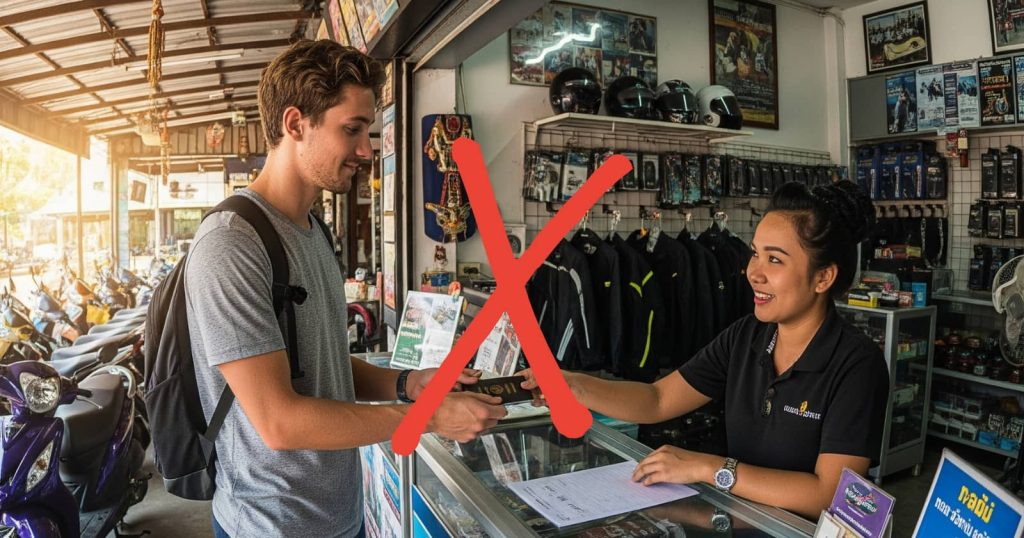
This is the golden rule of renting a scooter in Thailand: NEVER leave your original passport as a deposit.
Handing over your passport gives the rental shop all the power. If they decide to claim “damages” later—real or fake—they can hold your passport hostage until you pay their price.
Without your passport, you can’t leave the country. It’s the most common and effective scam you’ll face.
Here’s what to do instead:
- Offer a photocopy of your passport’s main page and your Thai visa/entry stamp.
- Provide a cash deposit. This is standard practice for reputable shops, typically between 1,000 to 5,000 THB.
- Always get a receipt that clearly states the deposit amount you paid.
If a shop refuses these alternatives and insists on your original passport, walk away immediately. Your passport is your most valuable document. Do not risk it.
2. Pre-Rental Inspection
Before you ride, become a forensic investigator. This five-minute process is your primary defense against paying for damage you didn’t cause.
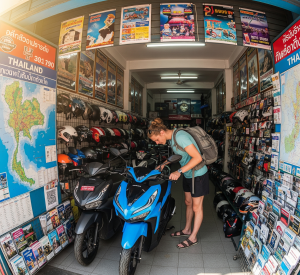
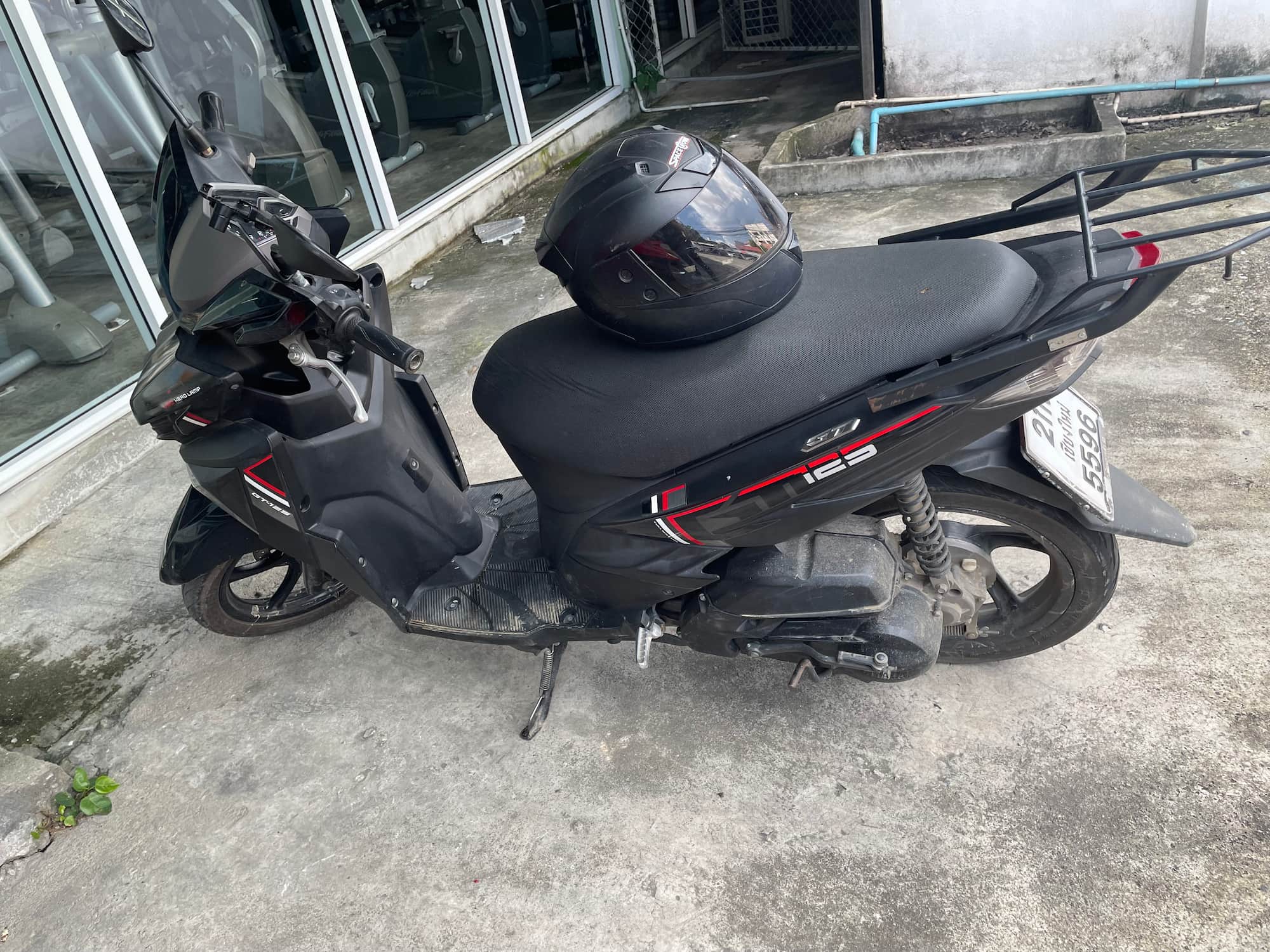
First, document the bike’s cosmetic condition.
- Use your phone to take photos and videos of the scooter from every possible angle.
- Zoom in on every single scratch, dent, or scuff you can find. Be meticulous.
Next, test the bike’s critical functions.
- Check the brakes. Both should feel firm.
- Test all lights. Headlights, taillights, and turn signals.
- Inspect the tires. They should not be bald or under-inflated.
- Note the fuel level. Don’t leave with an empty tank unless you’ve agreed to it.
A shop owner once tried to bill me for a tiny scratch near the footrest. Because I had photos that showed the scratch was already there, I was able to stand my ground and refuse to pay. Never skip this step—it’s your most powerful tool.
3) Find a Good Shop and Get a Fair Price
Where you rent from is just as important as how you rent. Follow these steps to find a trustworthy vendor and avoid overpaying.
Skip Your Hotel, Find a Local Shop:
Your hotel or guesthouse might offer scooter rentals, but they are almost always a more expensive middleman. For better prices and service, walk down the street and find an independent, local rental shop.
Use Google Maps to Vet Shops:
- Search for “scooter rental” or “motorbike rental” in your area.
- Focus on the reviews. Look for recent, positive comments that mention “fair prices,” “no scams,” or “easy deposit return.”
- Avoid shops with reviews complaining about damage scams or passport issues.
Always Negotiate the Price:
Rental rates in Thailand are rarely fixed. You can almost always get a better deal, especially if you’re renting for multiple days.
- Ask for a discount. A friendly, “Can you do a better price for three days?” often works.
- Understand tiered pricing. Shops usually have daily, 3-day, and weekly rates. The longer you rent, the cheaper the daily cost should be.
4) Know the Rules: Insurance, Licenses, and Safety Gear
Before you ride, you must understand three critical things that are non-negotiable for your safety and financial security.
- Your Insurance (Or Lack Thereof): Standard scooter rentals in Thailand do not include comprehensive insurance. If you crash, you are responsible for 100% of the repair costs. Furthermore, your travel insurance will likely deny your claim if you are not riding legally. Read your policy’s fine print—many exclude motorbike accidents unless you have a valid motorcycle license from your home country and were wearing a helmet.
- Driving Legally: To ride legally, you need an International Driving Permit (IDP) to accompany your valid home-country motorcycle license. Police checkpoints are common, and getting caught without an IDP means a fine. More importantly, riding illegally gives your travel insurance a perfect excuse to reject any accident-related claims, leaving you liable for everything.
- Always Wear a Helmet: This is not optional. It is required by law and is the single most important piece of safety equipment you can wear. Do not accept the flimsy, damaged helmets many shops provide. If you can, buy or rent a quality, certified helmet. Your safety is worth the small investment.
5) Riding Smart and Handling Trouble on the Road

Once you’re on the move, staying safe means being prepared. Drive defensively, stick to the left side of the road, and never drink and drive.
Should an accident or damage occur, remain calm and follow these steps:
- Stop Immediately. Do not leave the scene.
- Contact the Rental Shop. This should be your first call.
- Call the Tourist Police (1155). If another person is injured or another vehicle is involved, the tourist police can mediate and ensure you are treated fairly.
- Document Everything. Take photos of the scene, the damage, and any other vehicles involved. Do not agree to pay for anything on the spot.
Finally, always ride with photocopies of your passport and IDP, keeping the originals locked up safely at your hotel. This protects your essential documents and gives you what you need if stopped by police. If you face a language barrier, Google Translate is an essential tool for communicating clearly with shop owners or authorities.
Resource Pointers
Even with all the preparation, the travel landscape is ever-evolving. Here are some final pointers to keep you ahead of the curve.
Tap into the Savvy Traveler Network

Before you travel, or even once you’re on the ground, consult online traveler forums and Facebook groups dedicated to travel in Thailand. These communities are goldmines for real-time information. You’ll find recent discussions about reputable (and disreputable) rental shops, current scam alerts, and even tips on specific routes or road conditions. Search for groups like “Thailand Backpacking” or “Expats in [your specific city/island]”. People are often very willing to share their firsthand experiences and warnings.
Consider Alternatives to Self-Rental
While the freedom of a scooter is great, it’s not for everyone, especially if you’re new to riding or prefer not to navigate unfamiliar roads. For exploring islands or specific attractions, consider using local songthaews (shared taxis), tuk-tuks, or even taxi apps like Grab or Bolt. For longer excursions, many reputable tour operators offer organized trips that include transport to popular spots like Thailand’s stunning beaches and islands. This completely removes the stress of self-driving and dealing with rentals. If your trip is about soaking in the local flavors, perhaps exploring Thailand’s vibrant street food scene on foot or by public transport is a better, safer bet.
When to Say “No” to a Scooter
There are times when renting a scooter, despite your desire, is simply not a good idea. If you have no prior experience riding a motorbike, Thailand’s roads are not the place to learn. The traffic can be incredibly dense and unpredictable, especially in cities like Bangkok or Chiang Mai. If you’re feeling unwell, sleep-deprived, or under the influence of alcohol, absolutely do not ride. Your safety, and the safety of others, comes first.
Your Confident Ride Awaits
Renting a scooter in Thailand offers an unparalleled sense of adventure and freedom, allowing you to discover so much more than if you relied solely on public transport or taxis. But like any truly rewarding travel experience, it requires a little preparation and a lot of street smarts. By internalizing these key strategies, you’re not just renting a scooter; you’re taking control of your travel experience.
So, go forth! Embrace the open road, discover hidden waterfalls, and cruise along breathtaking coastlines. With these tips in your back pocket, you’ll confidently navigate the rental process, sidestep common scams, and ultimately enhance your Thai adventure. You’re now equipped with the insider knowledge to make better decisions on the road, travel more efficiently, and enjoy every moment, knowing you’ve outsmarted the potential pitfalls.