


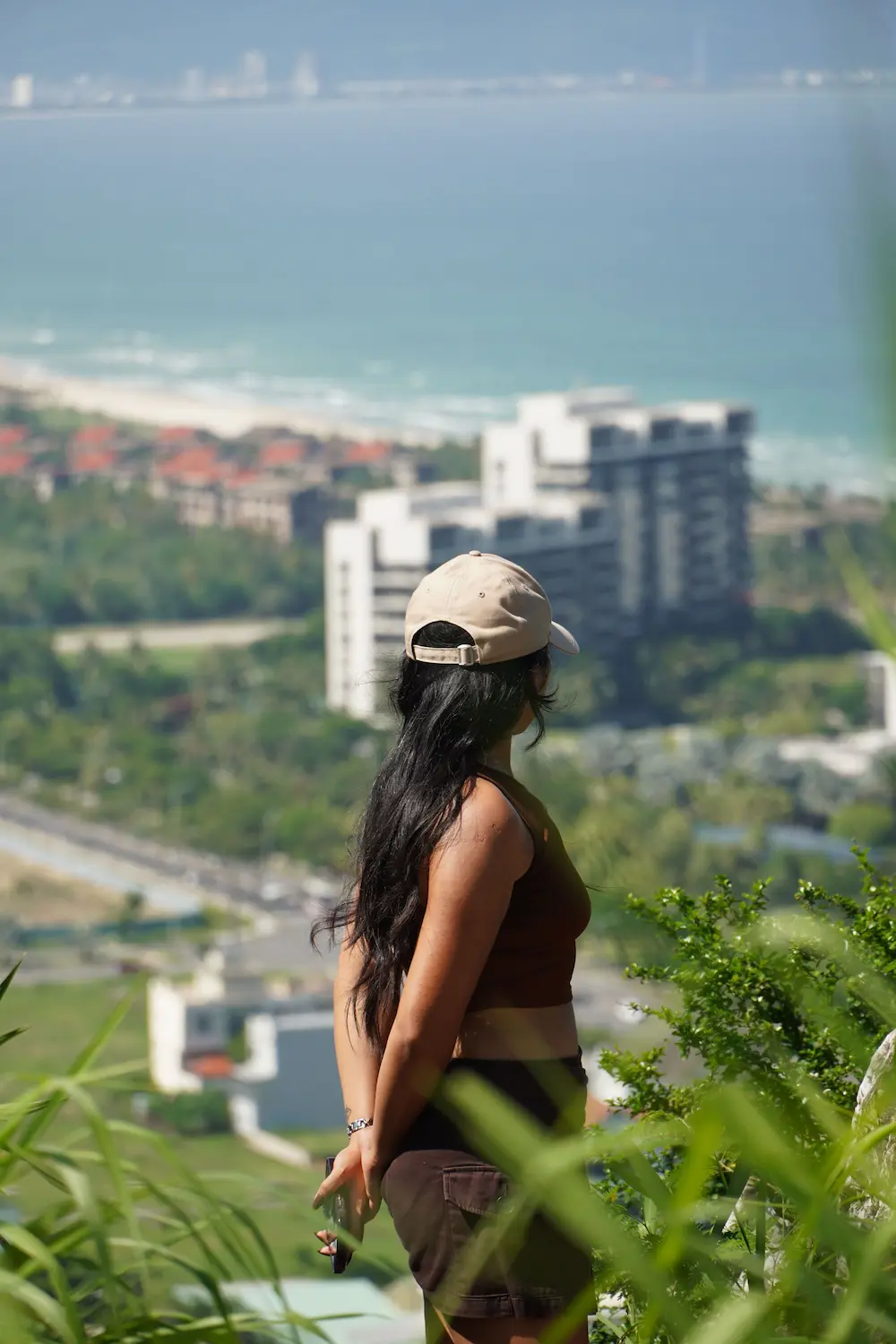
I first climbed the Marble Mountains in Da Nang in 2015, then went back with my partner eleven years later. Same stairs, same view at the top, and I still sweated through my brown top getting there.
Back then I was just ticking off a Da Nang attraction. This time my partner and I went with one question: was the Marble Mountains Da Nang trip as good as I remembered, or had I just been young and easily impressed? It’s better, in my opinion. If you only have half a day in Da Nang, spend it here and skip Hoi An.
Marble Mountains Da Nang at a Glance
| Category | Information |
|---|---|
| Vietnamese name | Ngũ Hành Sơn (also called Non Nuoc or Marble Mountains) |
| Meaning | “Five Elements Mountains”: five limestone hills named Metal, Water, Wood, Fire and Earth |
| Location | About 8 km southeast of Da Nang city center, on the road toward Hoi An |
| Getting there | Roughly 20 to 30 minutes from Da Nang by Grab, taxi or motorbike; parking at the foot of the mountain |
| Main mountain | Thuy Son (Water Mountain), home to the caves, pagodas and viewpoints most visitors come for |
| Best-known caves | Huyen Khong, Am Phu, Tang Chon, Van Thong, Hoa Nghiem and Linh Nham |
| Main pagodas | Linh Ung Pagoda, plus smaller shrines and temples built into the caves |
| Viewpoints | Vong Hai Dai (sea and beach views) and Vong Giang Dai (city and river views) |
| Opening hours | Daily, 7:00 AM to 5:30 PM |
| Entrance fee | 40,000 VND for Thuy Son (I remember it being 20,000 VND in 2015); Am Phu Cave has a separate 20,000 VND ticket |
| Elevator | Optional, 15,000 VND one way; only reaches the mid-level, so stairs remain |
| Entrances | Shorter, steeper route by the Am Phu bridge; longer route near Linh Ung Pagoda with more temples, caves and benches |
| Time needed | Half a day; we stayed about 3 hours and walked around 11,000 steps |
| Best time to visit | Early morning to avoid the heat; light beams in Huyen Khong Cave usually appear between 9:00 and 11:00 |
| Bring | Plenty of water, grippy shoes, cash, and a phone light if you plan to explore the small caves |
| Nearby | Non Nuoc stone-carving village at the foot of the mountains; My Khe Beach and Hoi An both within easy reach |
What Are the Marble Mountains?
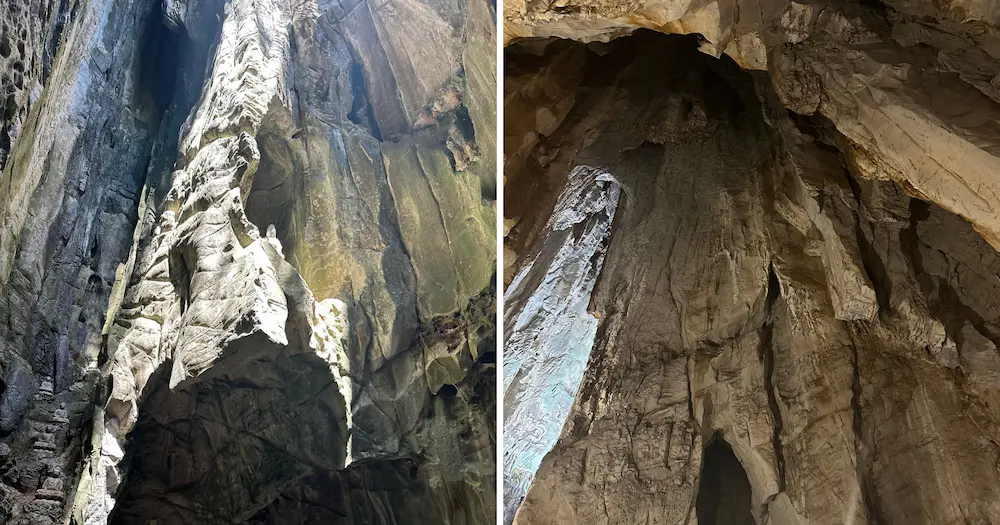
The Marble Mountains, or Ngu Hanh Son in Vietnamese, are a cluster of five limestone hills about 8 kilometers southeast of Da Nang city center. Each is named for an element: Metal, Water, Wood, Fire and Earth. The one almost everyone visits is Thuy Son, the Water Mountain. It holds the caves, pagodas and viewpoints that most people mean when they talk about the Marble Mountains.
There’s a lot of history inside the rock too. During the Vietnam War, the Viet Cong used the caves, especially Huyen Khong Cave, as a hideout, hospital and supply base, which is strange to think about when you’re standing inside one of them now.
How to Get There
The mountains sit roughly halfway between Da Nang and Hoi An, so they’re easy to fit into a day heading either way. My partner and I were staying at Prince Hotel Da Nang, and we opted to take a Grab from our hotel to the mountains. It took around 20 minutes to get there, and we paid around 180,000 VND (only 7 USD!). There’s parking at the foot of the mountain if you’re on a bike.
We got there around 10:30 AM. That’s later than I’d recommend, since it was already very hot and sunny and the steps have little shade in places, but the sunbeams were still coming through the cave ceiling when we reached Huyen Khong. The site is open daily from 7:00 AM to 5:30 PM, so the earlier you start, the cooler the climb.
Which Entrance Should You Use?
There are a few ways in, and the one you choose changes your whole visit. Here’s how it worked out for us.
The Am Phu entrance (the short way). This one has a bridge, and under the bridge is a small lake with sculpted hands reaching up out of it. It’s a taste of what’s inside, and it’s dramatic. If you’ve seen the hands at Wat Sri Don Moon in Chiang Mai, this will feel familiar. The bridge itself is symbolic: the yin-yang bridge to Am Phu Cave represents the path to both heaven and hell. This is the quickest way up the mountain, with a shorter and steeper staircase and no lift.
The second entrance (the longer way). Walk a little further and you’ll find another entrance with more steps and stairs, but also many more temples and caves to discover. I’d choose this one if you have the energy. There are plenty of benches along the way to rest on, and you’ll need them. This is the side near Linh Ung Pagoda, and the route from this gate passes Linh Ung Pagoda, Tang Chon Cave, Xa Loi Tower and Vong Hai Dai before reaching the peak and Huyen Khong Cave.
What it costs. At the time of writing, Thuy Son entry is listed at 40,000 VND for adults, and Am Phu Cave has its own ticket at 20,000 VND. The Am Phu ticket isn’t covered by the main Marble Mountains ticket, so you buy them separately. If you’d rather skip the stairs at the start, there’s an optional elevator for 15,000 VND one way. Be aware that the lift only takes you to the mid-level, so you still have stairs ahead. Bring cash in case.
The Steep, Narrow Way Up
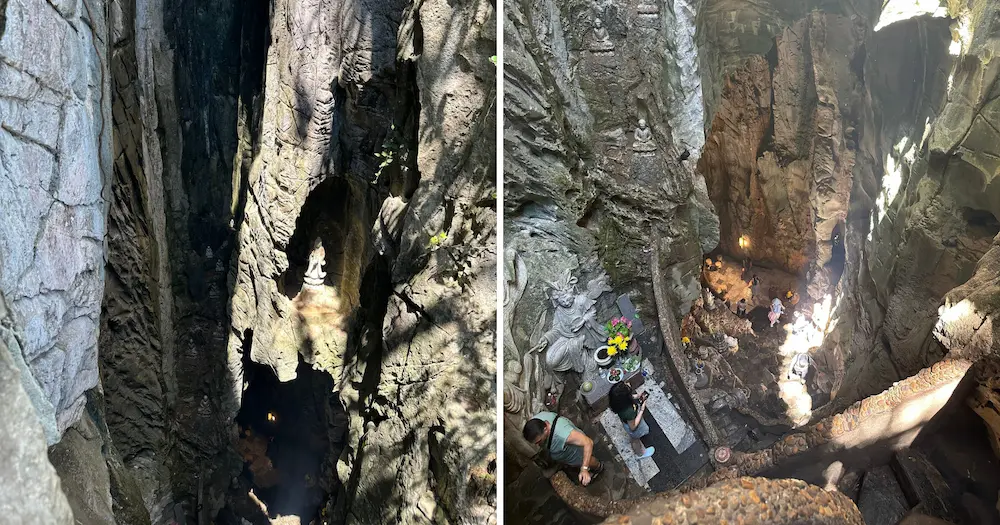
We took a very steep, narrow way up. Water runs down it all the time, so the stone is slippery even on a sunny day, and it felt a little dangerous. I stopped chatting and watched every step.
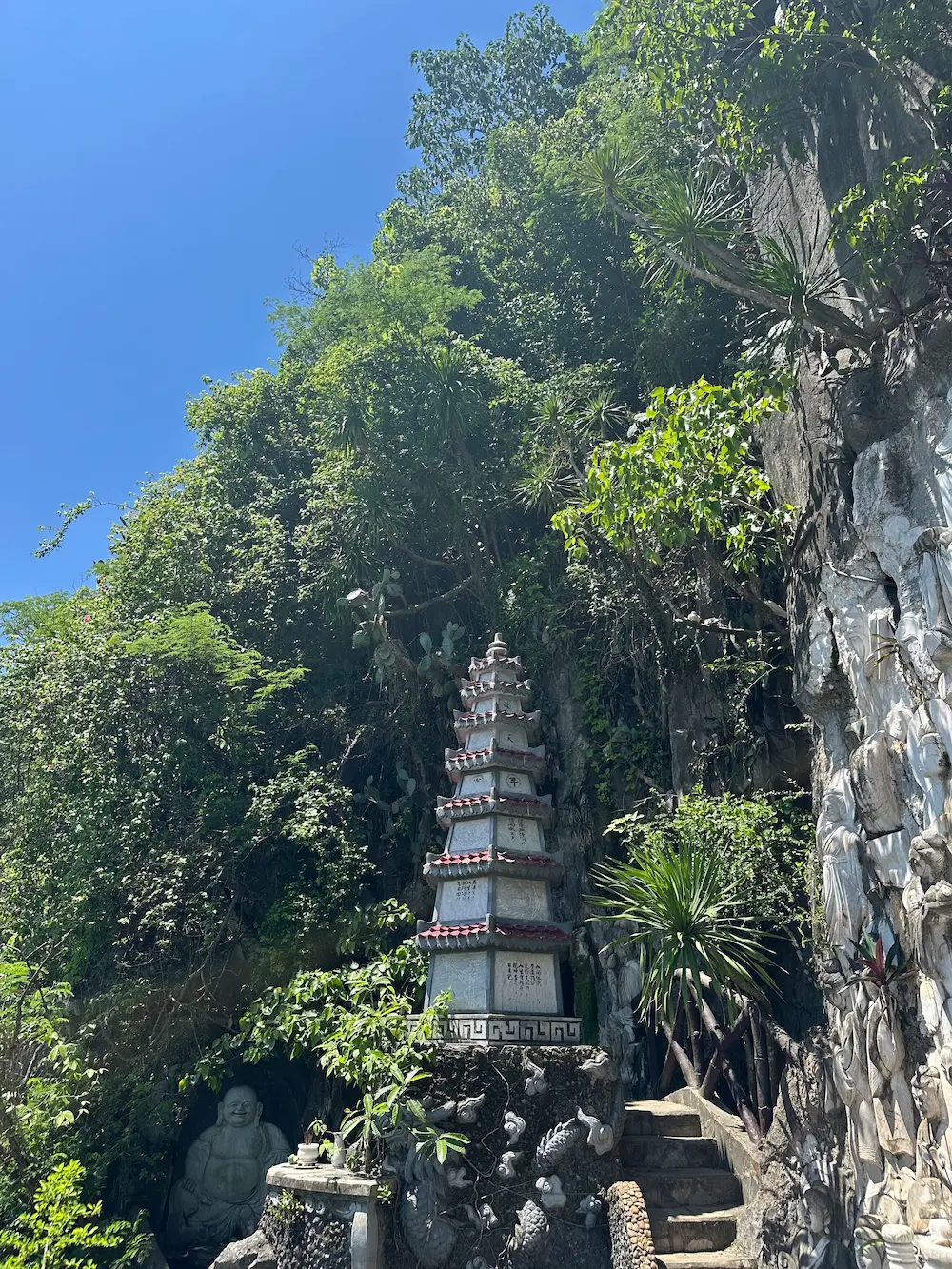
Wear shoes with real grip, go slowly, and skip this route if you’re with kids or anyone who isn’t steady on their feet. Coming back down is trickier than going up.
Where the narrow part ends, a small pagoda sits tucked into the greenery. It’s a slender stone tower with tiers of little red-tiled roofs and Chinese characters carved into its sides.
A gray stone Buddha sits in an alcove right next to it, and white marble figures are carved into the cliff beside the steps. It’s a good spot to catch your breath before you climb back down.
The Temple at the Heart of the Mountain
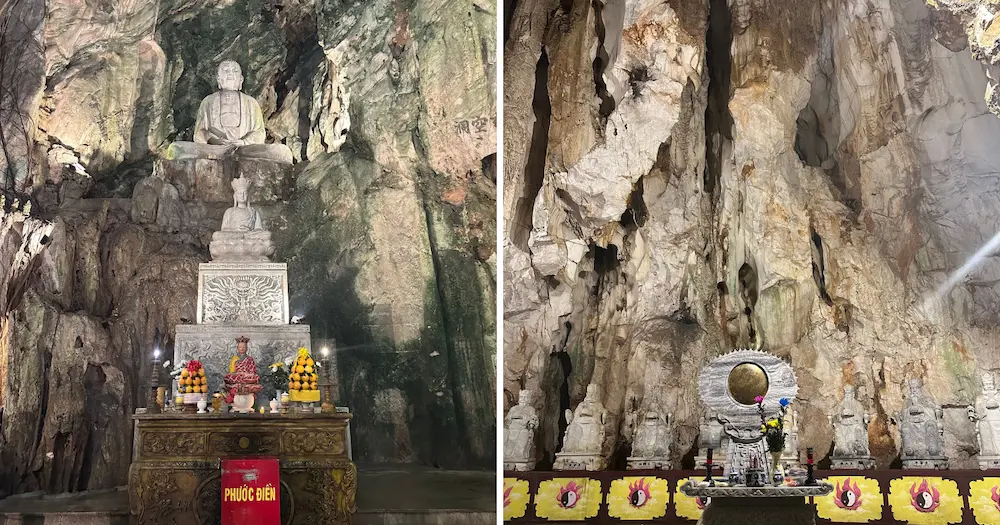
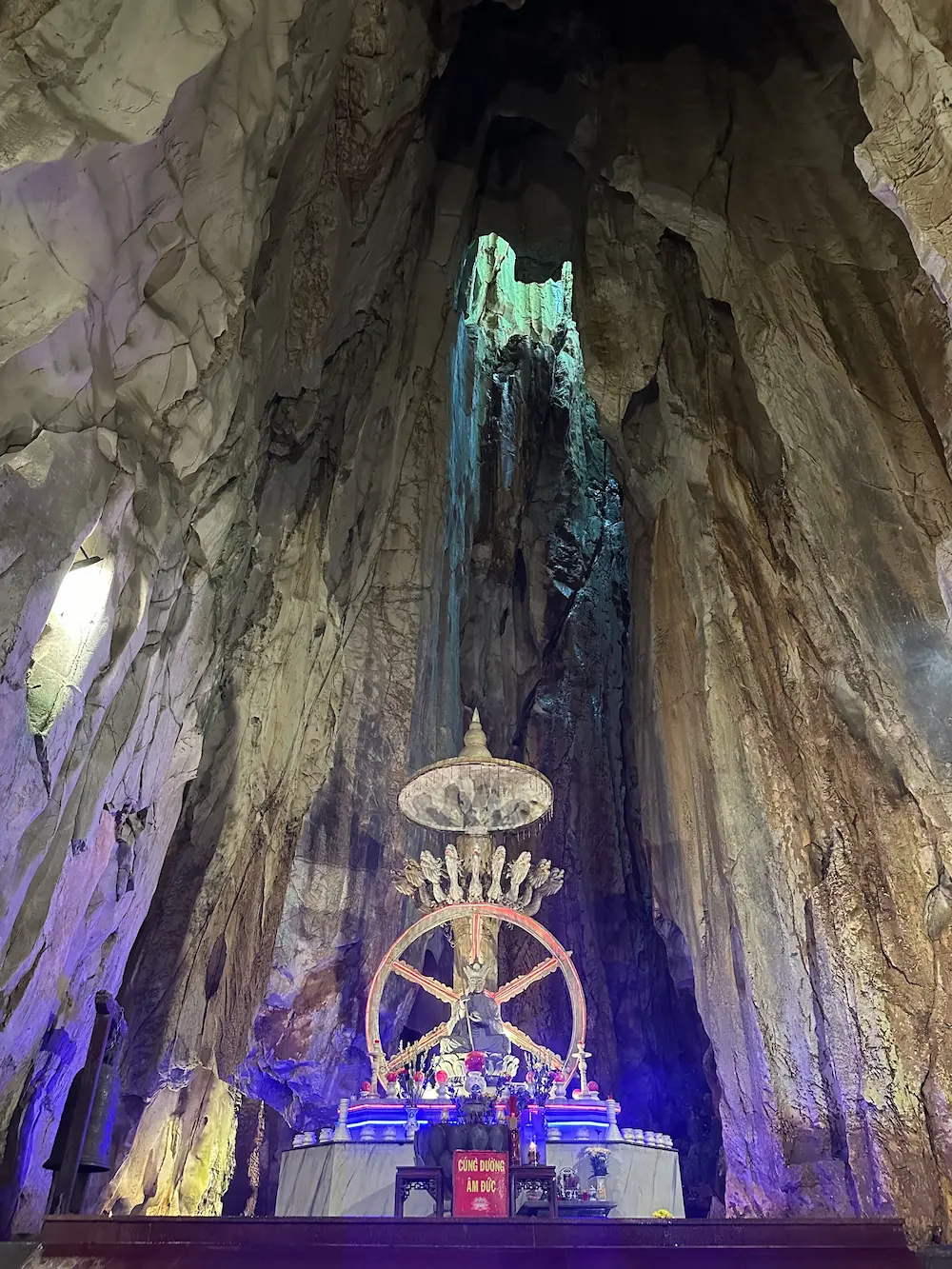
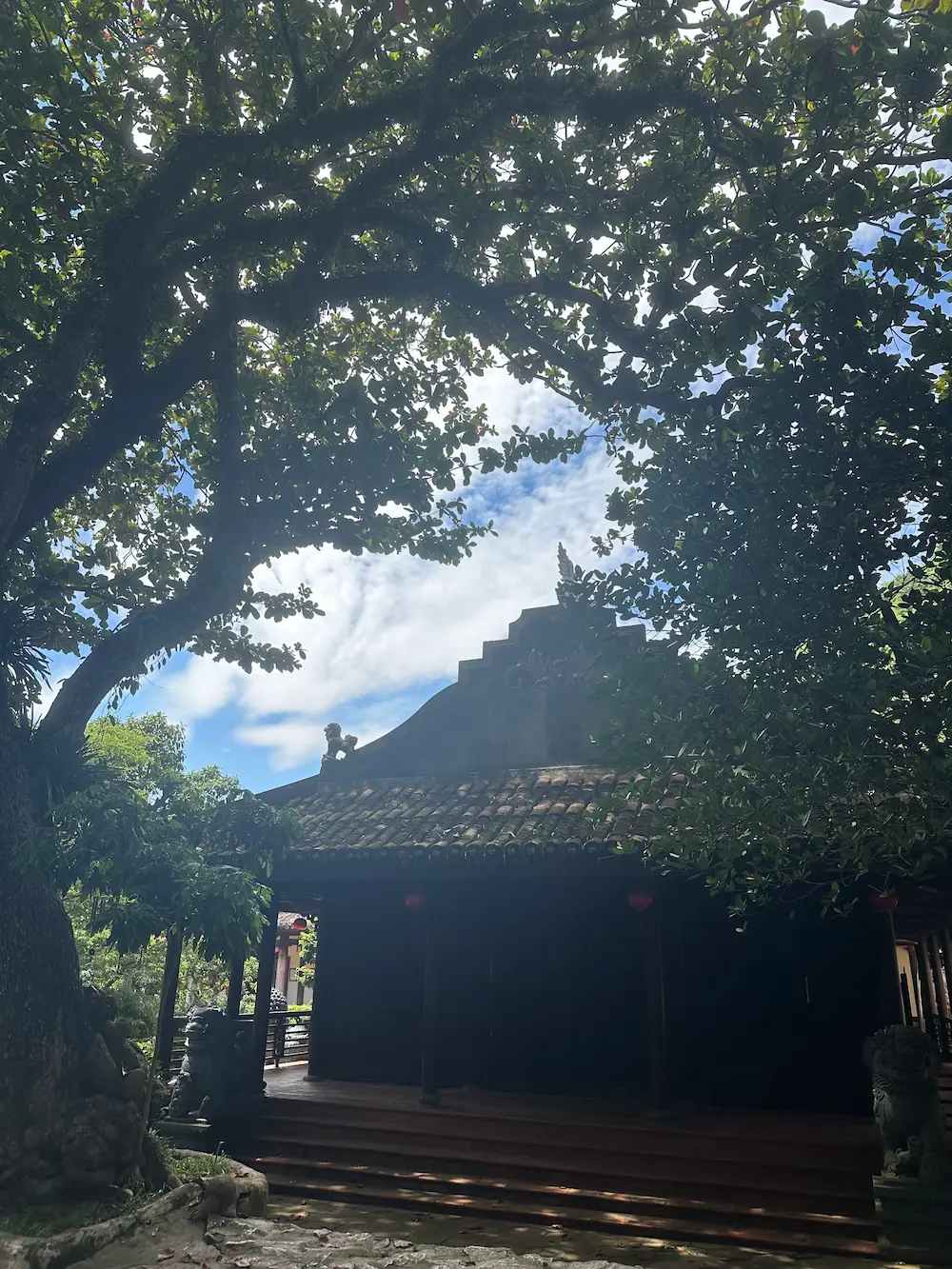
Right in the center of the mountain, inside a cave, there’s a temple. Natural drops of water fall from the rock above it, and the whole space is hushed and cool after the sweaty climb.
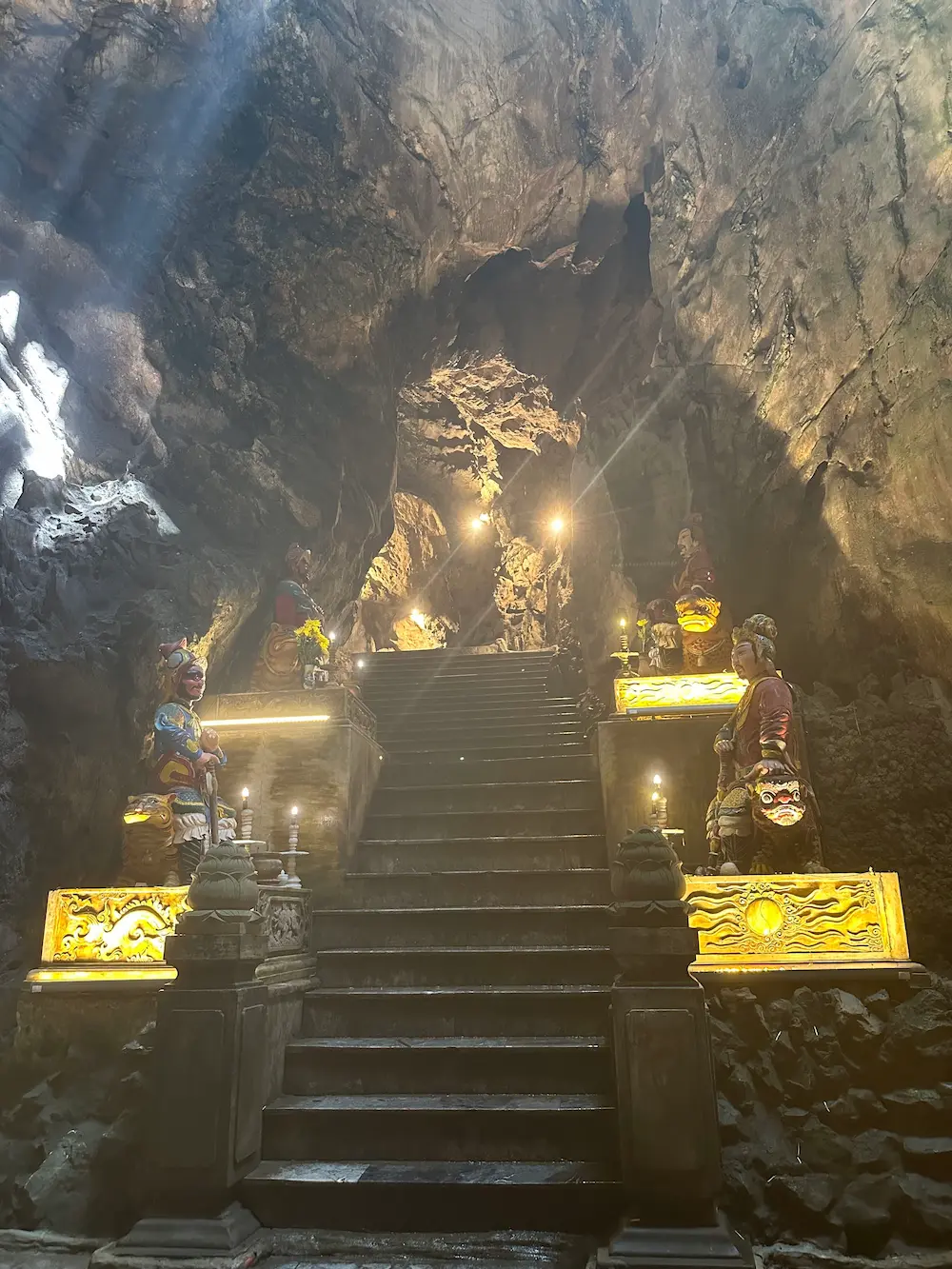
This is Huyen Khong Cave, the biggest and most photographed one. The light beams usually show up between 9:00 and 11:00, so if you want the famous sunlight-through-the-ceiling photo, time your visit for then.
When we walked in, it was cool and quiet, with water dripping somewhere, and a beam of light was coming down through the ceiling right beside the Buddha.
The Caves (and the One I Skipped)
There’s more than one cave here. By most counts there are nine, including Huyen Khong, Am Phu, Tang Chon, Van Thong, Hoa Nghiem and Linh Nham, plus some small unnamed ones. A few worth knowing:
- Am Phu Cave is the hell cave, and we went in. Ten stone kings of the underworld line the cave wall, with yin-yang symbols on the panels in front of them. The deeper you go, the darker it gets, hence the name.
- Tang Chon Cave is tucked directly behind Linh Ung Pagoda, and you have to duck under a low limestone arch to get in. Inside are several chambers with Buddha statues, shrines and marble sculptures, and it’s home to bats. It’s the one most people walk right past.
- Van Thong Cave is the cave that opens to the sky.
- Hoa Nghiem and Linh Nham are smaller. If you visit Linh Nham in flip-flops, watch your step on the rocks.
Some of these caves have caves of their own, narrow passages leading further in. If you like adventure, I’d say try them. They’re not for me. A few have drawings and figures of demons and similar things, and that’s where I turned around and waited outside. If it sounds like fun to you, bring a torch or a phone light. If it sounds like a bad idea, you can skip them and still have a great day.
More Temples Along the Way
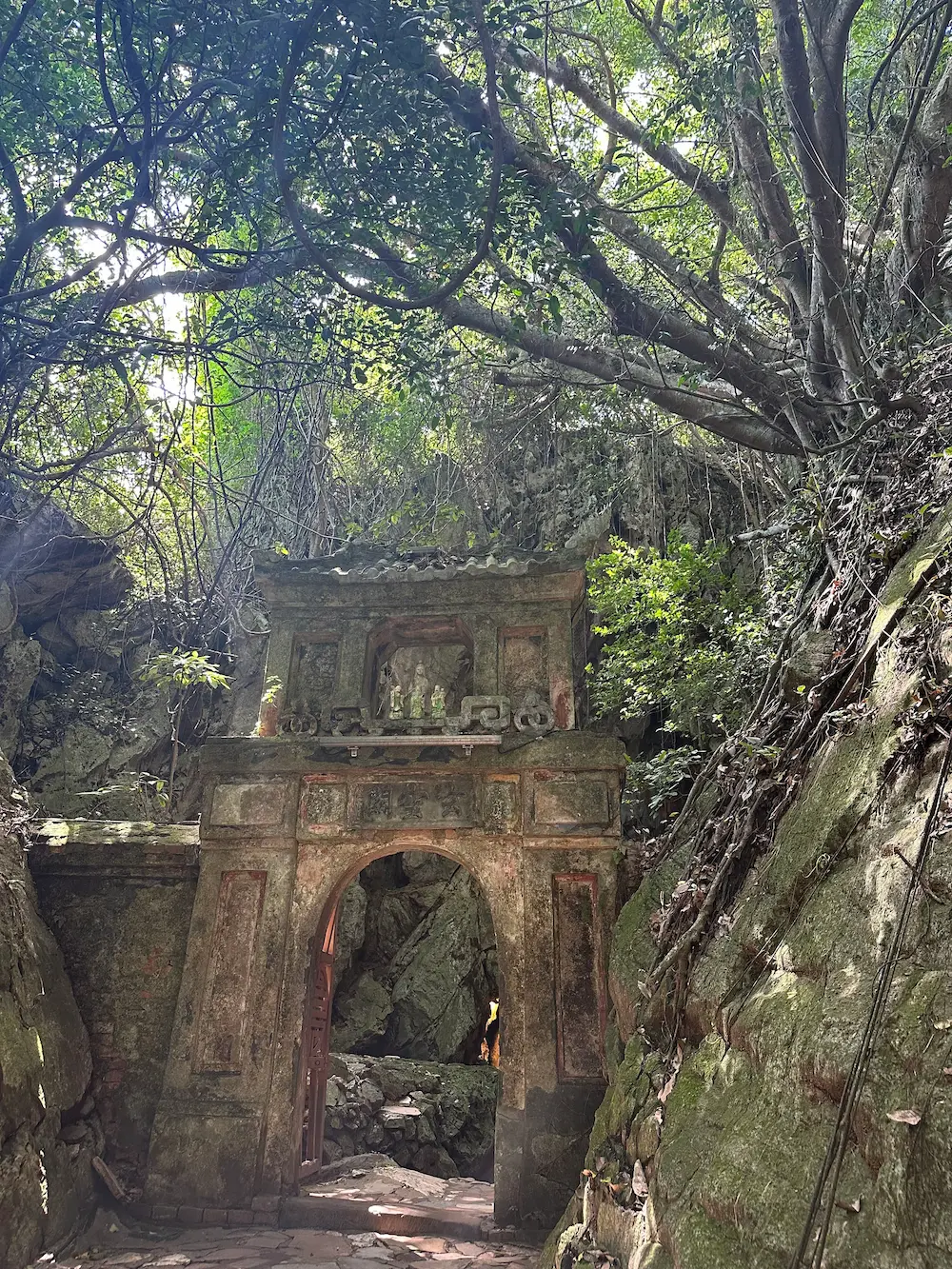
The longer route is worth it for the temples alone. Along the stairs you’ll pass pagodas and shrines, and the highlight is Linh Ung Pagoda. It was rebuilt in 1825 by Emperor Minh Mang, then renamed Linh Ung in 1891, a name it keeps today. Nearby stands Xa Loi Tower, a 15-meter pagoda tower built in 1997. Don’t confuse this with the giant Lady Buddha statue on the Son Tra Peninsula. It’s a different pagoda with a similar name.
Many of the caves on this side hold Buddha statues and small temples. I’m not an expert on which statue is which, and I won’t pretend to be. You don’t need to be one to feel the calm in these places.
The Peak: Painful but Worth It
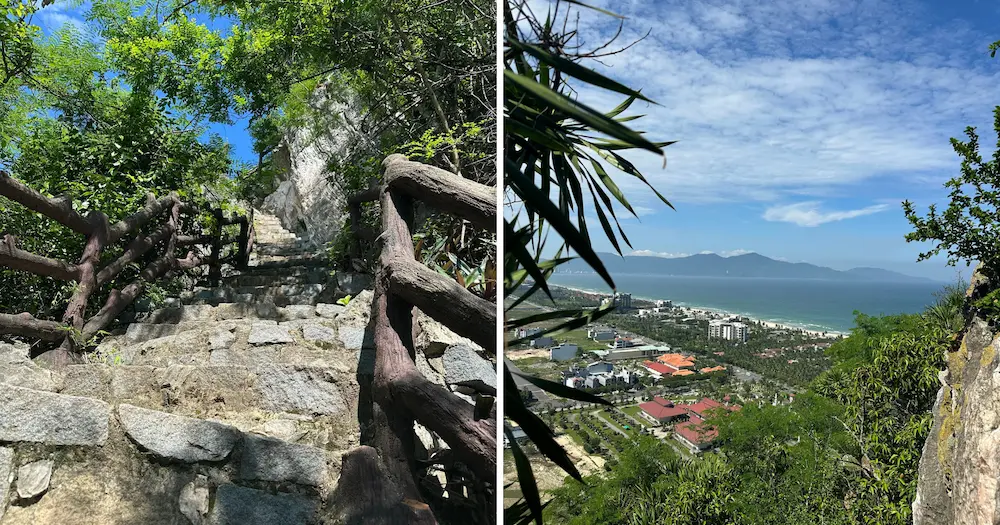
After the temples and caves, my partner and I kept going up. The walk to the top was painstaking: the steps are steep and uneven, the sun was relentless, and there were moments I seriously considered turning around.
Then we reached the top, and the view made it all worthwhile. You can see the long beach strip curving along the coast, the town spread out below, and the sea beyond. There are several lookouts on the mountain. Vong Hai Dai, reached by stone steps to the right of Linh Ung Pagoda, looks out over the golden beach and the sea toward Cu Lao Cham island. Vong Giang Dai looks over the city, the sea and the winding river.
The best advice I can give you is simple: bring water. Bring more than you think you need. It was very hot and sunny on our day, and there’s nothing worse than a steep climb with an empty bottle. Wear shoes with grip too, since the old marble steps get slippery.
After the Climb
After about three hours and around 11,000 steps, we walked seven minutes along the main road to a small restaurant (called Hùng68) run by an older mother and her son. It’s close enough to add to the trip without a second ride, and after that climb we were happy to sit down for lunch and Vietnamese coffee.
2015 vs. Now: What Changed
More people, of course.
If I remember right, the entrance was only 20,000 VND back then, and now it’s 40,000. The elevator was being fixed when we went in 2015, so everyone walked. The steep steps, the temple in the cave and the view from the top are exactly as I remembered.
Why I’d Pick This Over Hoi An
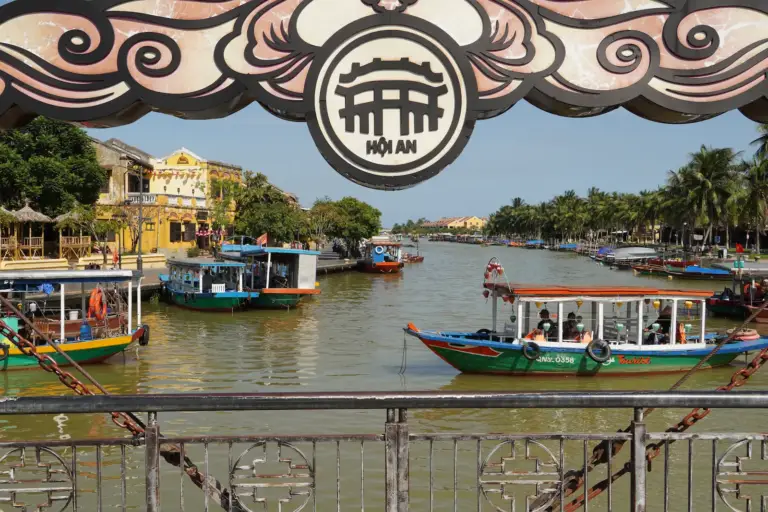
To me, Hoi An has gone from a cute historic place to a town of shops selling the same stuff over and over. It’s basically for shopping now, and the prices are well above what you’d normally pay in Vietnam. I didn’t feel any real culture or history left. It looks like it was just made colorful to appeal to tourists.
The Marble Mountains are a place you do something. You climb, you sweat, you duck into caves, you find a temple hiding inside a mountain, and you earn the view at the top. Hoi An is a place you walk through and shop.
It also costs next to nothing. Entry is about 40,000 VND, roughly 1.50 USD, and you only need about half a day. The mountains sit roughly halfway between Da Nang and Hoi An, so you can still stop in Hoi An afterward if you want to see it for yourself.
Marble Mountains Da Nang FAQ
How long do you need at the Marble Mountains?
We stayed about 3 hours and walked around 11,000 steps. Plan on half a day, with a meal afterward.
How much is the ticket?
Thuy Son entry is listed at 40,000 VND, and Am Phu Cave has a separate 20,000 VND ticket. The elevator is 15,000 VND one way.
Is the climb hard?
It can be, especially in the heat. The steps are steep, and the narrow route is slippery. Bring water, wear shoes with grip, and take the longer route if you want benches to rest on.
Are the Marble Mountains better than Hoi An?
In my opinion, yes, if you only have half a day. You get caves, temples and a big view instead of shop after shop.
Final Thoughts
Between 2015 and now, the Marble Mountains got busier and the ticket got pricier, but the steps still hurt, the temple in the cave still amazed me, and the view still made me forget about the climb. That’s more than I can say for Hoi An.
If you’re in Da Nang with half a day to spare, this is what I’d spend it on. Go early, carry plenty of water, wear shoes you can climb in, and don’t skip the longer route if you have the energy. I’d like to say I’ll wait another eleven years before going back, but I doubt it will be that long.