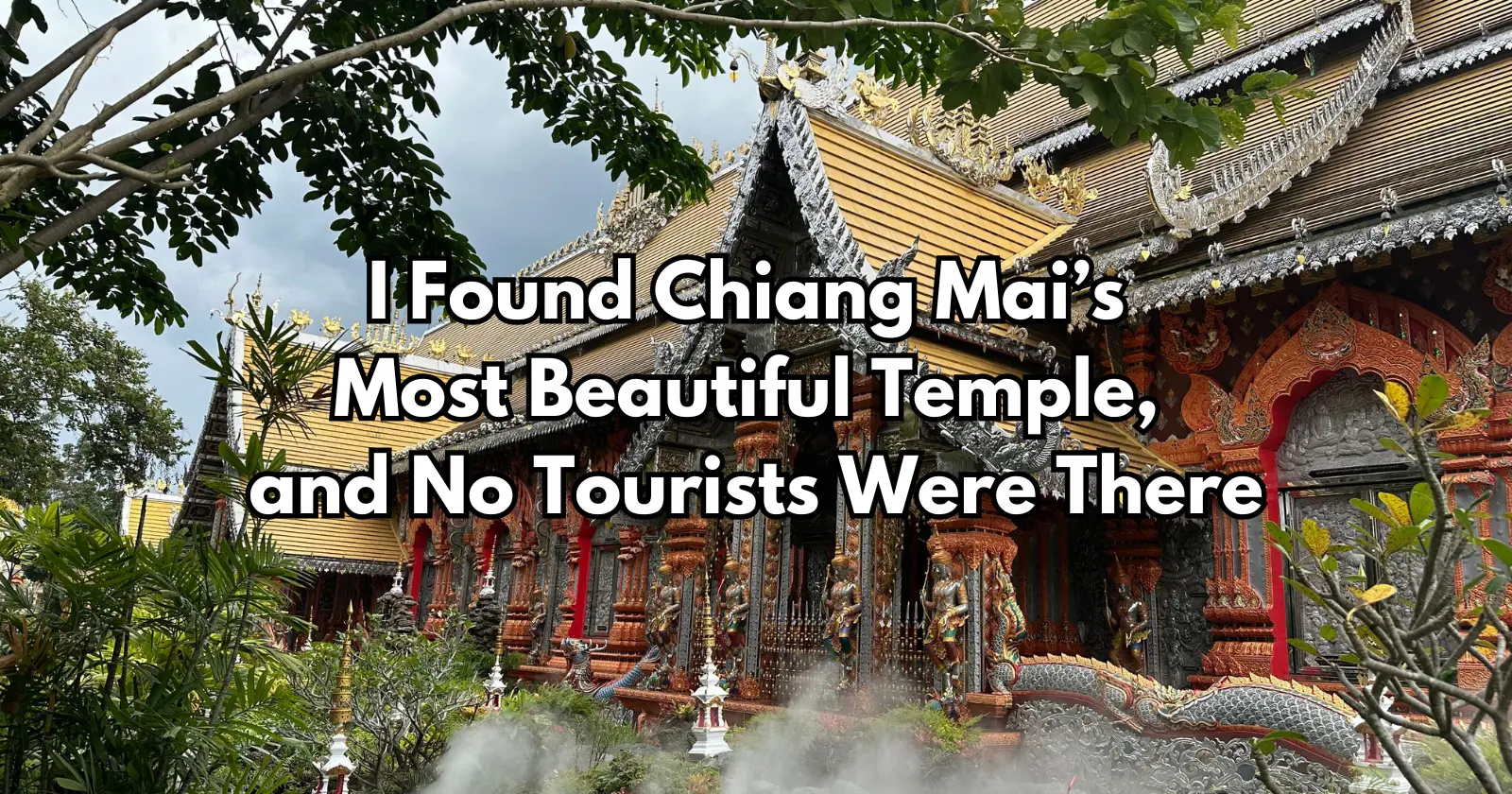
Six years in Chiang Mai, and I honestly thought I was done with temples.
Not in a bad way! I love them. But I’ve lit candles at Wat Phra Singh, climbed the Naga stairs to Doi Suthep, and posed for the usual photo at the Silver Temple. Add all the little neighborhood temples I ride past, and after a while they start to look the same in my camera roll.
So when we hopped on my partner’s motorbike to check out “one more temple” outside the city, my expectations were low. Very low.
Then we walked into Wat Sri Don Moon, and I just stood there with my mouth open.
Gold everywhere. Pillars covered in mirror tiles. A Buddha so big I had to step all the way back to fit him in one photo. And outside, a pile of white hands reaching up from hell. Yes, really.
No contest, it’s the most beautiful temple I’ve been to in Thailand. And we were the only foreigners there.
Wat Sri Don Moon at a Glance
| Category | Information |
|---|---|
| Thai name | วัดศรีดอนมูล (also spelled Wat Sri Don Mun or Wat Si Don Mun) |
| Meaning | “Temple of the Auspicious Raised Mound” |
| Location | Chom Phu subdistrict, Saraphi district, southeast of Chiang Mai city |
| Getting there | About 25 minutes by motorbike from the city, via the superhighway |
| Main Buddha | Luang Pho Phet, seated in the “victory over Mara” pose |
| Abbot | Kruba Noi Techapanyo, a famous meditation monk in the Lanna forest tradition |
| History | Possibly founded in the 15th century; abandoned during the Burmese wars, then restored in the late 1700s by families from Chiang Saen |
| Parking | Free, next to the food stalls across from the temple |
| Fortune machine | 20 THB |
| Crowd | Mostly Thai visitors and locals |
| Dress code | Shoulders and knees covered; stricter rules for the inner temple at the back |
The Ride to Saraphi (and Why There Were No Tourists)
We went the way most people in Chiang Mai go anywhere: on my partner’s motorbike, with me on the back holding the phone and the directions.
The first part of the trip is not glamorous. You get on the superhighway, and for a while it’s just trucks, songthaews, and the hot wind slapping your face. Then the scenery slowly changes. The big roads give way to smaller ones, and suddenly you’re riding through a quiet, suburb-like neighborhood. Houses with little gardens. Dogs napping in the shade. Aunties selling fruit by the road.
About 25 minutes later, we arrived.
Parking was easy. Right across from the temple, there’s a row of small food stalls, and you can simply park your bike next to them. No parking attendants, no fees, no stress. (And yes, I noted the stalls for a post-temple snack.)
The first thing I noticed when we walked in? There were no foreigners. Not a single tour group, not one selfie stick. Only locals and Thai families who came to pray and make merit.
Honestly, this made the whole experience feel more authentic. Nobody was performing for a camera. People were simply there for their faith, and we got to quietly be part of that for a few hours.
The Museum, the Garden, and the Hands From Hell
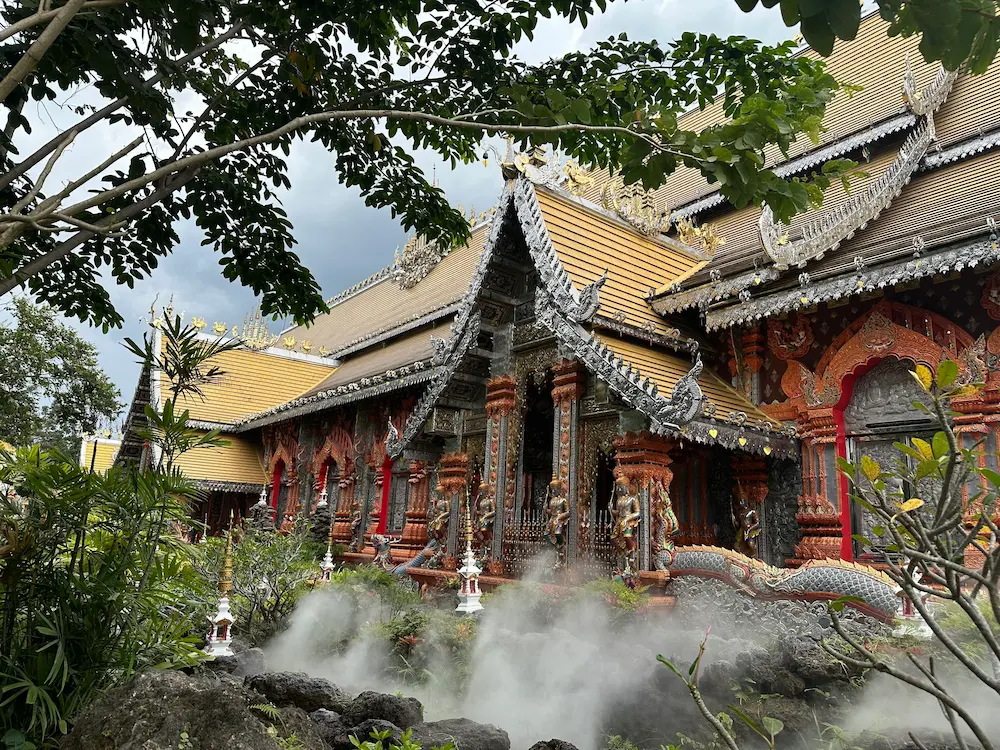
Before you even reach the main temple, you pass a building that works almost like a museum. It’s the Kuti Song Lanna Yanasangwararam, a traditional Lanna-style monks’ residence built in 1996. The name roughly means “abode of wisdom and restraint,” which is a very fitting name for a place where monks live.
Then there’s the garden. And wow, the garden.
It’s huge, and it is very well maintained. There are little ponds, small waterfalls, and naga staircases half swallowed by creeping plants. Every corner looks like someone actually cares for it every single day.
But the decoration that stopped me in my tracks was the sculpture at the back of the main hall.
Picture this: a towering wall covered in silver, gold, and blue mosaic. In the middle, a long staircase descends from the sky, and a golden standing Buddha is walking down it. This scene shows the Buddha coming down from heaven to the ancient city of Sankassa, and the plaque below it is named after that city.
And underneath it all? Dozens of white hands reaching up from a pool of red. Some are clawing. Some are grasping. A few ghostly faces are mixed in between them.
These are the hands from hell. They represent souls suffering for their bad karma, reaching up toward the Buddha for salvation. It’s creepy, it’s dramatic, and it makes an amazing photo. My partner and I just stood there for a while, staring. It’s one of those images that sticks with you long after you leave.
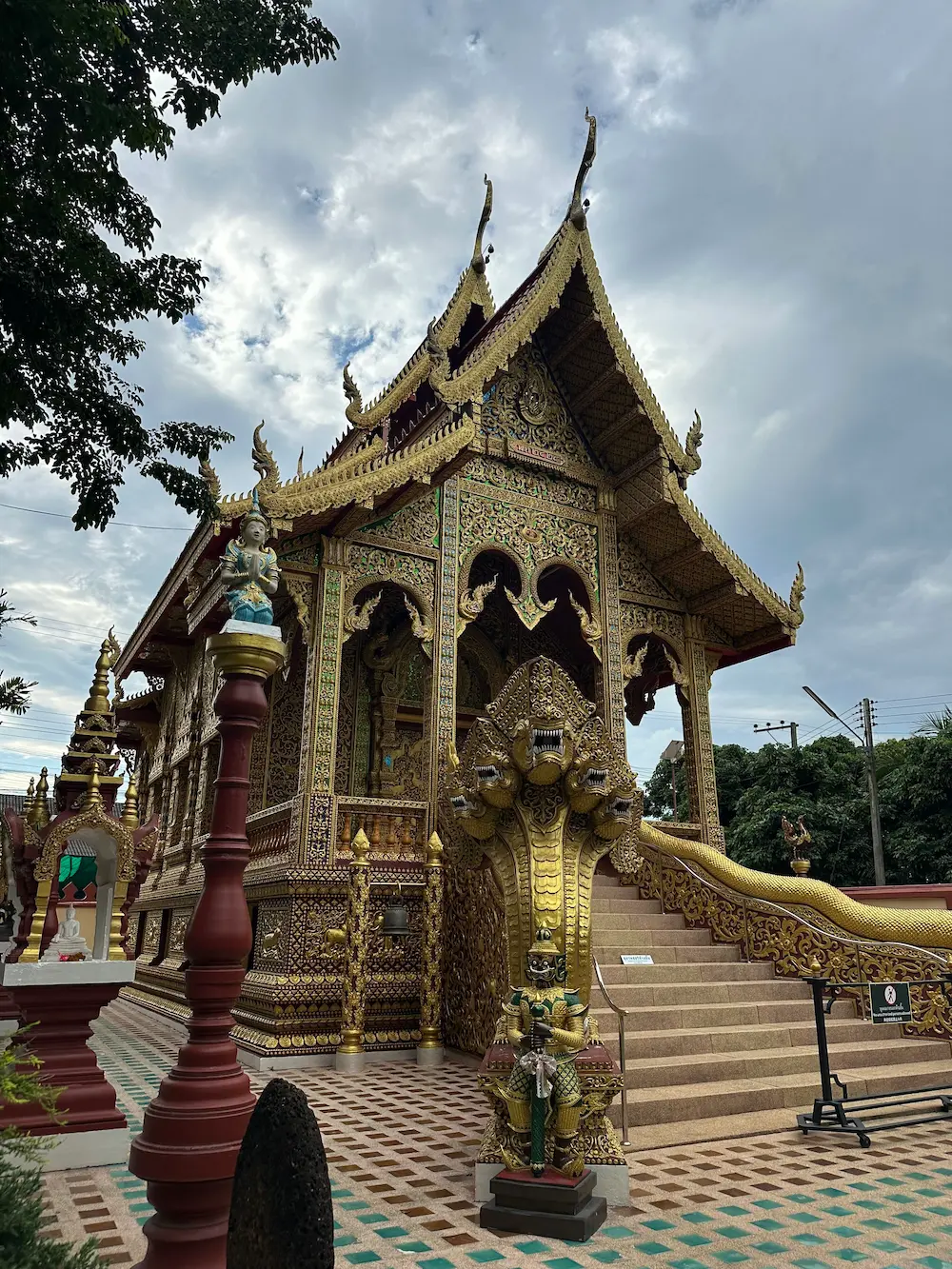 | 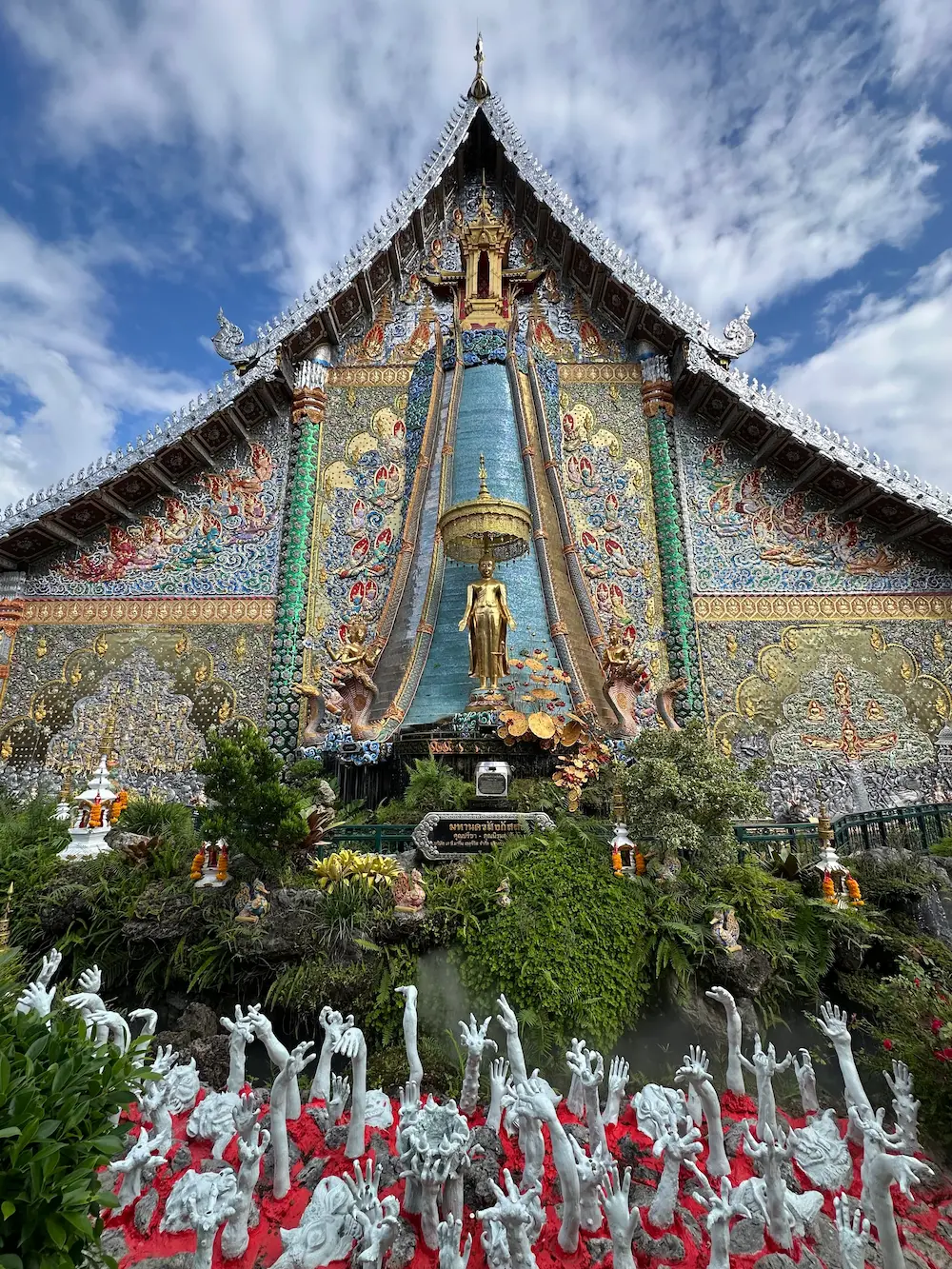 |
| The Kuti Song Lanna monks’ residence, and the hands from hell reaching up toward the Buddha. | |
Inside the Main Hall: Gold, Gems, and Luang Pho Phet
I’ve seen a lot of temple interiors in Thailand. Nothing prepared me for this one.
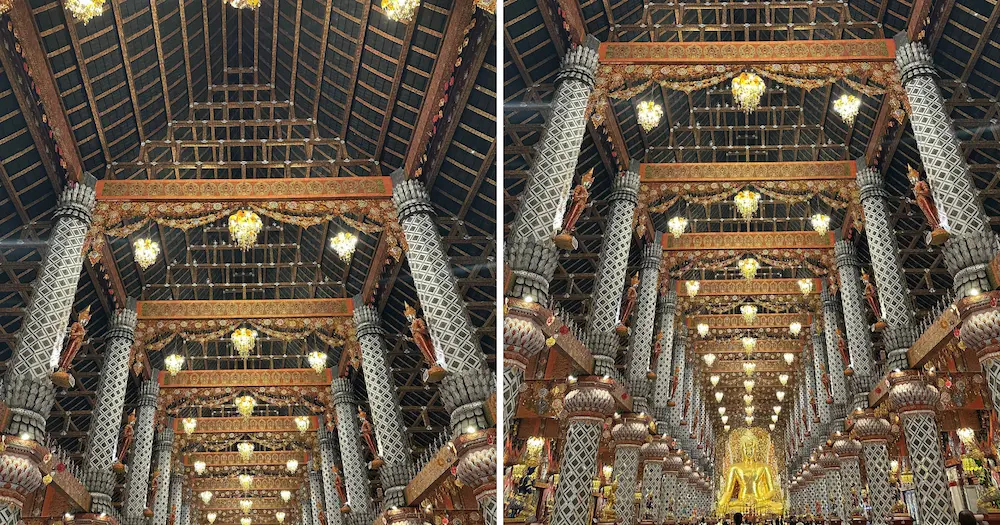
The moment you step inside the main hall (the Maha Wihan Boon Barami), you look up. You can’t help it. The ceiling is a massive grid of dark wooden beams, trimmed in gold and red, with crystal chandeliers dangling down the center like giant earrings. Tall pillars line both sides, each one wrapped in a diamond pattern of silver and mirror tiles that catch the light.
And at the end of it all sits Luang Pho Phet, the main Buddha.
He is enormous. He sits high above everyone, completely covered in gold, glowing against a backdrop of red, silver, and golden leaves. His hand touches the ground in the pose that shows the Buddha’s victory over Mara, the demon of temptation. From the side, you can really see how massive he is. His shoulders and knees are bigger than me!
In front of him, a few Thai people were kneeling and praying, holding flowers, candles, and incense as offerings. It was quiet. Peaceful. I felt like I should whisper even when I wasn’t talking.
Then I started noticing the details. On each side of the hall, there’s a line of smaller figurines in different colors. Some are purple, some are silver, some are gold. One kneeling deity in deep purple with fangs and a golden crown had his palms pressed together in a wai, as if he were praying with us. Each figure has a small plaque naming the family who donated it.
Even the door on the opposite side of the Buddha is a work of art. The whole wall around it is filled with silver and gold reliefs of Hindu and Buddhist deities, a giant golden canopy, and painted angels floating on a black, starry background.
Everything was colorful. Everything was shining. I kept turning around and finding something new.
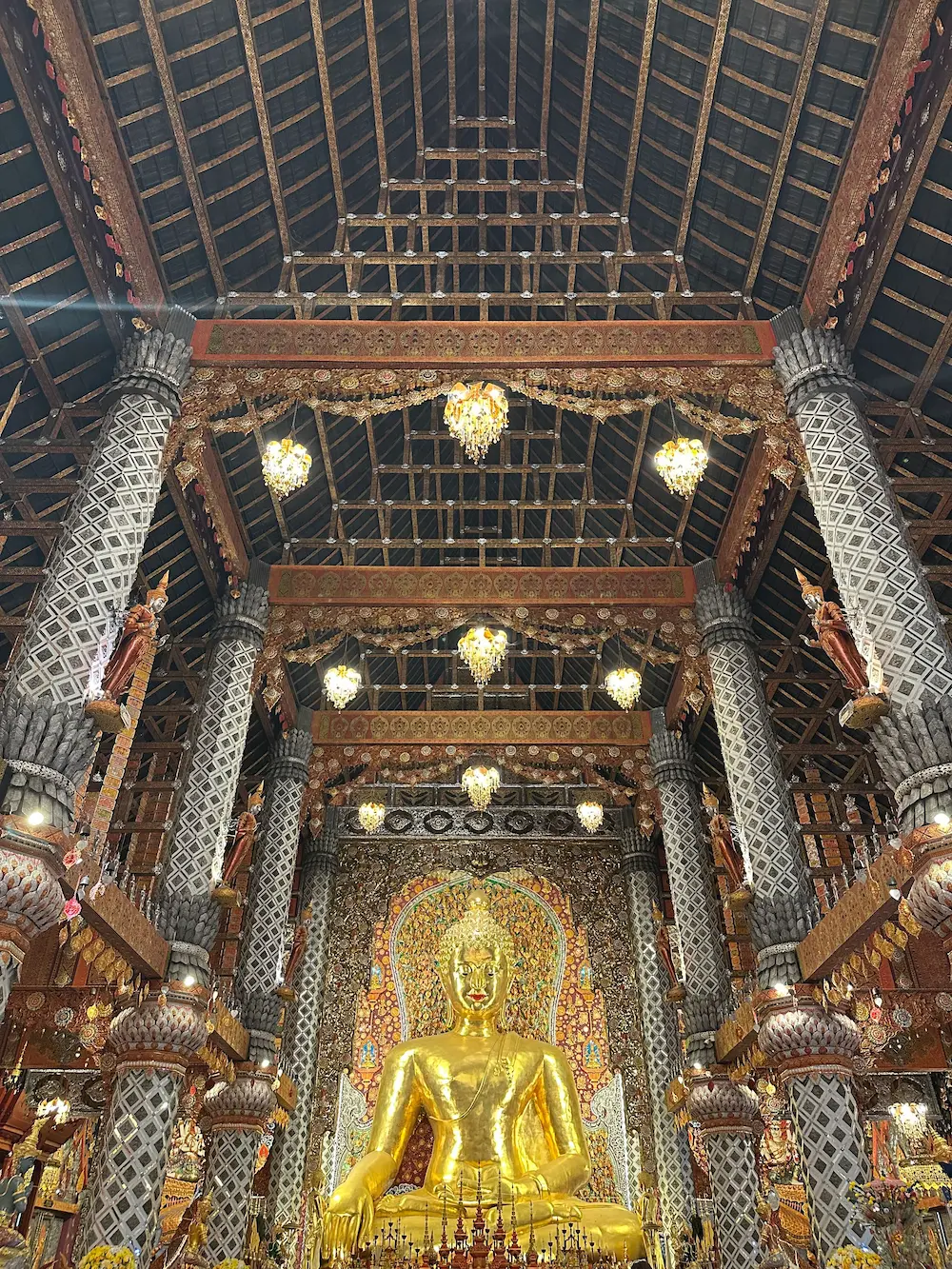 | 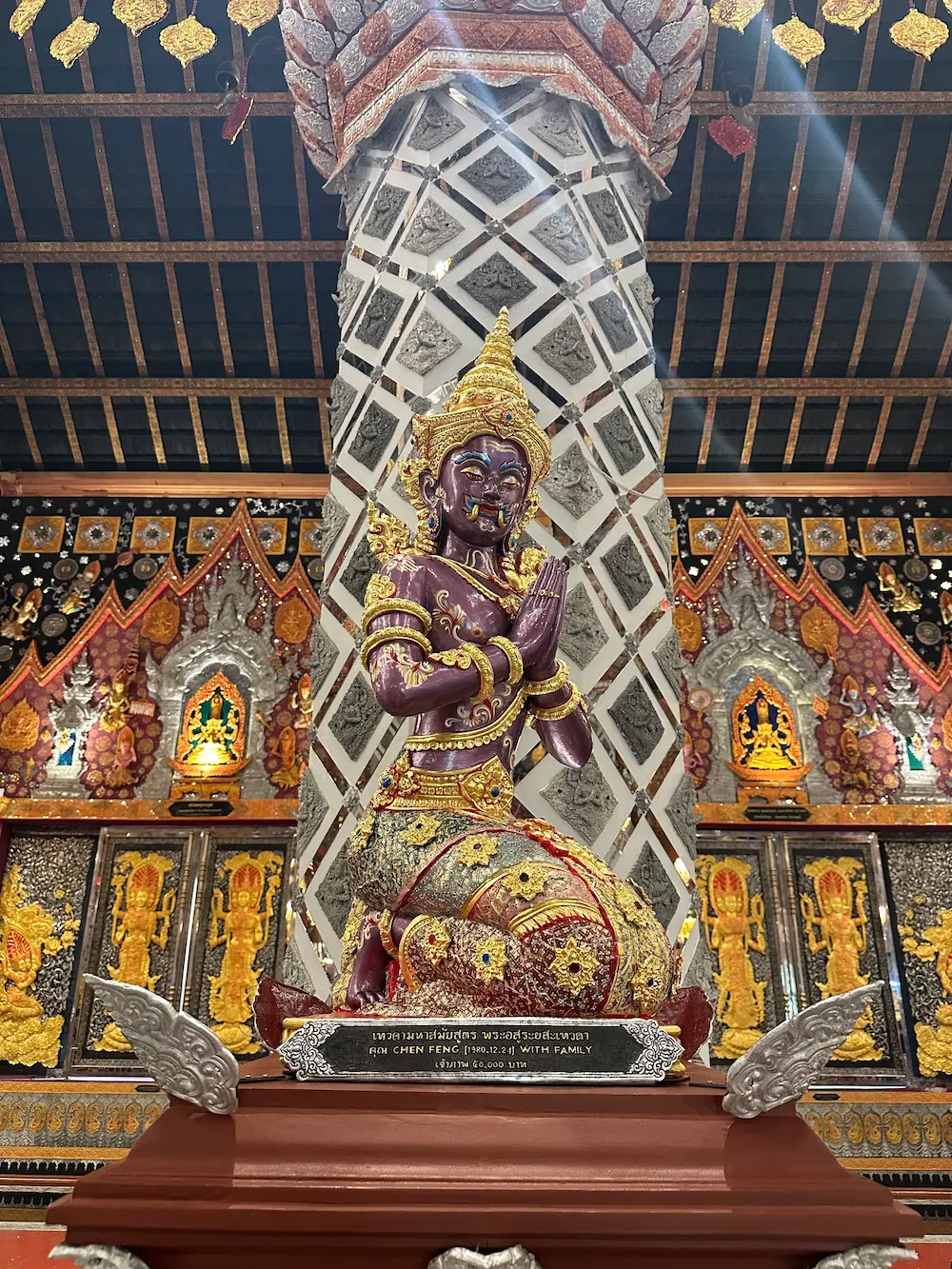 | 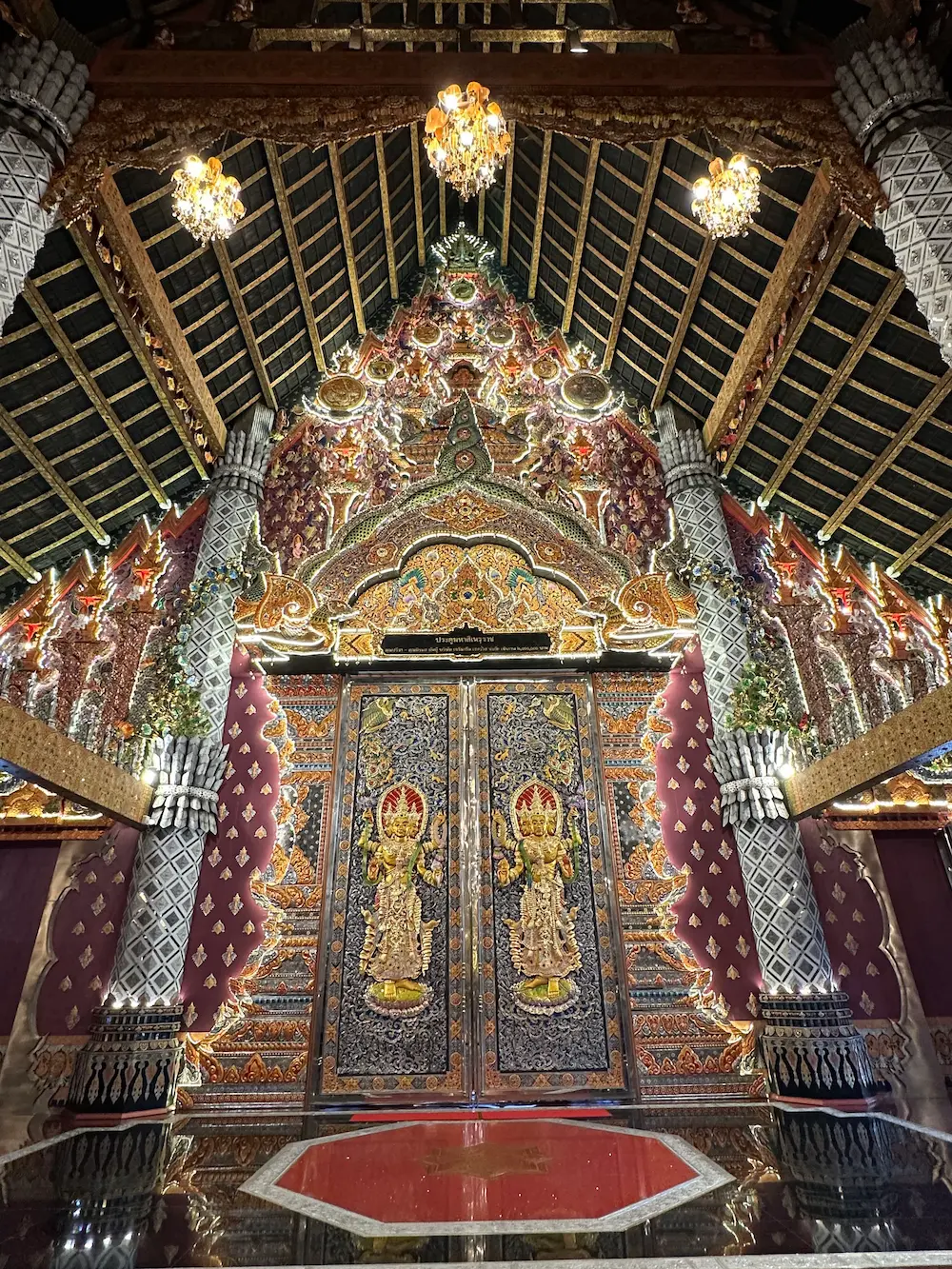 |
| Luang Pho Phet, one of the colorful figures lining the hall, and the grand door opposite the Buddha. | ||
The 20 Baht Fortune Machine
Here’s something you won’t find at most temples: a fortune-telling machine.
You insert some cash (we put in 20 baht), and a recorded voice starts chanting. It sounds like a monk. Then it spins through a roulette of numbers, and whichever number it lands on is your fortune.
You then find your number on the wall, where each fortune is printed in Thai, English, and Chinese.
Ours landed on number 17. And honestly? Jackpot. It promised a bright future and success, good fortune “like a fruitful plant,” and that I’d be loved by all. It even said that if you’re in a lawsuit, you’ll probably win. Good to know, just in case.
Is it serious spiritual guidance? Probably not. Is it a fun 20 baht? Absolutely. Plus, the money goes to the temple.
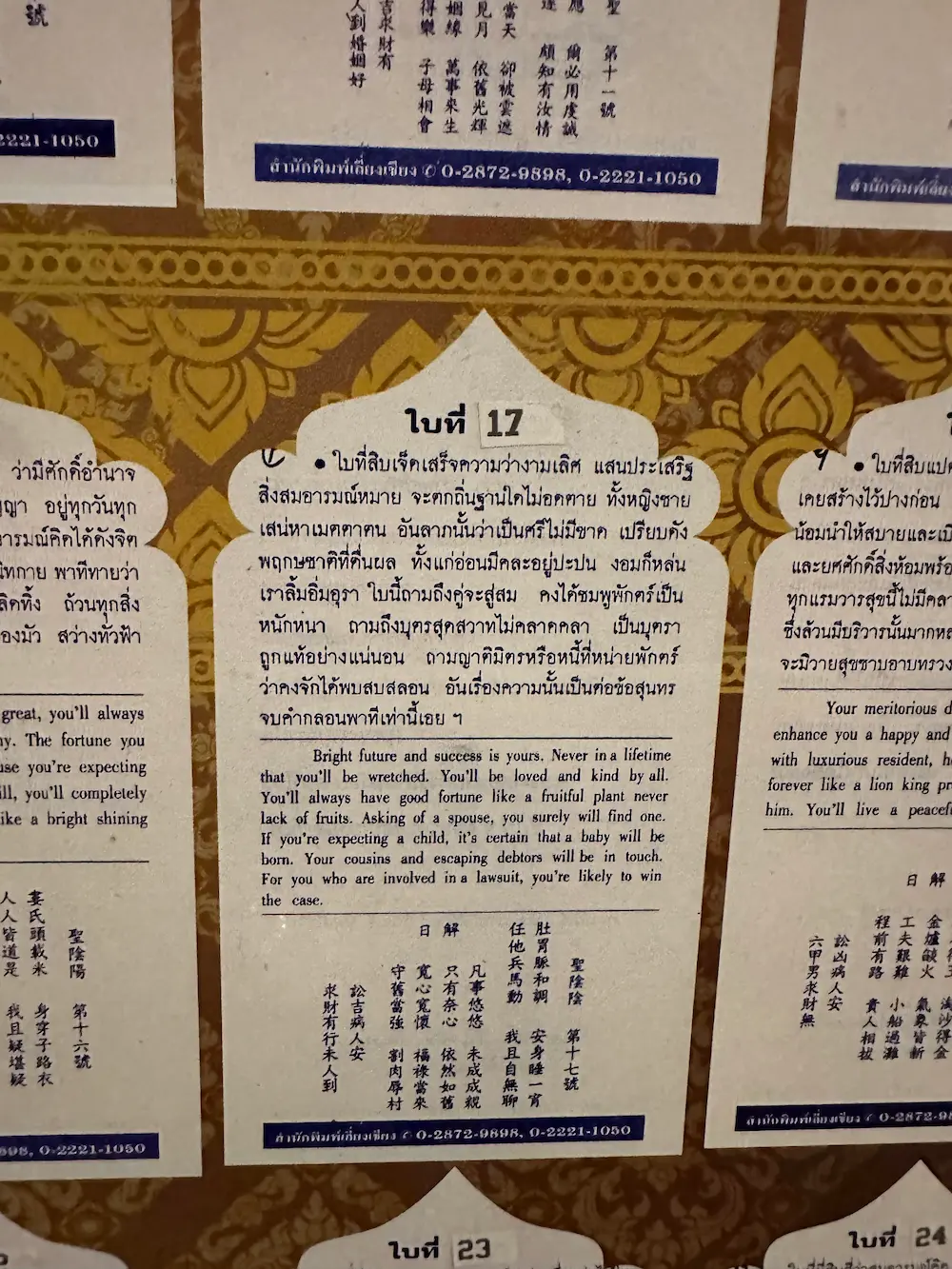 | 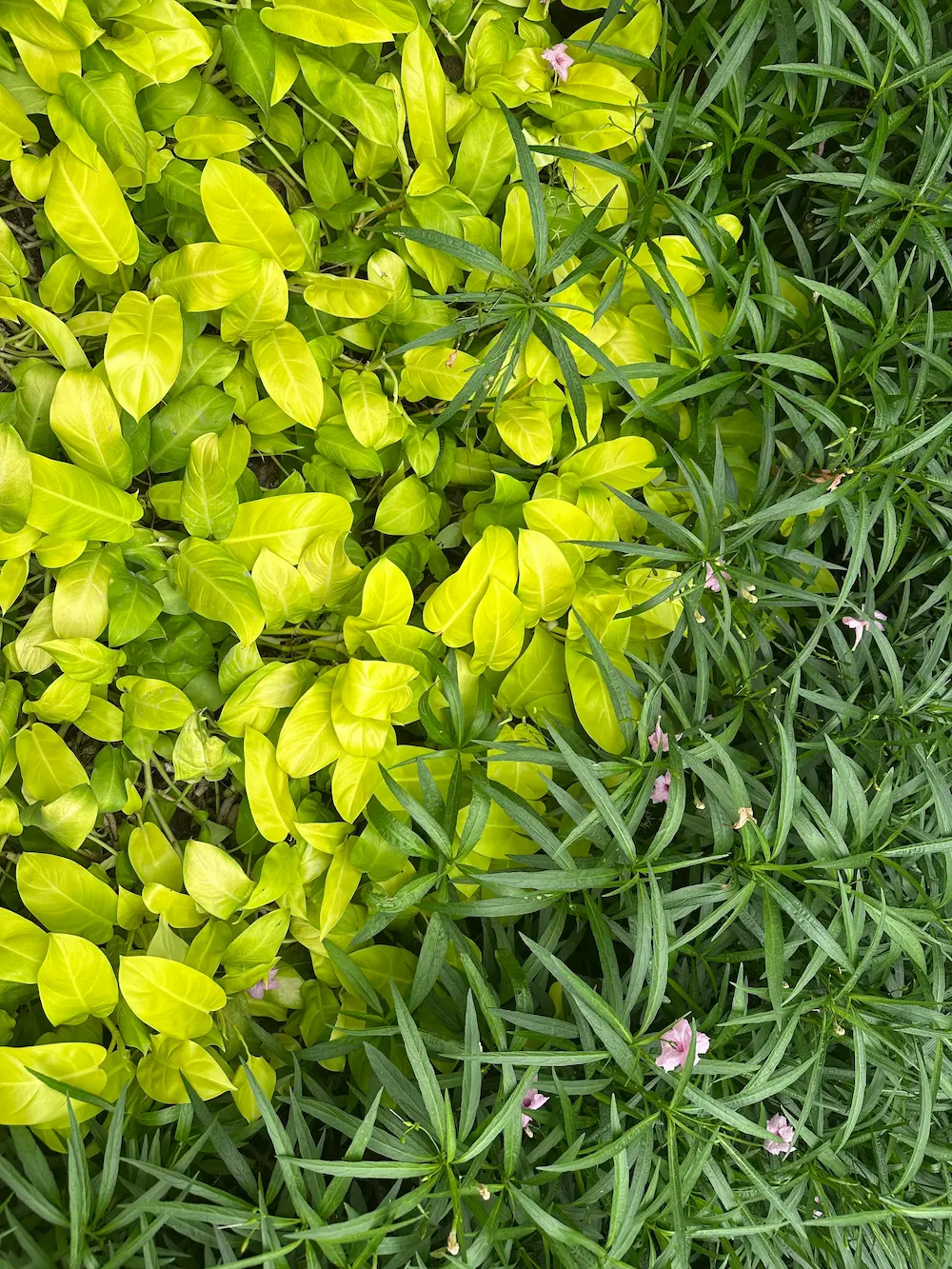 |
| Our lucky number 17, and some of the happiest plants I’ve ever seen. | |
The Little Things That Made It Special
Anyone who has traveled around Thailand knows that temple toilets can be a gamble. Here? Clean and well maintained. I’ll take that as a small miracle.
Even the plants look happy. The grass is green, and the flower beds are bursting with lime-yellow leaves and tiny pink flowers. I actually took a photo of a random patch of plants because the colors were so vibrant.
The garden outside the main hall has lots of benches, so you can sit in the shade, rest your feet, and just take it all in. Scattered around are a few small, colorful Buddha statues, which are lovely to discover as you walk.
There’s also another temple at the back of the compound. We didn’t go in, because it looked like a stricter temple. You need to dress properly to be allowed inside. So if you want to see everything, wear long pants or a long skirt, and cover your shoulders. A light scarf in your bag is always a good idea.
The Verdict: Is Wat Sri Don Moon Worth the Trip?
Yes. A thousand times, yes.
I came in thinking I had seen every kind of temple Thailand could offer. I left realizing I hadn’t seen anything like this. The gold, the gems, the silver pillars, the chandeliers, the hands from hell, the giant Buddha glowing at the end of the hall. It’s grand in a way that photos honestly can’t capture.
But what I loved most wasn’t the gold. It was the feeling. No crowds, no tour buses, no one rushing you along. Just Thai families praying, a quiet garden, and two very happy foreigners on a motorbike trying not to stare too much.
If you’re in Chiang Mai and want to see a temple that still feels like a local secret, hop on a bike and ride 25 minutes out to Saraphi. Dress respectfully, bring some small change for the fortune machine, and save room for a snack at the stalls across the street.
And if your fortune lands on number 17? Please tell me. I want to know if it comes true for you, too.
Sources
I used these for the temple’s history and background:
- Thailex: Wat Sri Don Moon (history, the main Buddha, and the Kuti Song Lanna)
- Khaosod (location and the abbot, Kruba Noi Techapanyo, in Thai)