


There is a reason you’re seeing headlines about bans on Kyoto’s backstreets and new fences blocking Fuji views: Japan is full.
In 2026, simply showing up with a smile isn’t enough; you need to know the rules that have changed since the tourism surge. The difference between a dream trip and a series of awkward confrontations lies in understanding the cultural ‘no-gos’ that most travel brochures ignore.
From silent subway etiquette to the new reality of dining out, here are 11 crucial things you absolutely CANNOT do when traveling to Japan this year if you want to be a welcome guest.
1. Do NOT Be Loud or Talk on the Phone on Public Transport
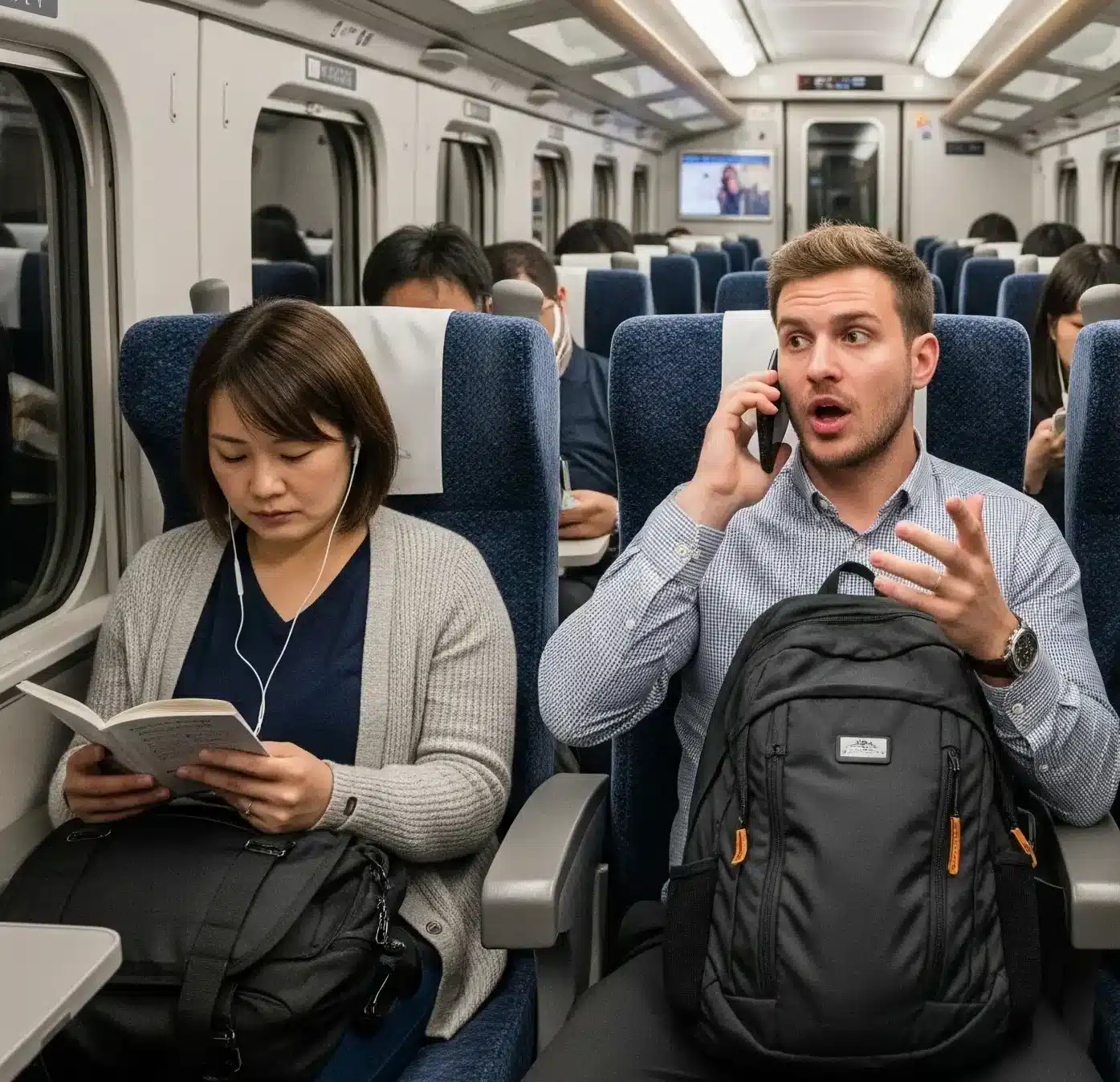
This is perhaps the most immediate and glaring difference you’ll notice when you first use Japan’s impeccable public transport system. Whether you’re on the bustling Yamanote Line in Tokyo or a local bus winding through Sapporo’s streets, a sense of profound quiet pervades.
In many Western or Southeast Asian countries, the train is a place to catch up on calls, laugh with friends, or listen to music. In Japan, the train is a shared public space where silence is the standard. You will see hundreds of people packed like sardines, yet you could hear a pin drop.
The “Manner Mode” Rule
You will frequently hear announcements asking passengers to “Please set your mobile phone to silent mode and refrain from making voice calls.” In Japanese, silent mode is literally called “Manner Mode.” This linguistic choice reveals a lot: being silent isn’t just a setting on your phone; it is good manners.
2. Do NOT Eat or Drink While Walking (Tabearuki)
While walking down the street with a bagel and coffee is standard behavior in New York, and sipping bubble tea while strolling is common in Taiwan, it is largely frowned upon in Japan.
This rule often confuses tourists the most. You will see delicious street food everywhere, yet nobody is walking around eating it. Why?
Cleanliness and Respect
The concept is rooted in keeping the streets clean. If you walk and eat, you are likely to drop crumbs, spill sauce, or leave trash behind (and as we will discuss later, trash cans are rare). Additionally, it is considered rude to shop owners to eat food from one store while browsing inside another.
Exceptions to the Rule
There are specific tourist streets, like Nishiki Market in Kyoto or Komachi-dori in Kamakura, where “Tabearuki” (eat-walking) is heavily advertised. However, even in 2026, many of these vendors will ask you to stand directly in front of their stall while you finish your skewer or croquette, and hand the trash back to them before you move on.
3. Do NOT Disregard Queues (Lines)
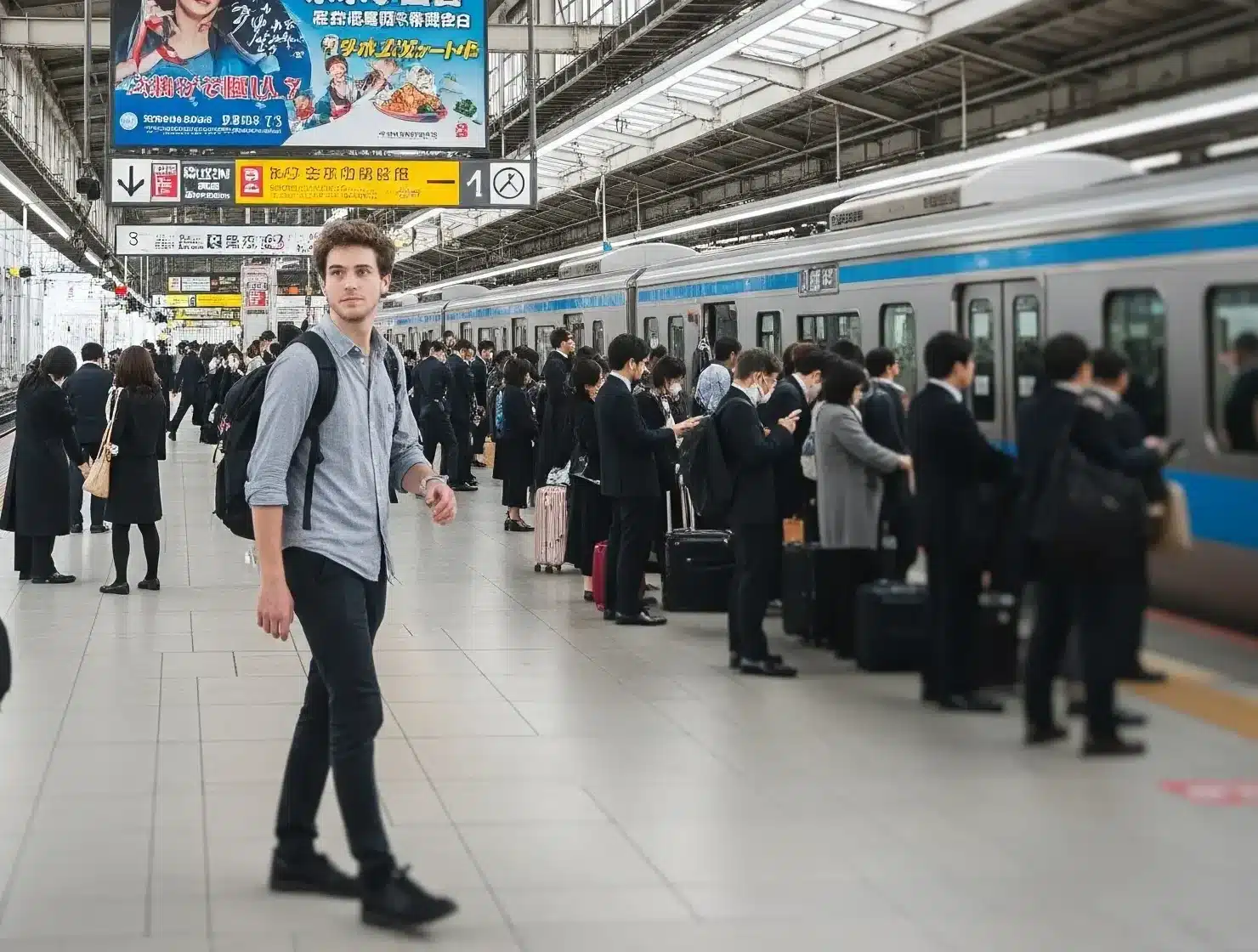
If punctuality is a religion in Japan, queuing is the daily ritual. The concept of queuing is deeply ingrained in Japanese society, and you’ll encounter it everywhere: at train stations, bus stops, elevators, escalators, and popular ramen shops.
Look at the Floor
At train stations, you will see color-coded lines and shapes painted on the platform floor. These aren’t decorations; they indicate exactly where the doors will open for specific train types (Rapid, Local, Express).
Locals will line up neatly behind these markers long before the train arrives. If you wander up to the front of the tracks while everyone else is in line, you will be blocking people from exiting and entering efficiently.
4. Do NOT Tip (Seriously!)
One of the most liberating, and anxiety-inducing, aspects of dining in Japan for Western tourists is the complete absence of a tipping culture.
In the US, tipping is mandatory. In Europe, it’s a nice gesture. In Japan, it is simply not done.
The Philosophy of Omotenashi
Japanese service is world-famous because of Omotenashi, a concept of wholehearted hospitality that anticipates a guest’s needs without expectation of reward. The staff provides excellent service because they take pride in their work, and because they are paid a fair wage to do so.
If you leave cash on the table at a restaurant, the waiter will likely think you forgot your change. I have seen waiters run down the street after tourists to return a 500 Yen coin. Offering a tip can actually be seen as confusing or even insulting, implying that the business isn’t paying their staff enough or that you are flaunting your wealth.
5. Do NOT Use Chopsticks Incorrectly
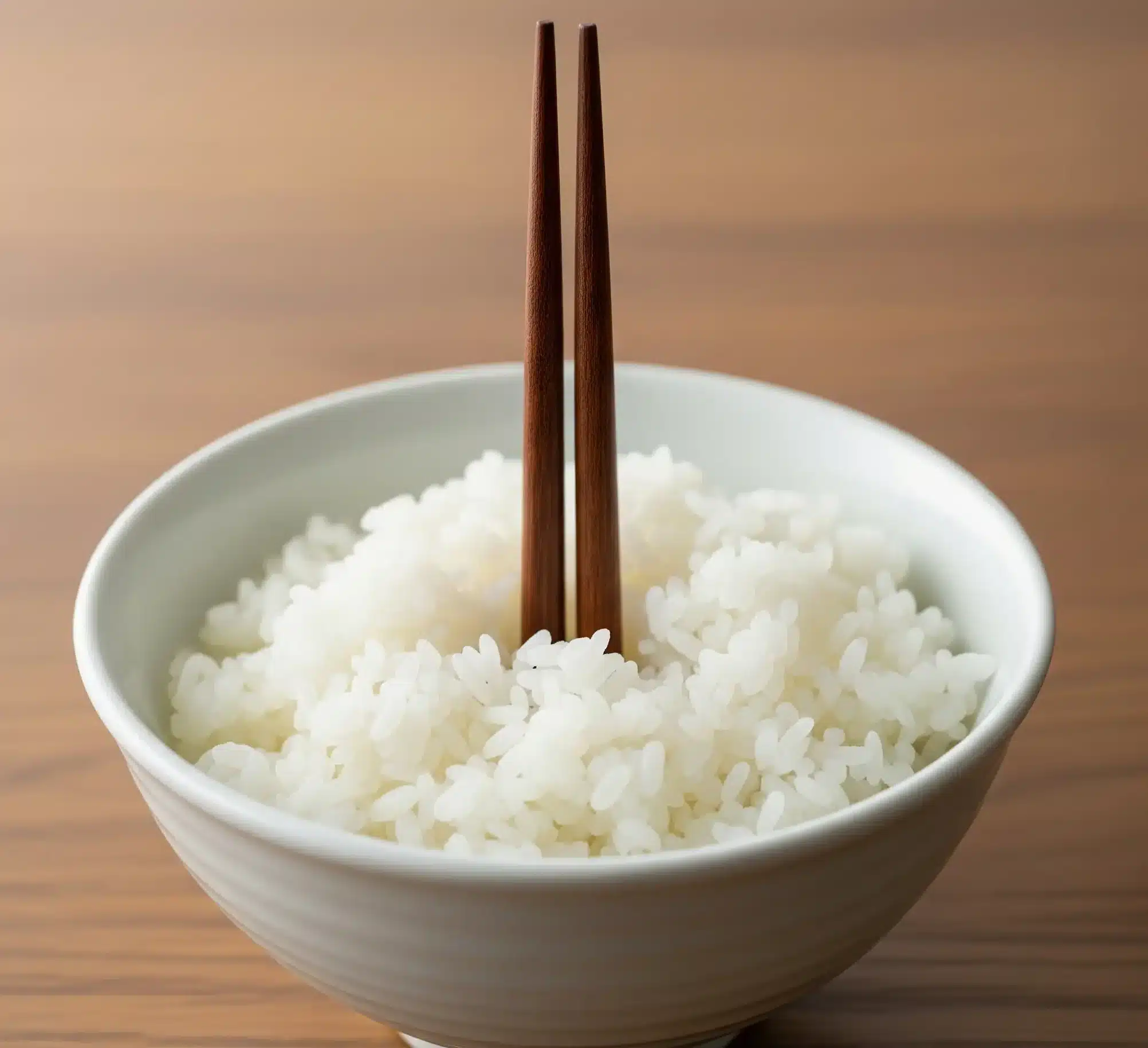
You don’t need to be a master of chopsticks, but you do need to avoid the “Taboos.” Chopsticks are not just utensils in Japan; they have ritualistic connections, particularly to Buddhist funeral rites.
Here are the “Big Three” you must avoid:
- Tate-bashi (The Vertical Stick): Never, ever stick your chopsticks upright into your bowl of rice. This mimics the bowl of rice offered to the deceased at a funeral altar. It is a superstitious shock to any Japanese person sitting nearby.
- Hashi-watashi (The Transfer): Never pass food directly from your chopsticks to another person’s chopsticks. At funerals, family members use special large chopsticks to pass the cremated bones of the deceased into the urn. Reenacting this at the dinner table is horrifyingly bad luck.
- Sashi-bashi (The Spear): Do not stab your food. Even if that dumpling is slippery, stabbing it is seen as childish and aggressive.
Other minor manners:
- Do not rub your disposable chopsticks together to remove splinters; it implies the restaurant gave you “cheap” quality utensils.
- Do not wave them around while talking.
6. Do NOT Wear Shoes Indoors
You see, the boundary between “outside” (dirty) and “inside” (clean) is sacred in Japan. You must remove your shoes before entering homes, traditional Ryokans, temples, school buildings, and some traditional Izakaya restaurants.
The Genkan
You will know when to take them off because there will be a sunken entryway called a Genkan. You leave your outdoor shoes there (pointing toward the door) and step up into the building in your socks or provided slippers.
7. Do NOT Ignore Rubbish Separation Rules
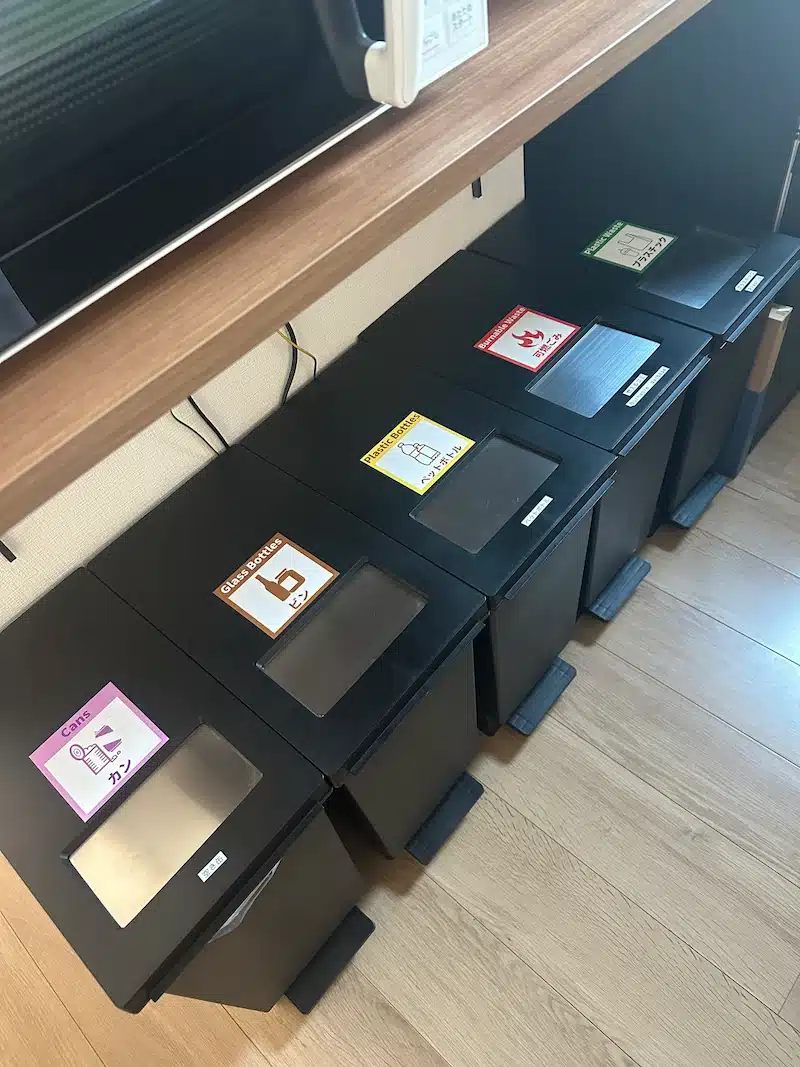
Japan is famously clean, yet you’ll notice a distinct lack of public trash cans. This isn’t an oversight; it’s partly a cultural habit and partly a security measure dating back to the 1995 Sarin gas attacks, after which many public bins were removed.
You are expected to carry your rubbish with you until you find a designated bin. However, you cannot just toss everything together. Japanese waste sorting is incredibly detailed.
Bins are usually grouped in sets of three or four:
- Combustibles (Moeru Gomi): Paper wrappers, food waste.
- Plastics/PET Bottles: Drink bottles (usually you must remove the cap and label).
- Cans/Glass: Aluminum and glass.
8. Do NOT Blow Your Nose Loudly in Public
In many Western cultures, blowing your nose is just a bodily function. In Japan, blowing your nose loudly (honking) in public is considered quite rude and unhygienic. It is seen as spreading germs aggressively.
Paradoxically, constant sniffling is generally tolerated more than a loud blow. However, the best solution is to wear a mask.
The Mask Culture
If you have the sniffles, a cough, or even mild allergies, wear a surgical mask. In 2026, mask-wearing is still very common in Japan, not just for COVID prevention, but as a courtesy to others. It signals: “I might be sick, but I am keeping my germs to myself.”
9. Do NOT Fail to Observe Onsen Etiquette
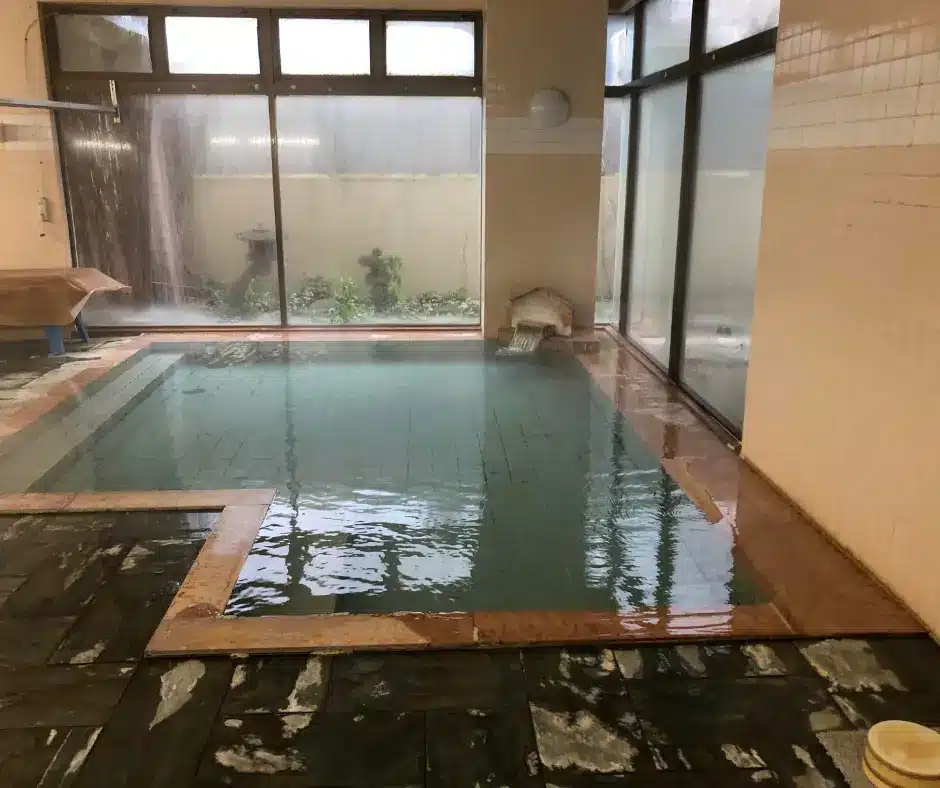
Visiting an Onsen (natural hot spring) is a quintessential Japanese experience. It is the ultimate relaxation—but only if you follow the strict rules.
The “Wash First” Rule
The water in the onsen tub is shared by everyone. It is not for washing; it is for soaking. You must sit at the shower stations (on the little stools) and scrub your entire body with soap and rinse off all the suds before you step foot into the communal bath. If you enter the bath dry or with soap on you, you will ruin the water for everyone.
10. Do NOT Be Late for Appointments
Punctuality is not just a suggestion in Japan; it is the backbone of society.
If a train is scheduled to leave at 10:42 AM, it leaves at 10:42:00. If you have a dinner reservation at 7:00 PM, arriving at 7:15 PM without calling is incredibly disrespectful.
The general social rule is to arrive 5 to 10 minutes before your scheduled time. If you are meeting a Japanese guide or friend, they will likely be there early waiting for you.
11. Do NOT Disrespect Sacred Sites (Shrines/Temples)
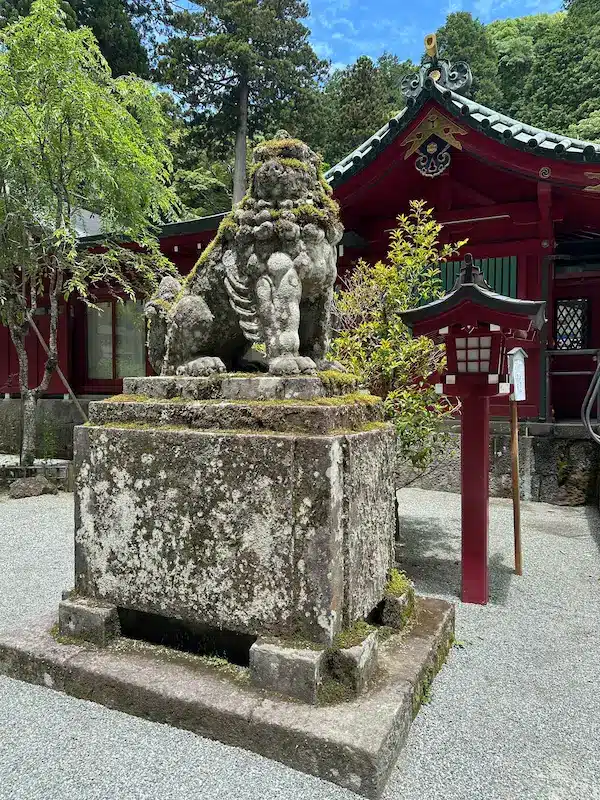
Japan is dotted with thousands of Shinto Shrines and Buddhist Temples. While they are beautiful tourist attractions, they are primarily active places of worship:
- Shrines (Torii Gates): The home of Kami (spirits).
- Temples (Pagodas/Statues): The home of Buddhas.
Photography
You can usually take photos in the courtyard. However, never take photos of the Buddha statues inside the main hall unless a sign says it is okay. It is also considered rude to take selfies with your back turned directly to the altar.
Becoming a Welcome Guest in 2026
As tourism in Japan continues to reach new heights, the line between a “clueless tourist” and a “welcome guest” has never been more important.
You now have the blueprint to navigate the country with confidence and grace. While you may still occasionally trip over a social nuance, remember that intent is the universal language here. A visible effort to follow local etiquette makes a massive impact on how you are received.
Explore the mountains, get lost in the backstreets, and enjoy every bite of sushi, armed with the knowledge that you are traveling as a conscious, respectful observer of one of the world’s most beautiful cultures.