
Sometimes, the most profound travel experiences are the ones you least expect. We embark on journeys with guidebooks clutched tight, searching for the “must-see” landmarks, meticulously planning routes. But what happens when you arrive somewhere with no grand expectations, only to be enveloped by a quiet charm that speaks directly to the soul?
This was our experience during 3 nights in Furano Hokkaido, a place we discovered was far more than just the postcard-perfect lavender fields it’s famous for. It is Hokkaido’s dreamy heartland, a region that unfolds its beauty gently, inviting you to slow down and simply be.
Furano, nestled in the geographical center of Hokkaido, presents a landscape defined by rolling farmlands stretching towards majestic mountain ranges.
The Gentle Town
To truly appreciate Furano, it helps to understand its connection to the land. Hokkaido, as Japan’s northern frontier, has a history tied to pioneering spirit and agriculture. While the island has developed significantly, areas like Furano retain a strong agricultural identity and a deep respect for the land, the seasons, and the bounty they provide.
Farmers are not just producers; they are stewards of the landscape, their work shaping the visual poetry that captivated us upon arrival. This deep connection to nature and the cycles of growth and harvest provides the foundational context for understanding the pace and character of life in Furano.
Our accommodation reflected this desire for a grounding experience – an apartment filled with natural light, offering a living room and kitchen. Having a kitchen, particularly, encouraged us to engage with local produce, a cornerstone of the Furano experience. It allowed us to appreciate the quality of Hokkaido’s renowned ingredients firsthand, preparing simple meals that highlighted their freshness.
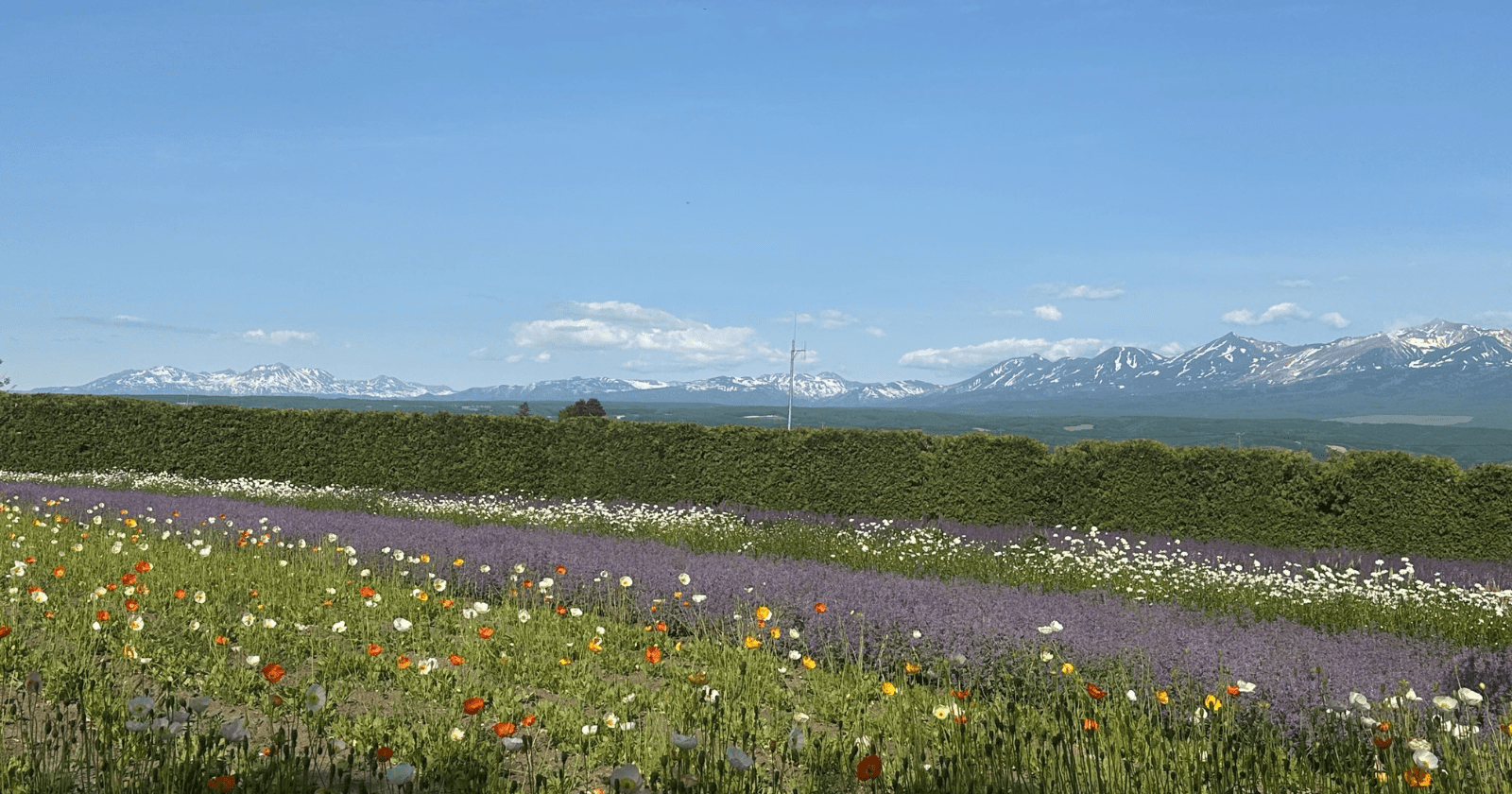
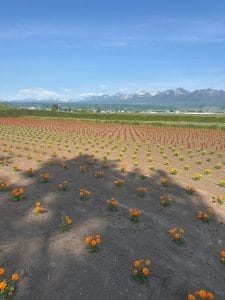 Our first full day led us to Farm Tomita, arguably the most famous spot in Furano. As anticipated, the place welcomed numerous tour buses, and yes, the lavender fields were a prominent feature (even if some were yet to bloom fully, a reminder of nature’s own timeline). However, Farm Tomita offers much more than just lavender. It is a vibrant tapestry of diverse flower fields, showcasing an incredible array of colours and varieties that bloom throughout the summer season. The farm highlights local products. Their melon, specifically Hokkaido melon, was incredibly sweet – a true taste of the region’s agricultural pride.
Sampling local produce, whether it’s melon, corn, or dairy products (Hokkaido is famous for these too), is a vital part of connecting with the culture here. It’s a form of miyage (souvenir) that nourishes the body and creates a tangible link to the place.
Later, we ventured to a different lavender farm situated on a hill. Though the lavender hadn’t peaked, the visit was far from a disappointment. Instead, the unhindered view from the hilltop became the main attraction. 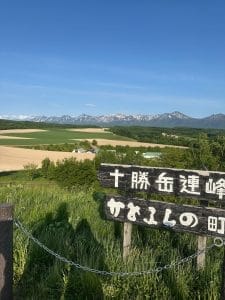 We gazed out over the valley, watching the patchwork fields recede towards the distant, snow-capped mountains, with tiny towns nestled in between. It was a moment of profound peace and expansive beauty, highlighting that Furano’s charm isn’t solely about perfected tourist attractions but about the raw, sweeping grandeur of its landscape.
As the day drew to a close, we sought out dinner and stumbled upon a local sushi place. This wasn’t a Michelin-starred establishment, but what we found was culinary perfection in its own right. The sushi and nigiri we were served were the biggest and freshest we had ever tasted.
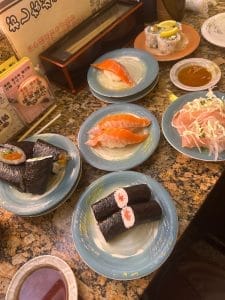 The quality of the seafood, undoubtedly sourced from Hokkaido’s rich surrounding waters, combined with the perfectly cooked rice, was simply outstanding. This experience speaks to the concept of kodawari, a Japanese term that embodies an uncompromising and relentless pursuit of perfection in one’s craft.
In this small, local restaurant, we witnessed kodawari applied to the art of sushi-making, transforming simple ingredients into an unforgettable meal. It was an instant favourite, a delicious reminder of the excellence often found in unassuming places throughout Japan, especially when working with ingredients of such high quality.
The Highlight of this Trip
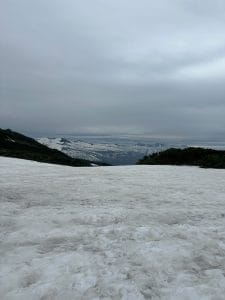
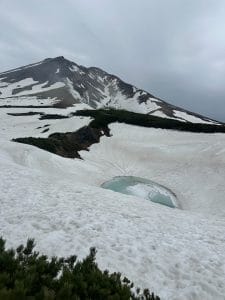
Day 2 traded lavender for lava. We rode the Asahidake Ropeway up Hokkaido’s highest peak – an active volcano. Within minutes, lush valleys vanished, replaced by snowfields and hissing steam vents (fumaroles). Sulfur stung our nostrils; the raw power underfoot was humbling. Forget the summit hike – a shorter, 60-minute loop gave us jaw-dropping views: volcanic moonscapes stretching back towards Hokkaido’s distant plains. The contrast was unreal: this raw, elemental fury vs. Furano’s gentle farmland below.
Here’s the thing about Japanese mountains: they’re more than rock. They’re sacred. You feel that ancient reverence on Asahidake – a deep respect woven into Shinto beliefs. It transformed our climb from just sightseeing into something quietly profound.
But Furano’s real magic? It lives beyond the postcards. We slipped into the rhythm of local life: sweating it out at the town’s no-frills sports center gym alongside residents, browsing neighborhood shops, just walking the quiet streets. These tiny moments – ordinary for locals – made us feel briefly woven into the fabric of the place.
That’s Furano’s secret sauce. Yes, Farm Tomita dazzles visitors, but the town’s soul is firmly rooted in its soil and the people who work it. The magic lies in that balance: welcoming tourists without losing itself. Respecting it means embracing the quiet, seeking out lesser-known spots, and understanding that not everything exists for our convenience. Furano isn’t just a pretty backdrop; it’s a living, breathing place.
A Deep Dive in Culture
Furano is the living, breathing soul of inaka – Japan’s romanticized countryside. Yes, it’s rolling hills and lavender, but it’s also aging towns and quiet resilience. It’s real life, evolving beautifully.
The magic? It’s in the micro-moments. Like ducking into a tiny family-run restaurant. You’re likely the only traveler there. No English menu? No fanfare? Perfect. Watch the quiet rhythm: locals chatting low, the chef’s focused precision, that humble pride in a steaming bowl of soba. A smile, a heartfelt “Arigato gozaimasu,” and suddenly, you’re not just eating. You’re sharing a silent language of respect – a real connection, no translation needed.
Respect is your compass here. Japan welcomes curious guests, especially in quieter spots like Furano. Keep your voice down. Be on time. Master the shoe shuffle. Handle cash with both hands.
Writer Jun’ichirō Tanizaki nailed it: True beauty lives in the shadows. Furano’s brilliance isn’t just in those technicolor flower fields. It’s the way dusk paints the valley in blues and golds. It’s steam rising off volcanic soil against a snow-capped peak. It’s the quiet perfection of a single, locally-grown tomato. Look for the contrasts – the serene farms beneath the moody volcano, the calm town absorbing summer crowds. That’s where Furano sings.
Honestly? Furano stole our Hokkaido trip. Not for the sights alone, but for its depth. It fed us (incredibly!). It soothed us. It showed us mountains that felt sacred and fields that felt like home. Mostly, it taught us: the best travel isn’t about chasing highlights. It’s letting a place whisper its secrets slowly. Whether it’s the buzz of Kuala Lumpur or the heartbeat of rural Hokkaido, Asia’s magic lies in these layers.
Leaving Furano after three nights, we didn’t just have photos. We had a feeling. A calm. A connection. It’s a place rooted in its earth and its people, rewarding those who slow down, look beyond the lavender, and simply… listen.
Our Hokkaido Farewell (For Now)
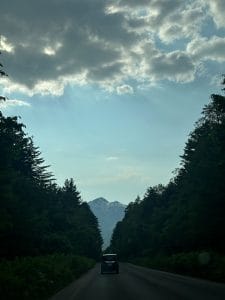 As our wheels rolled away from Furano’s lavender fields, Lake Toya’s misty shores, and Sapporo’s neon glow, we fell silent. Not because words failed us, but because Hokkaido had gifted us something deeper: a stillness we’d forgotten existed.
This road trip was more than just landscapes—it was slow mornings in onsens, impromptu picnics under snow-crowned peaks, and highways that felt like portals to peace. We thought we came for the views. We left with our souls reset.
And somewhere between Mount Yotei’s majesty and the whisper of the rental car’s engine, we made a promise: We’ll be back. To chase Hokkaido’s winter magic, to taste autumn’s crab feasts, to rediscover this wild, welcoming north… together.
Until next time, Hokkaido. You’re not just a destination—you’re a feeling.