


Bali. The name itself is a promise of lush rice paddies, serene yoga retreats, and the perfect digital nomad life. Instagram feeds are filled with it: smoothie bowls by the pool, sunset surfing sessions, and productive days in coworking spaces with jungle views.
But while those things are real, they are only half the story. The reality of working remotely in Bali is a minefield of visa nightmares, budget shocks, and infrastructure headaches that social media conveniently leaves out. This isn’t a guide to the dream; this is your practical, no-fluff guide to the 7 real challenges nobody warns you about before you book that one-way ticket to paradise.
Key Takeaways: The Realities of Working in Bali
- Visa Complexity: The B211A visa is essential for stays over 60 days and requires a sponsor and multiple extensions.
- Unreliable Infrastructure: Frequent power and internet outages make a personal mobile hotspot a necessity.
- Higher Costs: A Western-style nomad life in areas like Canggu can cost upwards of $1,500 USD per month.
- Health Preparedness: “Bali Belly” is common, and comprehensive travel insurance with medical evacuation is non-negotiable.
- Transient Community: Building deep, lasting friendships can be challenging due to the constant turnover of people.
1. The Visa Maze: A Bureaucratic Nightmare

The Dream: “I’ll just hang out on a tourist visa and do visa runs. It’s easy!”
The Reality: The days of easy, consequence-free visa runs are over. Bali’s visa situation is the single biggest logistical hurdle for long-term remote workers, and “winging it” is a recipe for stress and serious legal trouble.
Despite years of buzz, a simple, dedicated “digital nomad visa” is still not a straightforward reality for most. Your only viable path for a stay beyond 60 days is the B211A “Social/Business” Visa. This isn’t a simple stamp on arrival; it’s a process. It grants you 60 days upfront but requires a local agent to sponsor and process it before you arrive.
To stay longer, you must extend it four times, each extension involving fees, paperwork, and a mandatory trip to an often-crowded immigration office. It’s a recurring, time-consuming chore that feels less like living in paradise and more like waiting at the DMV.
The Tourist Visa Trap: A Warning
Many still attempt to work on a 30 or 60-day tourist visa (Visa on Arrival), leaving and re-entering the country every couple of months. This is a terrible strategy. Not only are visa runs expensive (flights, accommodation, lost work days), but working on a tourist visa is strictly illegal. Indonesian immigration is cracking down, and getting caught risks hefty fines, deportation, and a ban from re-entering the country.
Your Action Plan
- Plan Ahead: If you intend to stay longer than 60 days, engage a reputable visa agent months before your trip to start the B211A application.
- Budget for It: Factor in the full cost of the visa and its extensions, which can easily run over $800 USD for a 6-month stay. This is a non-negotiable cost of living in Bali.
2. Fickle Infrastructure: The Internet & Power Gamble

The Dream: “I’ll work from beautiful cafes with flawless, high-speed Wi-Fi.”
The Reality: While internet in Bali has improved, assuming it’s consistently reliable is a rookie mistake that can cost you clients and deadlines.
Power cuts, especially during the rainy season, can knock out entire neighborhoods for hours. Cafe Wi-Fi is notoriously unstable, often buckling under the pressure of a dozen other nomads on video calls.
Relying solely on your villa’s or a cafe’s connection is a gamble. For a remote worker, your internet connection is your lifeline, and in Bali, you need to build your own safety net.
Your Essential Backup Plan
- Get a Telkomsel SIM Card: Immediately upon arrival, buy a Telkomsel SIM card with a large data package (e.g., 50GB+). Their network coverage is the most reliable on the island, and your phone’s mobile hotspot will become your best friend during an outage.
- Scout Your Cafes: Don’t just pick a cafe for its aesthetics. Do a speed test before ordering. Find two or three spots with proven, stable connections.
- Know Your Closest Coworking Space: The best coworking spaces (like Tropical Nomad in Canggu or Outpost in Ubud) invest in dedicated fiber lines and backup generators. Know where the nearest one is for those days when everything else fails.
3. The Budget Shock: Bali is Not a Budget Destination

The Dream: “I can live like a king for $800 a month!”
The Reality: The myth of a dirt-cheap Bali is the most dangerous one of all. While you can survive on a shoestring budget by living in a local homestay and eating only from street-side warungs, that is not the lifestyle most digital nomads actually live. The Western-style comfort that most remote workers seek—a modern villa, trendy cafes, a social life—comes at a premium price.
A typical nomad lifestyle in popular areas like Canggu, Seminyak, or Ubud is often more expensive than living in Chiang Mai, Thailand, or Kuala Lumpur, Malaysia.
The Real Bali Budget: A Lifestyle Comparison (Monthly Estimates)
| Expense | Minimalist Local Lifestyle | Typical Nomad Lifestyle (Canggu) |
|---|---|---|
| Rent (Room/Guesthouse) | $250 – $400 USD | $700 – $1,200 USD (Private Villa/Modern Apt) |
| Food (Warungs Only) | $200 USD | $500 – $700 USD (Mix of Cafes & Restaurants) |
| Coworking/Transport | $50 USD | $200 – $250 USD |
| Total Estimate | ~$500 – $650 USD | ~$1,400 – $2,150 USD |
Your Action Plan
- Budget Realistically: Be honest about the lifestyle you want. If you plan to eat at trendy cafes, rent a nice place, and socialize, budget for at least $1,500 USD per month.
- Research Current Prices: Look at Airbnb or Facebook groups for current rental prices in your desired neighborhood before you arrive. Prices have risen sharply post-pandemic.
4. Health & Wellness: More Than Just Yoga
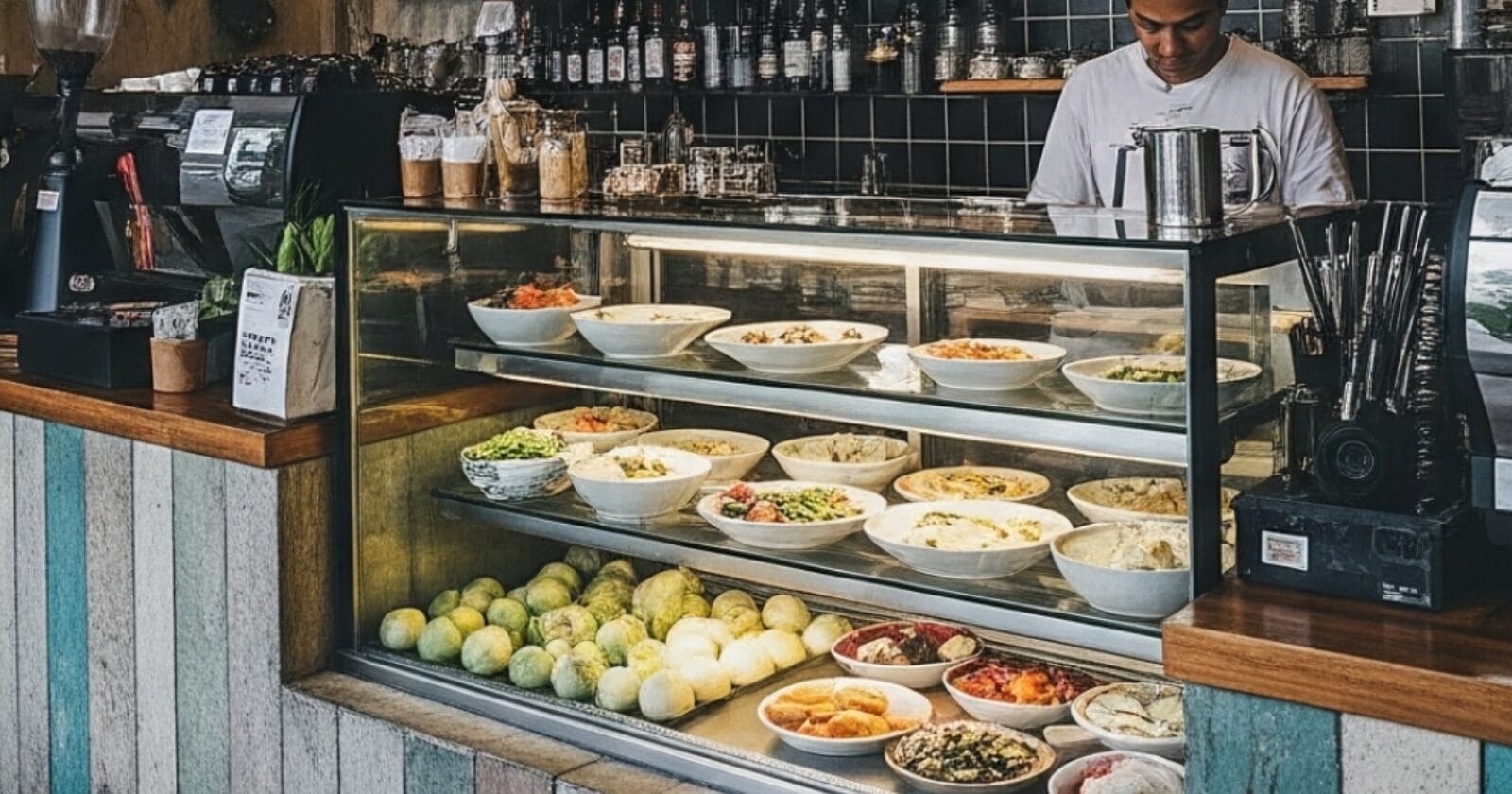
The Dream: “I’ll get fit and healthy with daily yoga and smoothie bowls.”
The Reality: While Bali is a wellness hub, it also presents significant health challenges that demand constant vigilance.
Physical Health: “Bali Belly” and Beyond
The infamous “Bali Belly” (traveler’s diarrhea) is not a myth; it’s a rite of passage that can knock you out for days. Food and water hygiene are critical. Beyond that, quality medical care is concentrated in the south. A serious illness or accident in a remote area can be a major problem.
- Prevention Checklist: Drink only bottled or filtered water, peel all fruits, eat at busy restaurants where food turnover is high, and wash your hands obsessively.
- The Golden Rule: Comprehensive travel insurance with medical evacuation coverage is non-negotiable. Local hospitals may not be equipped for serious trauma or complex medical issues. Without it, you are risking both your health and financial ruin.
Mental Health: The Paradise Paradox
The pressure to be “living the dream” 24/7 is real. The transient nature of the community can lead to loneliness, while the constant social stimulation can lead to burnout. It’s easy to feel like you’re failing if you’re not having a life-changing experience every single day.
- Your Mental Health Toolkit: Establish a routine that separates work and leisure. Find hobbies outside the typical nomad party scene. Schedule “do-nothing” days to recharge without guilt.
5. The Community: A Revolving Door of Friendships

The Dream: “I’ll find my tribe instantly in Bali’s massive nomad community.”
The Reality: You will meet a ton of people. But forming deep, lasting friendships is surprisingly difficult. The community is caught in a state of constant churn, which many long-termers call the “Hello-Goodbye Carousel.”
You’ll have the same introductory conversation a hundred times, make a great connection, and then that person leaves the island two weeks later. It can be emotionally exhausting and leave you feeling like you have many acquaintances but no real friends.
Why it Happens:
- Extreme Transience: Most people are in Bali for a few weeks or months, not years.
- Transactional Networking: Many interactions are subtly geared towards business—finding clients, promoting a project, or networking—rather than genuine connection.
Your Action Plan
- Seek Consistency: Make an effort to connect with long-term expats or locals.
- Join a Hobby Group: Find a consistent group activity (e.g., a surf camp, a martial arts gym, a volunteer organization) to see the same faces week after week.
6. The Traffic: Daily Gridlock That Steals Your Time
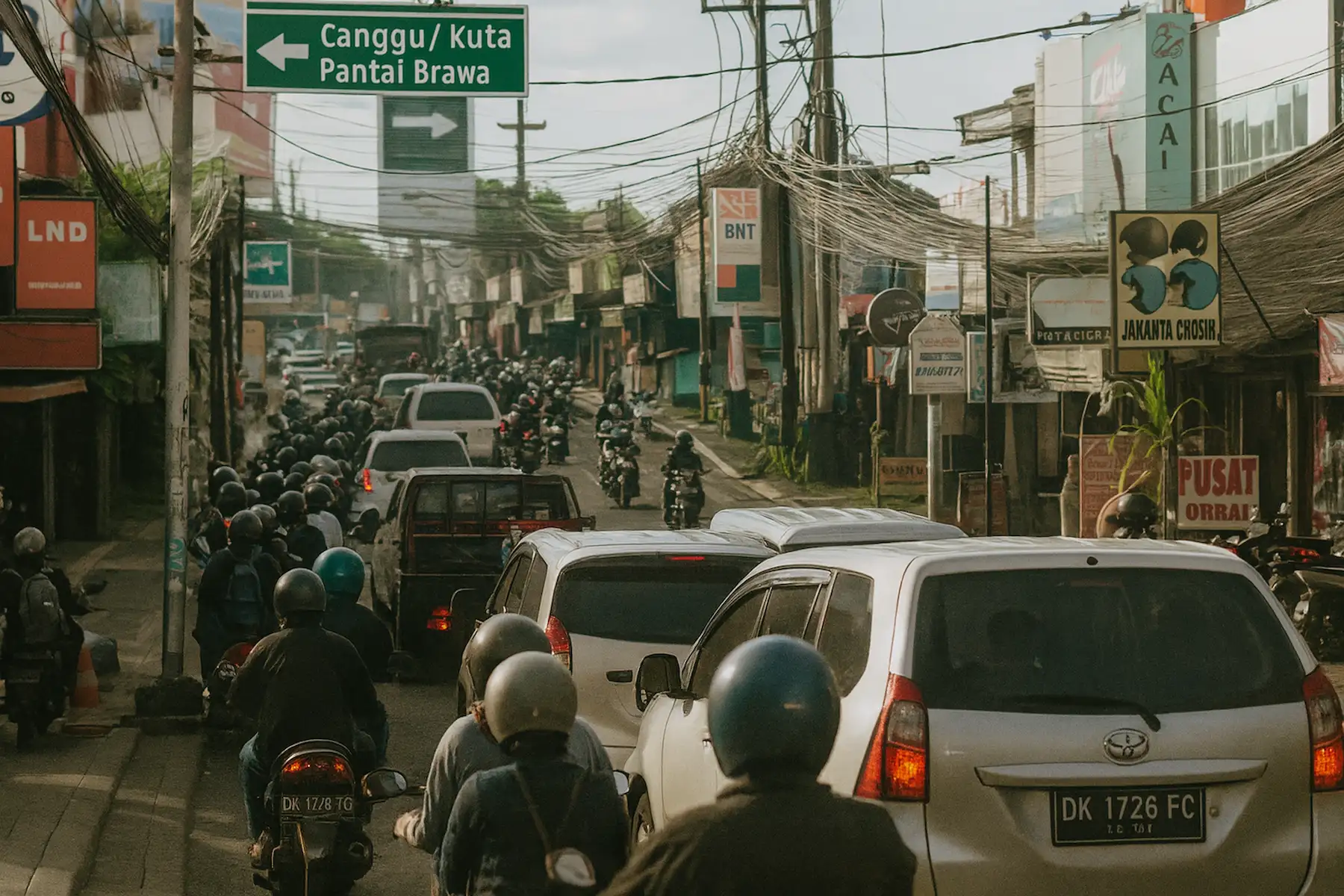
The Dream: “I’ll zip around on my scooter through beautiful rice fields.”
The Reality: The traffic in Bali’s main hubs (Canggu, Seminyak, Kuta) is some of the worst in Southeast Asia. A simple 5-mile trip can easily take 45 minutes to an hour. The constant gridlock is stressful, time-consuming, and a major drain on your daily productivity.
Scooters: Freedom at a High Price
Renting a scooter is the standard way to get around, but it comes with serious risks. Accidents involving tourists are tragically common. The roads are chaotic, the rules are often ignored, and many renters lack the proper experience or safety gear.
Your Action Plan:
- Live Strategically: Choose your accommodation based on what you want to be close to. If you plan to work from a specific coworking space, live within walking distance of it.
- Prioritize Safety: If you ride a scooter, always wear a proper helmet, have an international driver’s license, and get travel insurance that covers scooter accidents. If you’re not an experienced rider, use ride-hailing apps like Gojek and Grab.
7. The Productivity Trap: Paradise is Your Biggest Distraction
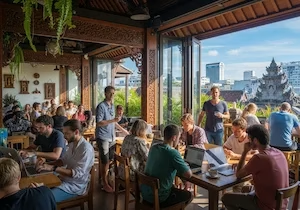
The Dream: “I’ll be so inspired by the beauty around me that I’ll get more work done than ever.”
The Reality: The irony of Bali is that its greatest strengths are also its biggest weaknesses for productivity. The constant temptation of a surf session, a waterfall hike, a yoga class, or a sunset beach party is relentless.
Maintaining the self-discipline required to sit at your laptop when paradise is calling is a serious challenge. It is incredibly easy to let your work slide, which directly threatens the income that allows you to be there in the first place.
How to Stay Focused in Paradise
- Create Structure: Treat your work like a real job. Use a coworking space to create a mental separation between work and play.
- Set Strict “Office Hours”: Define your work blocks and stick to them.
- Schedule Your Fun: Plan your adventures and social activities after your work is done, not instead of it. Learn the power of saying “no” to a distraction.
Conclusion: Is Bali a Bad Idea?
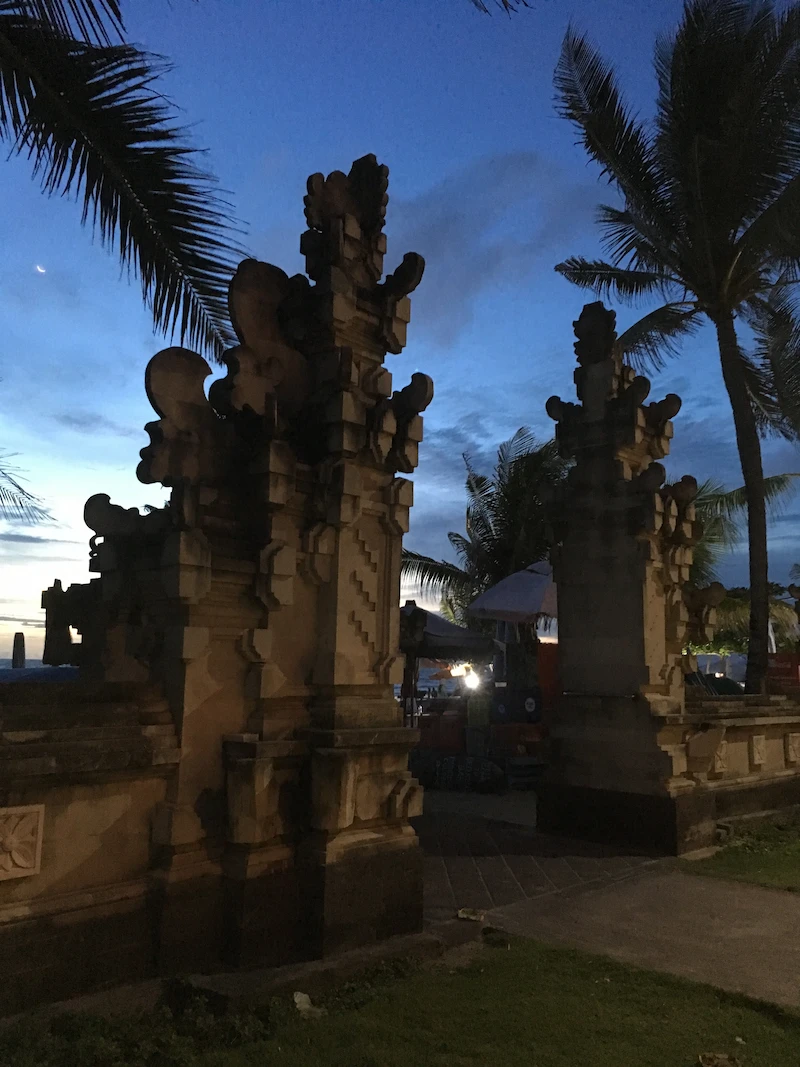
So, after all these warnings, should you forget about working remotely in Bali?
Absolutely not. But you must understand that Bali is a destination for the prepared, not the spontaneous.
Bali is perfect for you if: You have a stable income, can comfortably budget for a $1,500+/month lifestyle, are willing to navigate the visa bureaucracy months in advance, and have the self-discipline to stay focused.
You should reconsider Bali if: You’re on a shoestring budget, your income is unstable, or you need a perfectly reliable and predictable environment to function. The hidden costs and infrastructure gambles will eat you alive.
The truth is, Bali doesn’t just hand you a dream lifestyle—it makes you earn it. By understanding these challenges upfront, you can stop chasing the Instagram fantasy and start building a sustainable, incredible, and truly unforgettable reality.
Zoe’s Final Verdict on Bali
After months on the ground, here’s my personal scorecard for remote workers considering the move:
- Work-Life Balance: ⭐️⭐️⭐️☆☆ (Amazing lifestyle, but constant distractions require serious discipline.)
- Cost vs. Value: ⭐️⭐️⭐️☆☆ (Excellent value if you live like a local; can get expensive quickly if you don’t.)
- Community & Networking: ⭐️⭐️⭐️⭐️☆ (Huge community, but can feel transient. You have to work to find deep connections.)
- Ease of Setup (Visas & Logistics): ⭐️⭐️☆☆☆ (Complex and requires significant planning and budget.)
The bottom line: Bali is a world-class destination for the prepared, but a frustrating one for the spontaneous.
Frequently Asked Questions: Working Remotely in Bali
Your complete guide to the most common questions about visas, budget, and lifestyle for digital nomads on the Island of the Gods.
Visas & Legalities
What is the best visa for working remotely from Bali?
The right visa depends on your length of stay:
- Up to 60 Days: The Visa on Arrival (e-VOA) is the easiest option. It’s valid for 30 days and can be extended once for another 30 days.
- Up to 180 Days: You must apply for the B211A Visit Visa before you arrive. It provides an initial 60 days and can be extended twice for a total of six months.
- Long-Term (1 Year+): The official E33G Remote Worker/Digital Nomad KITAS is the correct long-term visa. It requires proof of an annual income of at least $60,000 USD from a non-Indonesian company.
Can I legally work on a tourist visa (VOA or B211A)?
This is a legal gray area. While these visas do not technically permit work, authorities have generally tolerated remote workers whose income comes from foreign companies. It is strictly illegal to earn money from Indonesian sources. This is a common practice, but it is not without risk.
Cost of Living & Budget
What is a realistic monthly budget for a digital nomad in Bali?
Your budget will vary greatly depending on your lifestyle:
- Budget Lifestyle: $700 – $1,000 USD per month is possible if you eat at local warungs and stay in basic guesthouses.
- Comfortable Nomad Lifestyle: A more realistic budget is $1,300 – $2,200 USD per month. This covers a modern living space, a mix of local and Western food, a coworking membership, and social activities.
- Luxury Lifestyle: Costs can easily exceed $2,500 – $4,500+ USD per month for a private villa and fine dining.
Is Bali still considered cheap in 2025?
While more affordable than most Western countries, Bali is no longer a “dirt cheap” destination. In Southeast Asia, it is now considered a mid-range option, especially in popular hubs like Canggu.
Internet & Workspaces
How reliable is the internet in Bali?
The internet is generally reliable and fast enough for most remote work. However, having a backup is crucial.
- Typical Speeds: Expect 30-100 Mbps in most modern accommodations and cafes.
- Essential Backup: Always get a local Telkomsel SIM card with a large data package. Their mobile hotspot will be your lifeline during the occasional power or internet outage.
What are the best areas in Bali for nomads?
Each area offers a different vibe:
- Canggu: The main hub for networking, surfing, and social life. It’s busy and trendy.
- Ubud: The spiritual center, perfect for yoga, wellness, and a quieter, nature-focused lifestyle.
- Uluwatu: A laid-back area known for world-class surfing and stunning cliffside views.
Health & Safety
What is the healthcare system like for foreigners?
Private hospitals in Bali are high-quality but expensive. It is absolutely essential to have comprehensive health insurance that includes medical evacuation coverage, as serious conditions may require transfer to a hospital in a nearby country.