


Chiang Mai has a way of making you feel like you’ve found the real Thailand.
The Old City moat at dusk, the smell of khao soi drifting from a side street, monks in saffron crossing the courtyard of a temple nobody else seems to know about. It earns its reputation.
I know because it earned mine. I came here in 2019 thinking I’d stay a few months, and somewhere between the morning markets and the mountain air, I stopped counting. Chiang Mai became home.
That’s exactly why I’m writing this. More than six years of living here, not visiting, means I’ve watched the same tourist mistakes and scams play out more times than I can count. Some of what targets visitors here isn’t just overpricing or mild inconvenience. Some of it is organised, deliberate, and in a handful of cases, genuinely dangerous.
I’m going to be direct about all of it. Not to scare you off, because Chiang Mai is one of the best cities in Southeast Asia and absolutely worth your time, but because the tourists who get burned are almost always the ones nobody warned properly.
Here are the six mistakes most tourists make, scams they face, what actually happens, and what to do instead.
Quick Answer: 6 Traps to Avoid in Chiang Mai
- Tuk Tuk Karaoke: Don’t let late-night drivers choose your venue; you may be taken to extortion bars with 10,000+ baht bills and aggressive security.
- Paid Lantern Festivals: Skip the $150+ USD commercial CAD packages; the free, public Yi Peng celebrations in the Old City are more authentic.
- Night Bazaar Fakes: Avoid counterfeit goods; plainclothes scammers sometimes impersonate police to extort “fines” from tourists.
- Instagram Muay Thai: Skip overpriced, photo-focused gyms; look for authentic gyms offering real 1-on-1 pad work.
- “The Temple is Closed”: Ignore drivers outside temples claiming it’s closed for a holiday; it is a trick to reroute you to a commission-paying gem shop.
- Guesthouse Tour Desks: Don’t book through intermediaries; book directly with ethical operators (like Elephant Nature Park) to ensure safety and quality.
1) The Reality: The Tuk Tuk Karaoke Scam Is More Dangerous Than You Think
It usually starts the same way.
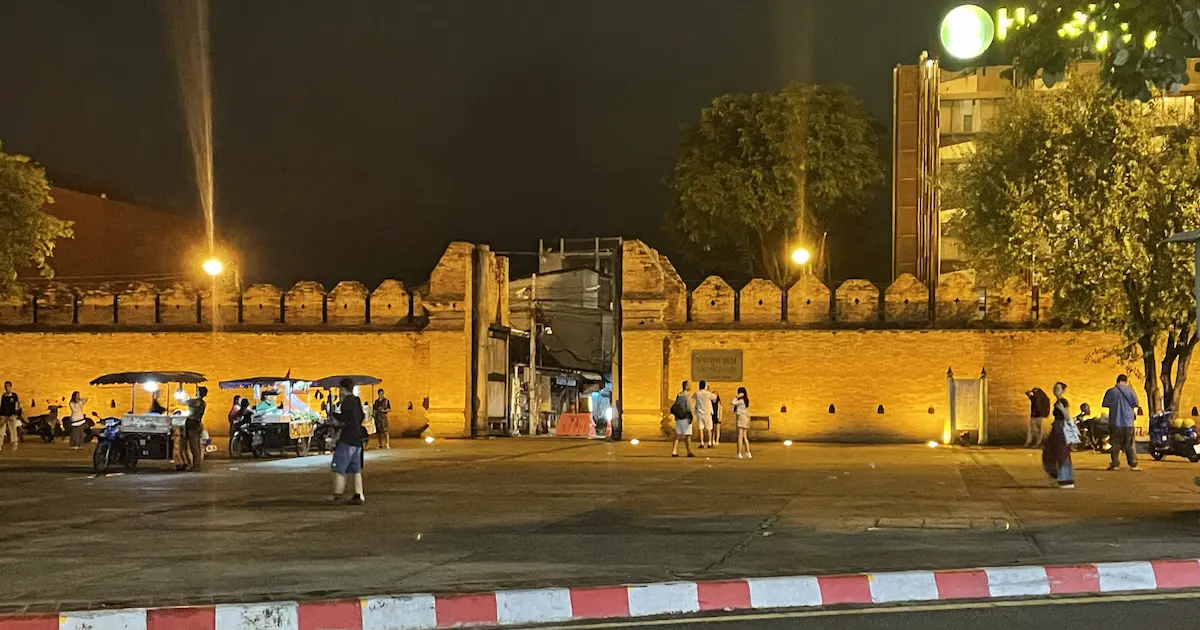
You’re out late, near Tha Pae Gate or along Loi Kroh Road, and you ask a tuk tuk driver where the party is. He knows exactly where to take you. He’s charming, relaxed, and seems genuinely helpful. He drops you at a karaoke bar (often on Chang Klan Road) where beautiful women are waiting near the entrance.
Inside, the atmosphere is warm and welcoming. Women sit with you, sing, order drinks on your tab without asking. More women arrive. The drinks keep coming. You’re having a good time. Then you decide to leave.
The bill arrives. Not 500 baht. Not 2,000 baht. We’re talking figures that tourists have reported at 10,000 baht for four beers, and in documented cases, as high as 160,000 baht (over $4,500 USD) for a single visit. When you refuse or question it, security staff appear. Some tourists have been physically prevented from leaving. Others have been beaten.
This is not an urban legend. In 2019, a 35-year-old German tourist named Arthur Wojciechowski filed a police report after being lured by a tuk tuk driver to a bar called Together Karaoke on Chang Klan Road. He had four beers. The bill was 10,000 baht. When he refused to pay the full amount, staff assaulted him, leaving facial bruises. He was forced to pay 5,000 baht before being thrown out onto the street. A passerby called an ambulance. In the same period, a South Korean tourist was forced to pay over 160,000 baht at a similar establishment in the same area. Police in Chiang Mai have confirmed that Chang Klan Road has several unlicensed karaoke bars operating this specific model.
The tuk tuk driver gets a commission for every tourist he delivers. The women inside are paid to order drinks on your bill. The security men are there to make sure you pay. The whole operation is coordinated.
What to Do Instead
Never let a tuk tuk driver choose your destination, especially late at night. If you want to go out, choose your venue before you get in the vehicle. Stick to well-reviewed bars along Nimman Road or the areas around the Old City where you can see pricing clearly, pay as you go, and leave without incident. Use Grab for transport rather than negotiating with street tuk tuks after dark.
If you ever find yourself in a situation where security is blocking the door over a disputed bill, do not pay yet: call the Tourist Police on 1155 immediately.
2) The Reality: The Yi Peng Lantern Festival Packages Are Not What They Appear
The photos are extraordinary. Thousands of glowing lanterns rising into the night sky above Chiang Mai, their light reflected in the river below. It is one of the most iconic images in all of Southeast Asia travel photography, and it draws visitors from around the world every November during the Yi Peng and Loi Krathong festivals.
What many tourists don’t realise until they’ve already paid is that the free version of this event: the public celebrations in the Old City around Tha Pae Gate, is genuinely beautiful and costs nothing. The paid packages, marketed aggressively online and through guesthouses, are a different story.
Organised events run by commercial operators, including those marketed under the CAD (Chiang Mai Arts and Design) banner, charge anywhere from $150 to $400 USD per person. For that price, tourists have reported receiving: a long transfer to a venue in Mae On — a significant drive outside the city — in uncomfortable transport with poor communication, a dinner that barely justifies the cost, and two sky lanterns, which retail on the street for around 50 baht each. Crowds at these events are large and chaotic.
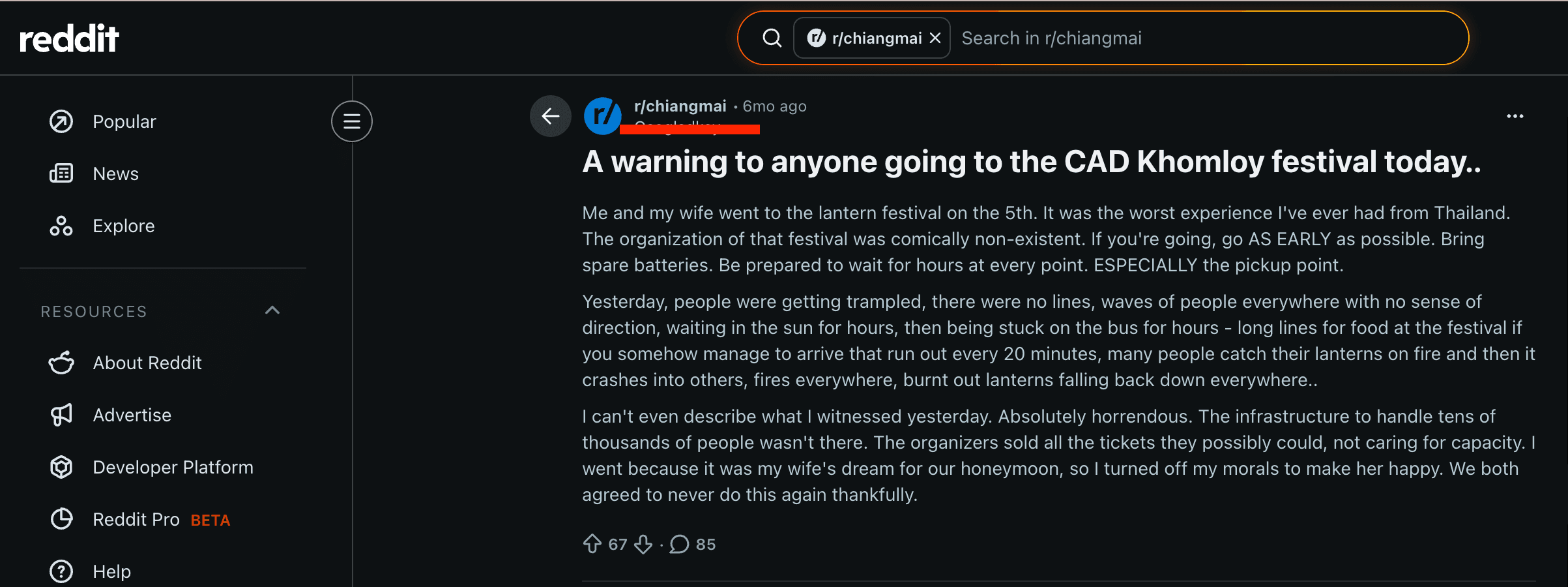
In November 2024, travel photographers who attended reported seeing lanterns fall on people, trees catching fire nearby, and emergency services being called. Online reviews are mixed at best and scathing at worst, with many visitors feeling they paid a premium to experience something far less magical than the free public event happening back in the city.
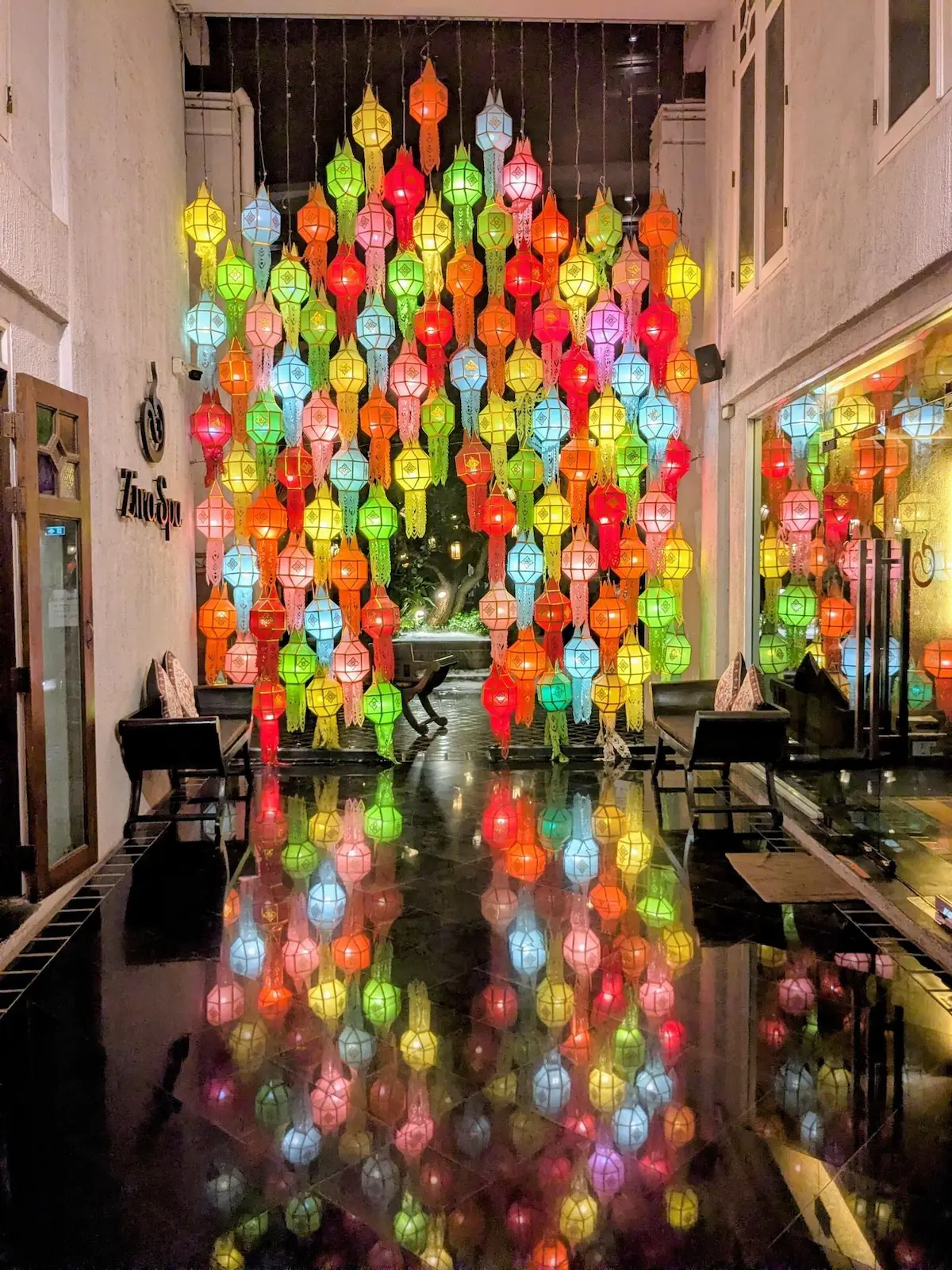
Beyond the value question, there is an environmental dimension worth knowing: sky lanterns carry metal wire and large wax components that don’t biodegrade, land in fields and waterways, and have caused fires in rural areas. Some visitors, once they understand this, prefer to skip the lantern release entirely and simply experience the parade and celebrations in the city.
What to Do Instead
Go to the Old City on the night of the festival and experience the public celebrations for free. The Tha Pae Gate area, the moat, and the surrounding streets come alive with the Loi Krathong parade, traditional performances, and the sight of thousands of lanterns released from the public areas.
If you want to release a lantern personally, you can buy one from a street vendor for 50 baht and release it with the crowd. No transfer, no overpriced dinner, no disappointment. Check the exact dates before you travel: Yi Peng follows the Lanna lunar calendar so the date shifts each year. For 2026, the CAD event is scheduled for 24–25 November, though as always, the free public celebrations in the Old City happen around the same nights and remain the better choice.
3) The Reality: Buying Fake Goods at the Night Bazaar Can Cost You More Than You Paid
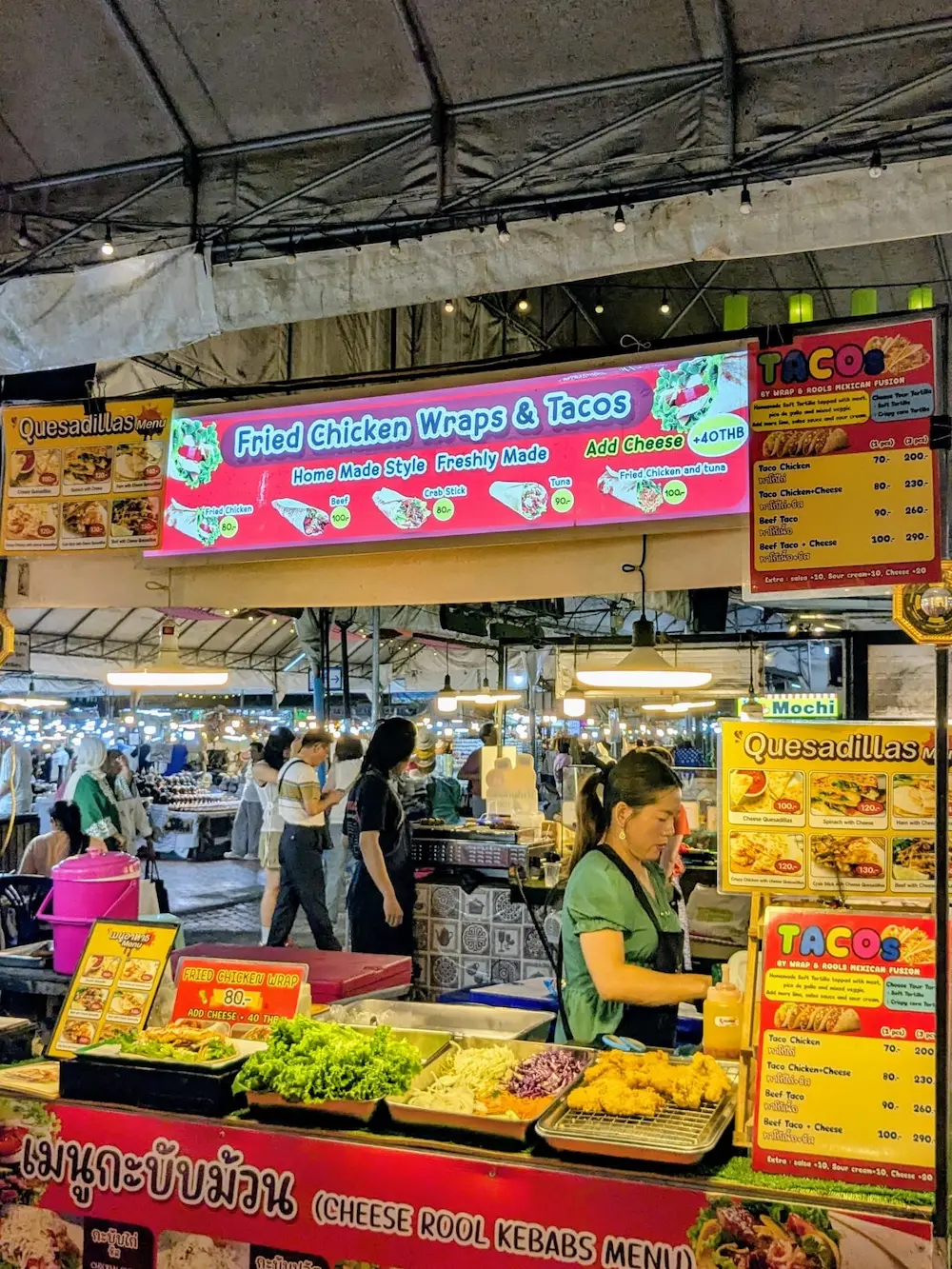
The Chiang Mai Night Bazaar on Chang Klan Road is one of the city’s most visited attractions, and for good reason: it has food, atmosphere, locally made handicrafts, and a genuine buzz that rewards a slow walk. It also has a well-documented counterfeit goods problem that has led to police raids seizing tens of millions of baht worth of fake products from its stalls.
Most tourists know they’re looking at counterfeit goods when they pick up a fake Rolex or a Louis Vuitton bag for 500 baht. What they don’t always know is what can happen next.
A documented scam at the Night Bazaar and similar markets involves plainclothes individuals, sometimes actual police, sometimes not, approaching tourists immediately after a purchase and identifying themselves as officers. They accuse the tourist of committing a crime by buying counterfeit goods and demand an on-the-spot fine of anywhere between 5,000 and 20,000 baht. Faced with the threat of arrest in a foreign country, many tourists pay without question.
Even setting aside the extortion risk, the goods themselves are often far worse quality than they appear under market lighting, and importing counterfeit branded products back to your home country can create legal problems at customs.
What to Do Instead
The Night Bazaar is worth visiting… just shift what you’re buying.
The locally made handicrafts, Thai silk products, handwoven textiles, and wooden goods are genuine, often beautifully made, and directly support local artisans. Skip anything carrying a recognisable brand name. If someone approaches you claiming to be a plainclothes officer after a purchase, ask to see official police ID, state clearly that you want to go to the police station to pay any fine officially through proper channels, and call Tourist Police on 1155. Legitimate officers will comply.
Scammers will not.
4) The Reality: Instagram Muay Thai Gyms Are Selling You an Aesthetic, Not a Training Experience
Chiang Mai has a genuine and well-earned reputation as one of the best cities in the world to train Muay Thai. There are excellent gyms here with experienced trainers, proper facilities, and competitive drop-in rates. There are also gyms that have understood something simpler: that a well-lit Instagram grid, a photogenic ring, and a logo on a pair of shorts will bring tourists through the door regardless of what actually happens inside.
The Instagram trap gym looks the part. Bright murals, matching equipment, good natural light, trainers who know how to pose for photos. What it often doesn’t have is pad work that challenges you, trainers with real fight records or coaching credentials, or a class structure designed around actual skill development. Some of these gyms charge premium prices (700 baht or more for a drop-in) for sessions that amount to skipping rope, hitting a heavy bag without correction, and a group photo at the end.
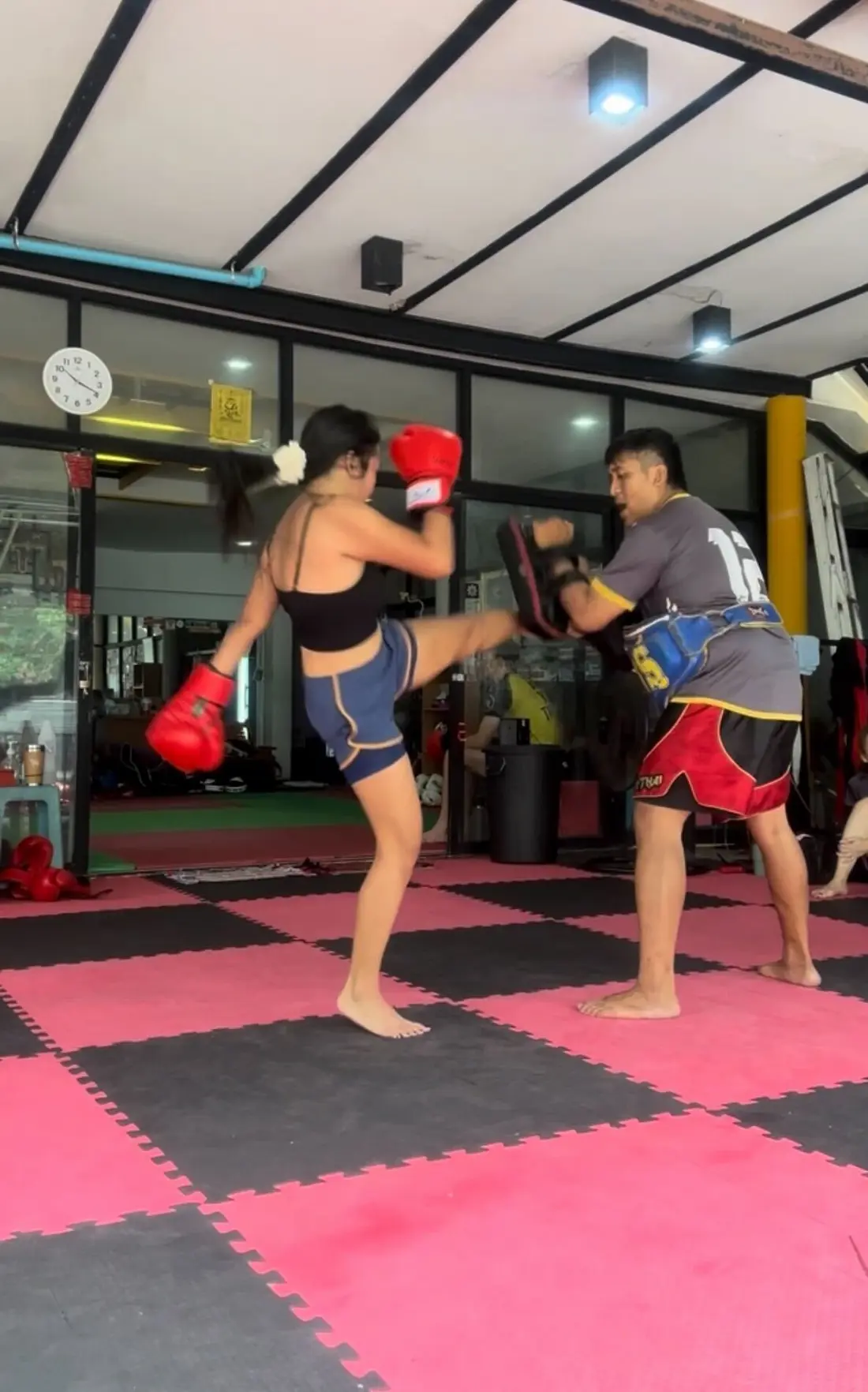
The contrast with a genuinely good Chiang Mai gym is significant. At places like Heavy Hit, which charges around 310 baht per drop-in session, you get personal pad work with a trainer, technique correction, and the kind of session that leaves you unable to lift your arms properly the next morning. That is what Muay Thai training in Chiang Mai should feel like.
What to Do Instead
Before booking any gym, search for it specifically, not just by category. Look for reviews that mention specific trainers by name, describe the training structure in detail, and come from people who have trained Muay Thai before, not just tourists ticking off an experience.
Ask directly: do I get personal pad work with a trainer, or is it bag work only? A good gym will answer that question clearly. You see, price alone is not a reliable signal either direction, some of the best gyms in Chiang Mai are also the most affordable.
Check our guide to Muay Thai gyms in Chiang Mai for verified prices and honest assessments of the training quality at specific gyms.
5) The Reality: “The Temple Is Closed Today” Is Almost Never True
This scam has been running in Chiang Mai for years and remains effective because it exploits a tourist’s natural instinct to trust a local. You’re heading to Wat Phra Singh, or planning to take the red truck up to Doi Suthep, and a tuk tuk driver or a friendly stranger near the entrance tells you — apologetically, helpfully — that the temple is closed today. Special ceremony. Buddhist holiday. Cleaning day. He happens to know somewhere else worth seeing, and he can take you there for a good price.
The somewhere else is invariably a gem shop, a tailor, or a tour agency where the driver receives a commission for every tourist he delivers. The temple, meanwhile, was never closed. Wat Phra Singh and Doi Suthep are open virtually every day of the year. The “closed” story exists solely to redirect you.
A variation of this scam involves being dropped at the wrong location entirely: a driver who doesn’t know the temple’s actual address, or who quietly reroutes you to a shorter destination and pockets the same fare.
What to Do Instead
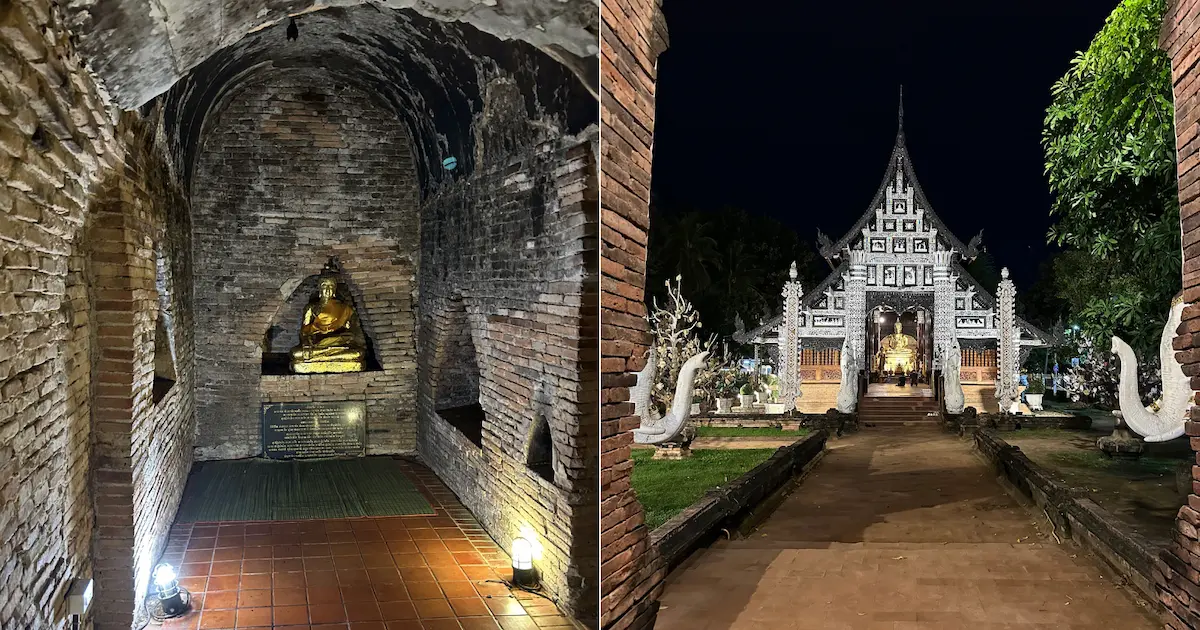
Walk past anyone who tells you a temple is closed and verify for yourself. Step up to the entrance and look. If there is genuinely a ceremony in progress, temple staff will explain and often invite you to return at a specific time or watch from a respectful distance. Never let a driver choose the route to a temple you’ve already decided to visit.
Use Grab to book transport with a mapped destination, which removes the possibility of being rerouted. For Doi Suthep, the red truck (songthaew) from the Chiang Mai Zoo runs a fixed route at a fixed price: it’s the most reliable and cheapest option.
6) The Reality: Guesthouse Tour Desks Are Not Neutral Travel Agencies
Most guesthouses and hostels in Chiang Mai have a tour desk or a noticeboard advertising day trips, jungle treks, elephant sanctuaries, and cooking classes. They’re convenient, they look official, and the person behind the desk speaks enough English to make the booking feel straightforward. What is rarely disclosed is that these desks operate on commission, meaning the tours they recommend are the ones that pay them the most, not the ones that offer the best experience.
Tourists have reported paying for day tours where the bus departed significantly late or not at all, itineraries that differed substantially from what was described at booking, elephant sanctuary visits that turned out to be commercial shows rather than ethical sanctuaries, and no recourse when the experience fell short because no detailed written itinerary or receipt was provided at the time of payment.
The problem is not that guesthouse tours are always bad, some are perfectly fine. The problem is that you have almost no way to evaluate quality in advance and no leverage if things go wrong, because the intermediary who sold you the tour has no direct relationship with the operator running it.
What to Do Instead

Book tours directly with the operator where possible. For ethical elephant experiences, Elephant Nature Park north of Chiang Mai is one of the most respected sanctuaries in Thailand and books directly through its own website: no intermediary required.
For cooking classes, search for operators with substantial independent review histories on Google Maps or TripAdvisor, and book directly. For any tour, always ask for a written itinerary and a receipt before you pay, and be wary of any desk that cannot or will not provide these. If a price seems dramatically lower than competitors, it usually reflects a cut in the quality of the experience, not a genuine deal.
A Final Word on Chiang Mai
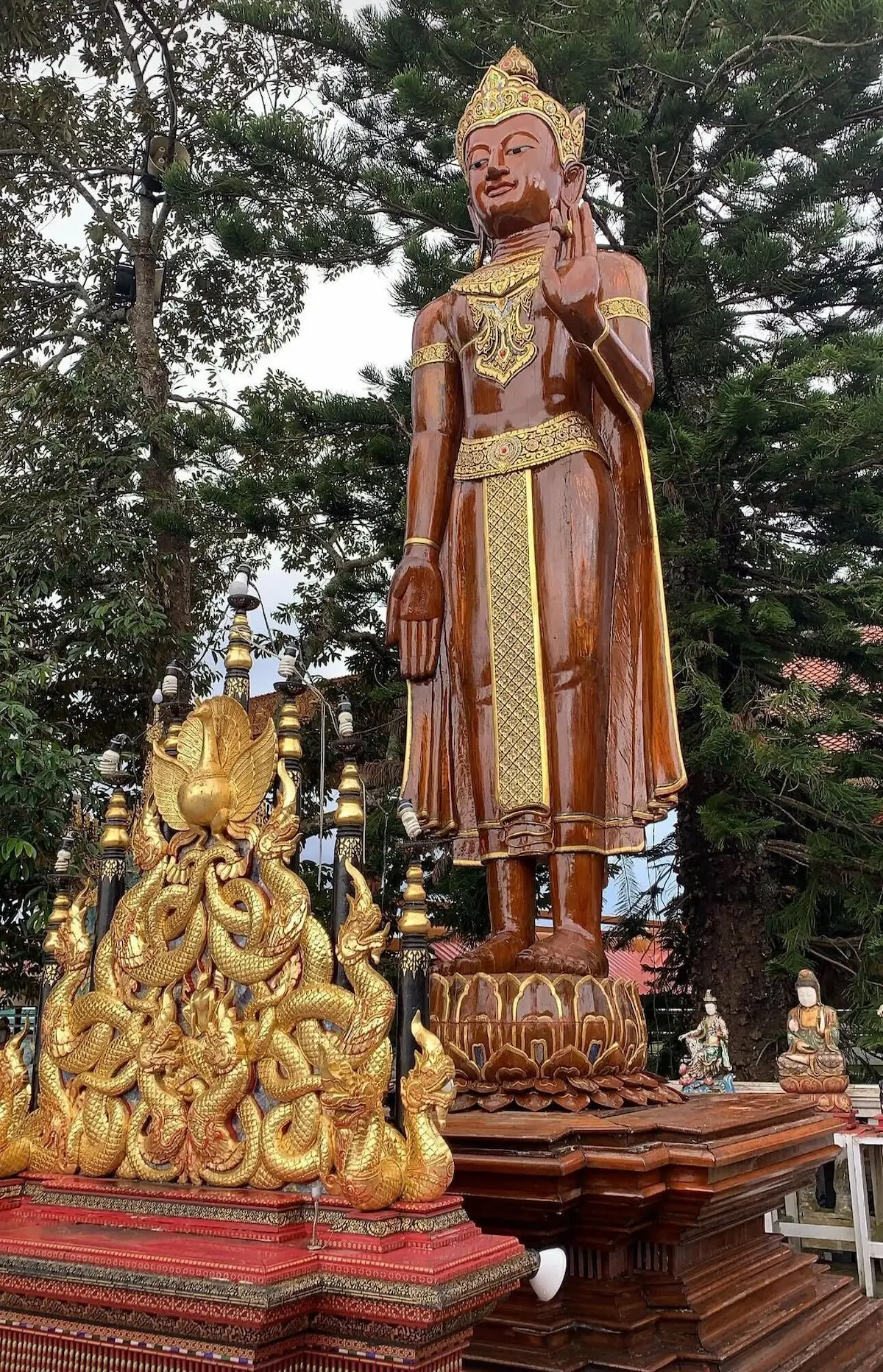
None of this should put you off.
Chiang Mai remains one of the most rewarding cities in Southeast Asia: for its food, its temples, its access to the mountains, its Muay Thai gyms, its café culture, and the particular unhurried quality of daily life that makes it one of the few places tourists reliably end up extending their stay.
The mistakes above are avoidable. Most of them share a common thread: they exploit the tourist tendency to follow wherever someone helpful is pointing. The countermeasure is simple. Decide where you’re going before you get in the vehicle. Book tours directly with operators. Walk up to the temple and check for yourself. Pay as you go rather than running tabs. And if you’re out late and someone offers to show you where the real party is: trust your instincts over their enthusiasm.
The real Chiang Mai doesn’t need a tuk tuk driver to find it. It’s already right there, usually just a short walk from wherever you’re standing.