

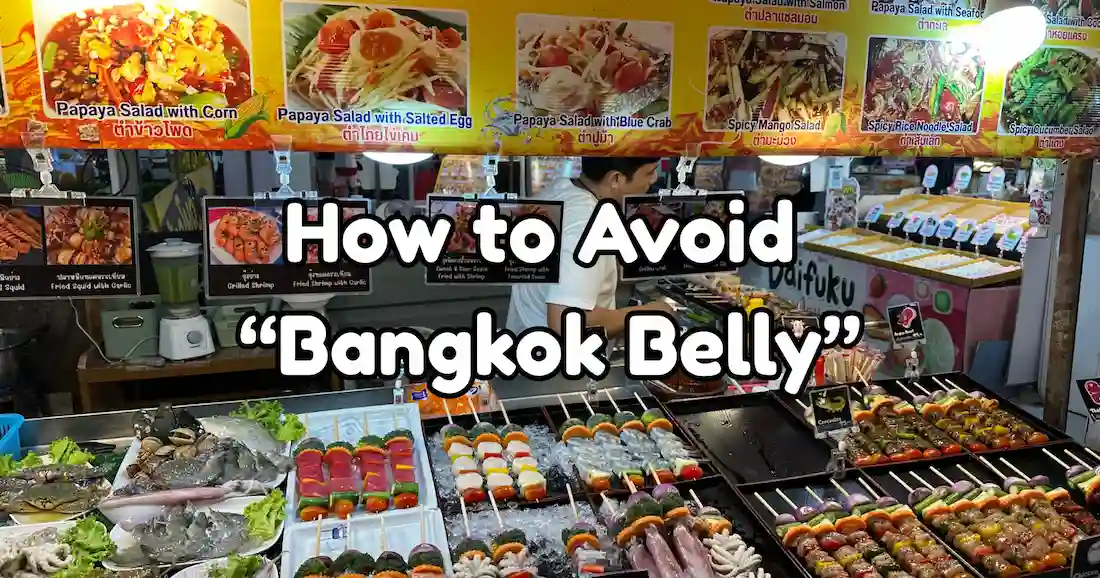
Thailand is a sensory masterpiece, a place where the air is thick with the scent of roasting pork, fermented fish sauce, and jasmine. Indeed, the country invites you to eat. And why wouldn’t you? The food is world-class, ubiquitous, and shockingly cheap.
But there is a shadow that hangs over this paradise, a phenomenon known colloquially as “Bangkok Belly,” traveler’s diarrhea, or food poisoning. If you’ve ever traveled to Indonesia, you’ve heard of its cousin, “Bali Belly.”
Both terms are essentially travel slang for acute food poisoning. Historically, these terms emerged from the backpacker trails of the 70s and 80s, serving as a sort of “war story” for Westerners—a badge of honor that proved you’d truly roughed it in the tropics.
Today, as someone who has lived here as an expat and watched the “farang” (Westerner) cycle for years, I see the same story play out every week. I see them in the Nimman area of Chiang Mai or on the beaches of Koh Phi Phi: fresh-faced travelers in brand-new elephant pants, sitting at a roadside bar at 2:00 PM.
The sun is punishingly hot, and they are clinking large, condensation-covered bottles of Chang beer. They are diving into plates of fifty-baht Pad Thai or spicy papaya salad, lured by the incredible prices and the vibrant colors. By day three, those same travelers are often pale, clutching a bottle of electrolytes, and looking for the nearest pharmacy.
The food is too good to resist, but the poisoning that leads to Bangkok Belly is often entirely avoidable if you know the rules of street food safety. Here is my indispensable checklist for surviving the delicious but dangerous terrain of Thai street food and island restaurants.
1) The “Grey Water” Trap: Cross-Contamination on Utensils

Many travelers obsess over whether the meat is cooked through, but they overlook the plate it’s served on. In many authentic street stalls, there is no running water. Instead, you’ll see a series of plastic buckets behind the stall.
The first bucket is for scrubbing, the second for rinsing, and the third is a “final” dip. By 8:00 PM, that third bucket is lukewarm, “grey” water teeming with the bacteria of a thousand previous customers. When your steaming hot noodles are tossed onto a plate that was just dipped in that bucket and still damp, the heat of the food actually helps the bacteria multiply. It is the best breeding ground for salmonella and E. coli bacteria.
- Action Step: Observe the washing station. If it’s just buckets on the floor, consider ordering your food “to go” (Sai Tung). You’ll get it in a fresh, disposable container or a clean plastic bag.
- Expat Secret: I always carry a small pack of biodegradable wet wipes. I give my spoon and fork a quick, discreet wipe before I eat. You’ll see local Thais doing this with tissues—it’s not an insult to the cook; rather a standard hygiene practice in the tropics.
2) The “High Turnover” Rule: Follow the Crowd for Street Food Safety
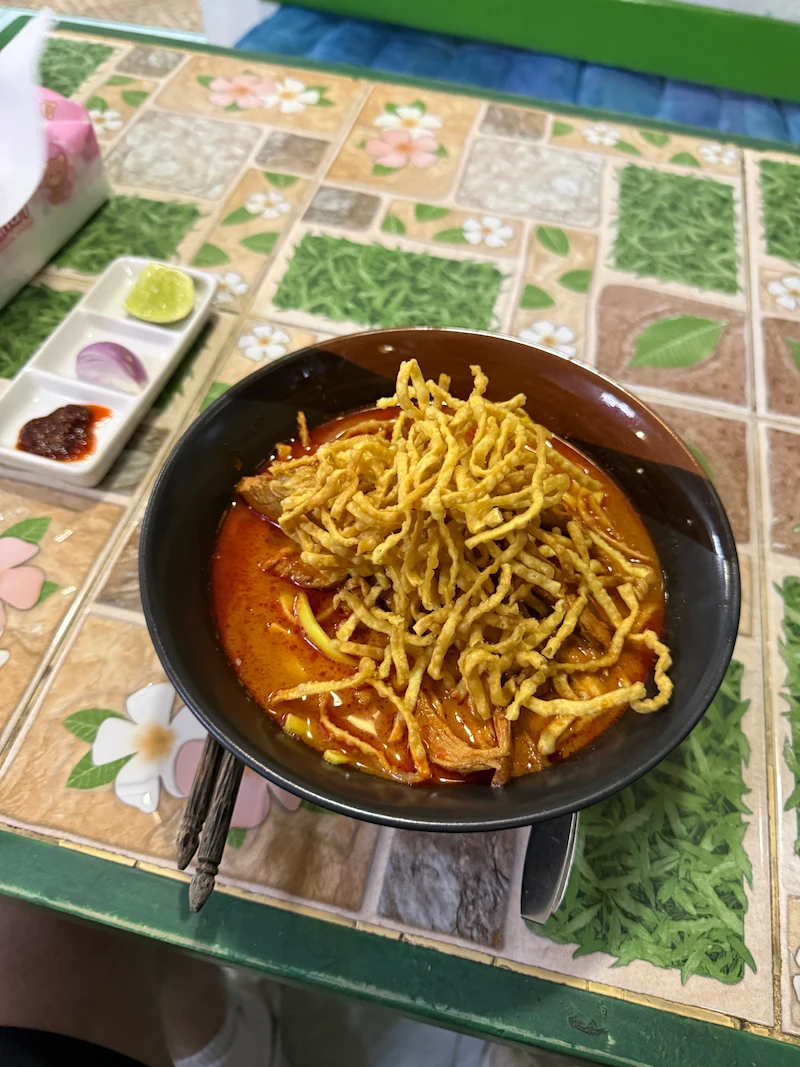
In the West, we often seek out the quiet, “hidden gem” restaurant. In Thailand, a quiet restaurant is a red flag. The tropical heat is a ticking clock for food safety.
Whether you’re in the street markets of Chiang Mai or a beach shack in Koh Lanta, you want to eat where the food is moving. High turnover means the ingredients are being replenished constantly. A stall with a long line of locals and expats means the pork hasn’t had time to sit out and “sweat” in the 35-degree humidity.
- Avoid “Ghost Stalls”: If you see pre-cooked dishes sitting in metal trays (Khao Gaeng) and there isn’t a single customer in sight, keep walking. That curry has likely been breeding bacteria since the lunch rush.
- The “Wok-to-Plate” Metric: Always prioritize food that is cooked “a la minute”, which is flashed in a flaming wok right in front of you. The high heat of a Thai burner is your best defense against pathogens.
3) The Probiotic Shield: Prepping Your Gut Microbiome
One of the reasons “Bali Belly” or “Bangkok Belly” hits farangs so hard is that their gut microbiomes are “naive” to Southeast Asian bacteria. You are walking into a biological environment your body doesn’t recognize.
As someone from the Philippines, I have a bit more natural resistance, but even I “prime” my system. You shouldn’t wait until you’re sick to start thinking about your gut health.
- Start Early: Two weeks before you land in Thailand, start a high-quality probiotic supplement. You want to build a “wall” of good bacteria to compete with any “bad” bacteria you might ingest.
- The 7-Eleven Savior: Once you arrive, make a daily trip to 7-Eleven (they are on every corner). Buy a small bottle of “Betagen” or “Dutch Mill” probiotic drink. They are cheap, delicious, and help maintain your internal defenses against the local flora.
4) Drinking Water and the Tap Water Trap
By now, every traveler knows not to drink the tap water in Thailand. However, the water still finds its way to you in ways you don’t expect.
In the islands (Phuket, Koh Samui, Koh Lanta, etc.), water infrastructure is often local and less regulated than in the big cities. This “hidden” water is a frequent cause of the dreaded belly.
- The Toothbrush Habit: Use bottled water even for brushing your teeth. It’s a tiny amount of water, but it only takes one swallow of contaminated tap water to ruin a week of your life.
- Salads and Raw Veggies: These are washed in tap water. If you are in your first few days of travel, stick to cooked greens. The “Som Tum” (Papaya Salad) is a major culprit… it’s raw, washed in local water, and the mortar and pestle used to grind it are rarely sanitized between uses.
Is the Ice Safe in Thailand?
One of the most common questions is: “Can I have ice in my drink?” Generally, yes. In Thailand, most ice is produced in factories using purified water and delivered in bags. You can recognize “safe ice” by its shape, it will be cylindrical with a hole through the middle.
- Avoid “crushed ice” or hand-shaved ice in rural areas, which may have been handled with bare hands or stored in dirty coolers.
- Stick to the “tube ice” found in 7-Eleven and most busy bars in Bangkok and Chiang Mai.
5) Red Flags of Spoiled Meat and Seafood
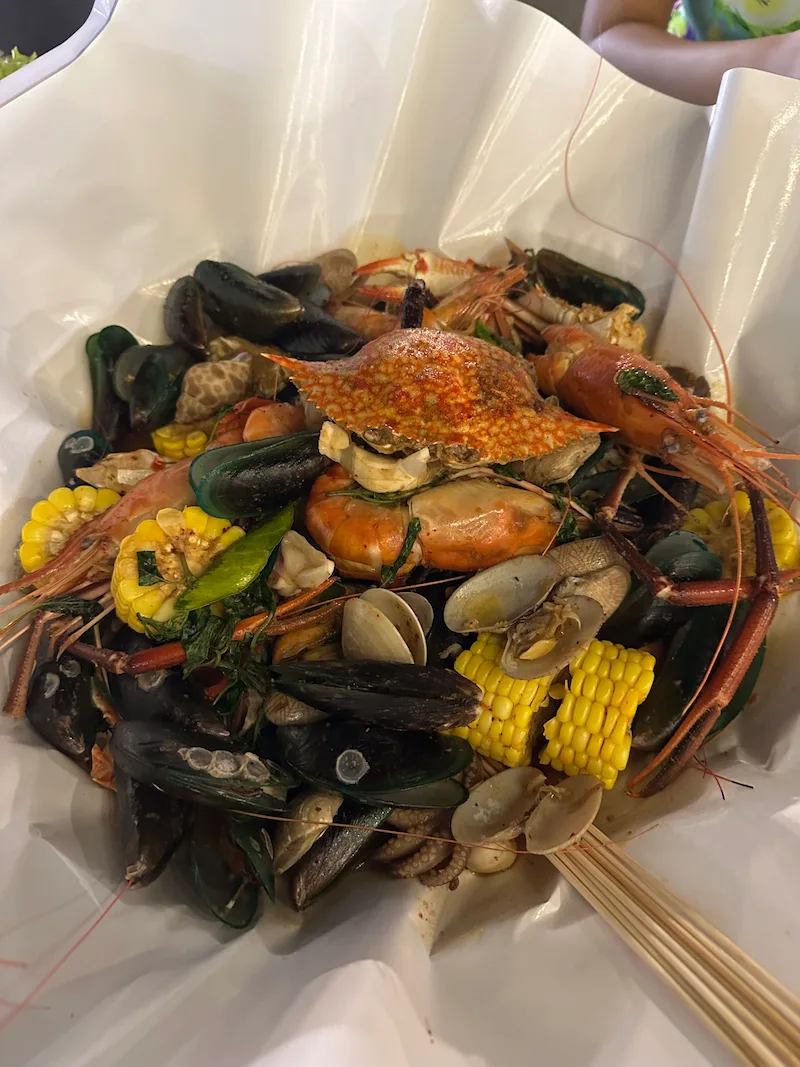
The temptation of a fifteen-baht skewer of grilled meat (Moo Ping) is strong. But in the heat of Thailand, meat can turn in an hour.
When you’re walking through a market, use your senses to spot the red flags.
- The “Sweat” Test: If the meat on display looks slimy, “sweaty,” or has a greyish tint, it has been out too long.
- The Fly Metric: A few flies are a part of life in the tropics, but if a vendor is letting flies crawl all over raw meat without a care, it’s a sign that their overall hygiene standards are low.
- Seafood in the Islands: On Koh Phi Phi or Phuket, you’ll see “fresh” seafood on ice outside restaurants. Look at the eyes of the fish. If they are cloudy or sunken, the fish is old. Truly fresh fish should have clear, bulging eyes and red gills.
6) The “Farang Beer Belly”
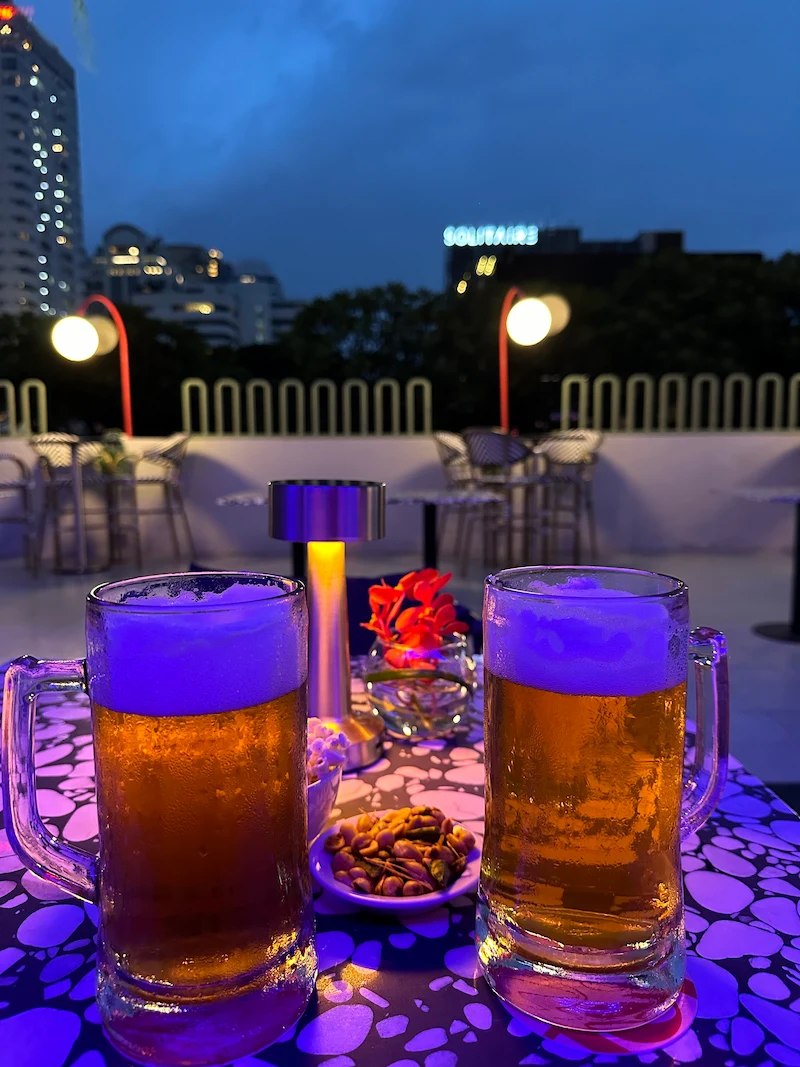
It’s a common sight: travelers drinking large bottles of Chang or Leo beer from noon until night. While the “Beer Belly” is the physical result of the calories, the alcohol itself is a major contributor to “Bangkok Belly” symptoms.
Alcohol irritates the lining of the stomach and intestines. When you combine that irritation with the extreme Thai heat, you become severely dehydrated. A dehydrated gut is a weak gut; it loses its ability to flush out toxins and maintain its natural acidic balance, making it much easier for food poisoning to take hold.
- Heat Correlation: Most people who think they have food poisoning actually have a mix of mild heatstroke and severe dehydration.
- Action Step: For every beer you drink, you must drink at least 500ml of water. Avoid the 2:00 PM beer binge; stick to fresh coconut water during the day, it’s nature’s Gatorade and will keep your gut resilient.
7) Fruit Safety: Peel It or Leave It
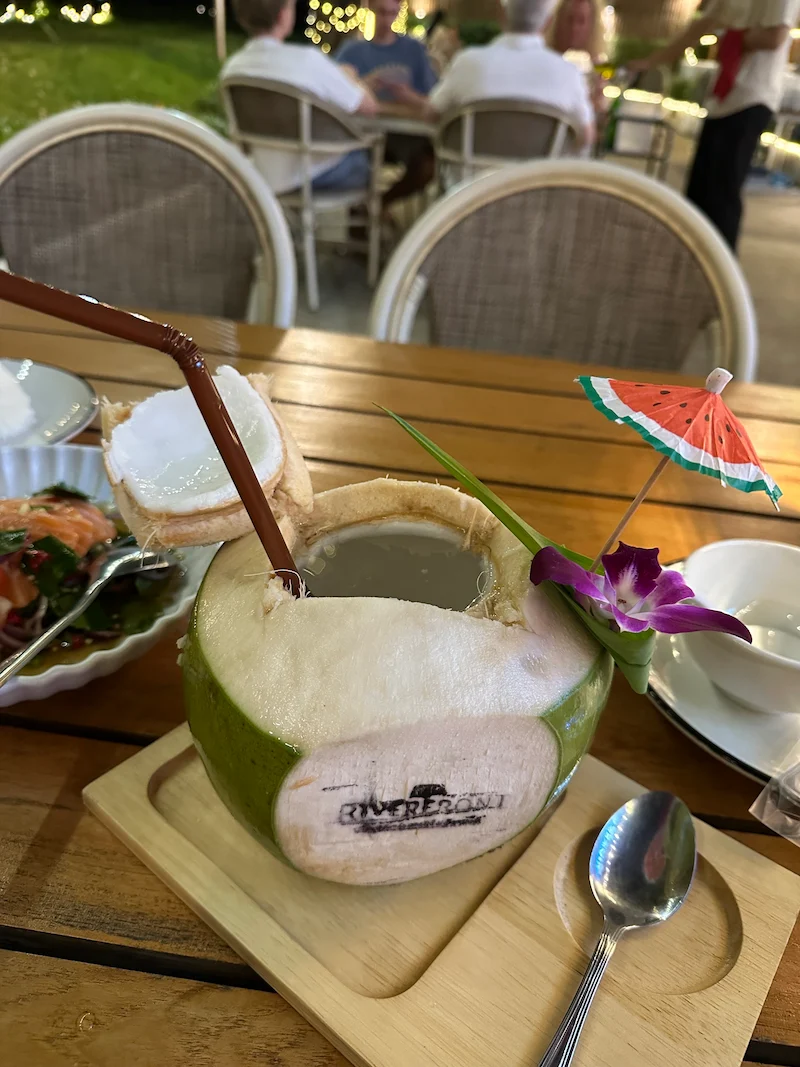
Thailand’s fruit is a revelation: sweet, cheap, and juicy. But fruit can be a vehicle for dirty water and “Bali Belly” pathogens if handled incorrectly.
- Peel Rule: If the fruit has a skin you can peel yourself (mangosteen, dragon fruit, bananas, mangoes, rambutan), it is generally 100% safe. The skin acts as a natural sterile barrier.
- Pre-Cut Trap: Be careful with the pre-cut fruit bags sitting on carts. You don’t know what kind of water was used to wash the knife or the vendor’s hands. If you want pre-cut fruit, ask them to slice a fresh one right in front of you.
8) Money, Hands, and the Cross-Contamination Cycle
The Thai Baht is one of the “dirtiest” currencies I’ve ever handled. It circulates through wet markets, fish stalls, and sweaty pockets in 90% humidity.
A common way people get sick is not necessarily the food: it’s the “Money-to-Mouth” pipeline. You pay for your food with grimy bills, the vendor gives you change, and then you sit down and use your hands to pick up a piece of sticky rice or a spring roll.
- The Hand Sanitizer Ritual: Carry a small bottle of sanitizer at all times. Use it after you have paid for your food and before you touch your utensils or the food itself.
Identifying the Early Warning Signs
Many travelers ignore the early signs of Bangkok Belly, thinking it’s just “the heat” or “spicy food.” Catching it in the first hour can save you days of agony.
- The “Gurgle”: A specific, hollow, bubbling sensation in the lower intestine. It’s often accompanied by sudden, intense bloating. This is the sound of your body reacting to a toxin.
- The Sudden Chill: If you are standing in 32-degree weather and you suddenly feel a “cold” shiver or get goosebumps, your immune system has just sounded the alarm. Your body is shifting energy to your gut to fight an invader.
- The Metallic Taste: A sudden, strange metallic or “off” taste in your mouth often precedes the nausea phase of food poisoning.
What to Do if You Get Hit
If the prevention fails and you find yourself tethered to a bathroom in a Krabi bungalow, your goal shifts from “curing” to “management.”
- Don’t Stop the Flow (At First): This is the biggest mistake farangs make. They immediately take Imodium (Loperamide) to stop the diarrhea. Diarrhea is your body’s way of purging the poison. If you stop it too early, you “lock” the bacteria inside you, which can lead to a longer, more painful infection. Only use Imodium if you have a “must-travel” situation, like a flight or a long bus ride.
- The Rehydration Secret (ORS): Water is not enough. When you have Bangkok Belly, your body loses essential salts. Go to any Thai pharmacy and ask for ORS (Oral Rehydration Salts): the most common brand is “Royal-D.” It comes in orange-flavored packets. Mix it with bottled water and sip it constantly. It is the single most important factor in a fast recovery.
- The “Thai BRAT” Diet: Once you can keep liquids down, eat plain “Jok” (Thai rice congee). Every street corner has a Jok vendor in the morning. It’s easy on the stomach, hydrating, and provides the simple carbs you need for energy without irritating the gut.
My Conclusion: Respect the Heat, Enjoy the Feast
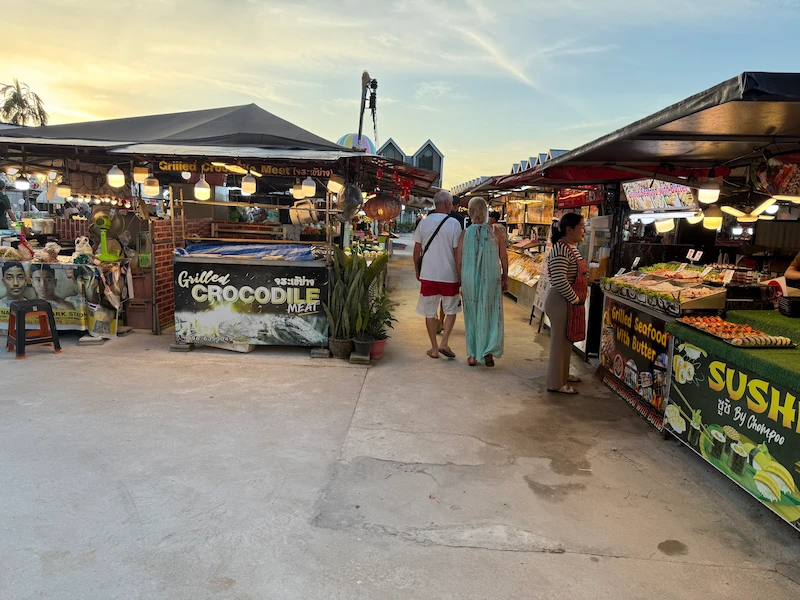
After six years of living here, I still eat street food nearly every day. I’ve seen the farangs who come here and are so terrified of getting sick that they only eat at expensive hotel restaurants or McDonald’s. Ironically, they often end up getting sick anyway because they lacked the “street smarts” regarding ice or hand hygiene.
The secret to avoiding Bangkok Belly isn’t about being a germaphobe, more about being a “smart-aphobe.” Respect the power of the tropical sun, understand that hygiene standards are different, and listen to your body.
Thailand’s food is a gift, the heart and soul of the country. By following this checklist, you can dive into that heart headfirst, beer in hand (with a water chaser!), and enjoy every single spicy, salty, delicious bite.
Safe travels and Chok Dee na!